 Chinese (Traditional)
 Chinese (Simplified)
 English


Social Studies in Hong Kong International Primary Schools: What Do Students Learn?
TUTORZONE SUBJECT GUIDE · INTERNATIONAL PRIMARY SCHOOL
Social Studies in Hong Kong international primary schools goes far beyond memorising facts — it builds the social understanding, cultural awareness, and problem-solving skills children need to become responsible global citizens. Here is a complete guide to what students learn, from geography and history to civics and real-world projects.
Direct Answer:What do students learn in Social Studies at Hong Kong international primary schools?
Social Studies builds social understanding, cultural awareness, and problem-solving skills to help students become responsible global citizens.
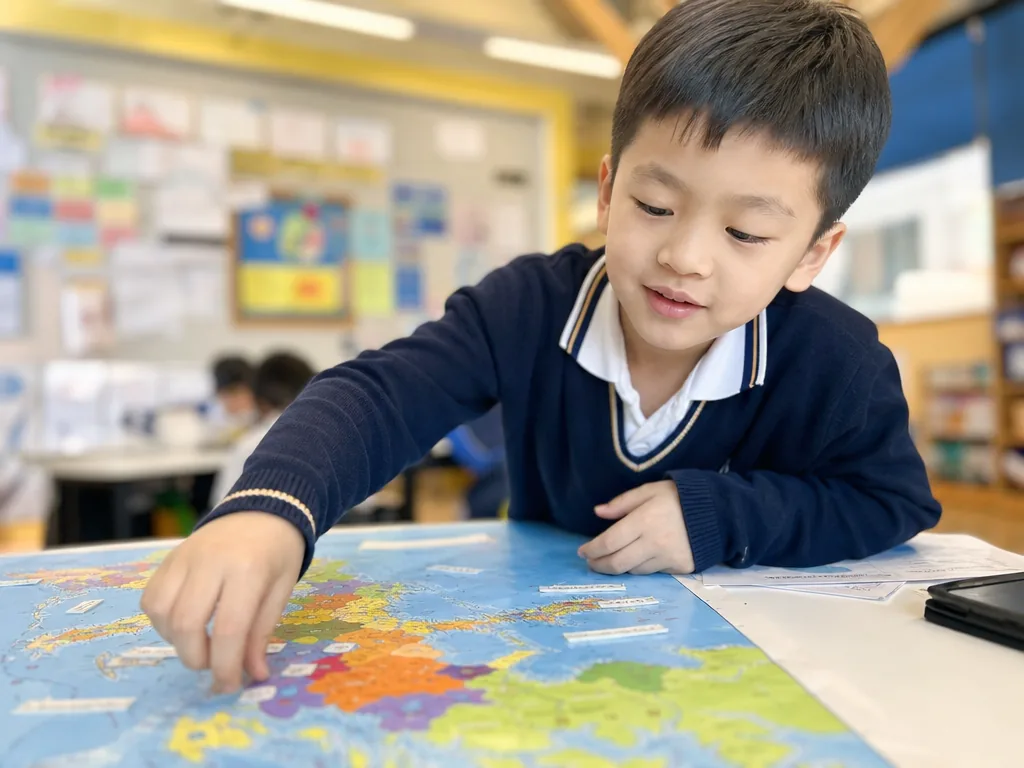
Foundations of Social Studies: Understanding the Structure of the World
In today’s fast-changing world, students need more than just math and language skills — they also require strong social understanding and cultural awareness. That is why Social Studies is an increasingly important subject in the primary curriculum of Hong Kong international schools. It helps students grasp how societies function, collaborate with others, solve problems, and become responsible global citizens.
Social Studies in Hong Kong international primary schools typically starts with basic social concepts to help students understand the relationships between individuals, families, communities, and nations. These fundamental ideas help children recognize their roles and responsibilities in society.
- Self and Others: Students learn to understand themselves and how to interact with others. The curriculum emphasizes cultural diversity, empathy, and respect for different backgrounds.
- Family and Community: Students explore the role of families and how communities function. They learn about cooperation, sharing, and social norms to integrate better into their surroundings.
Geography: Discovering the World and the Environment
Geography is a key component of Social Studies, allowing students to understand the physical structure of the Earth and how human actions impact the environment.
- Maps and Directions: Students acquire basic map-reading skills, learn to interpret symbols, and use a compass to find directions — boosting both spatial awareness and curiosity.
- Continents and Earth Systems: They study continents, oceans, countries, and major cities, along with climate, natural disasters, and resource distribution.
- Environmental Awareness: Lessons emphasize sustainability, including reducing carbon footprints, conserving resources, and protecting ecosystems, fostering a global sense of responsibility.
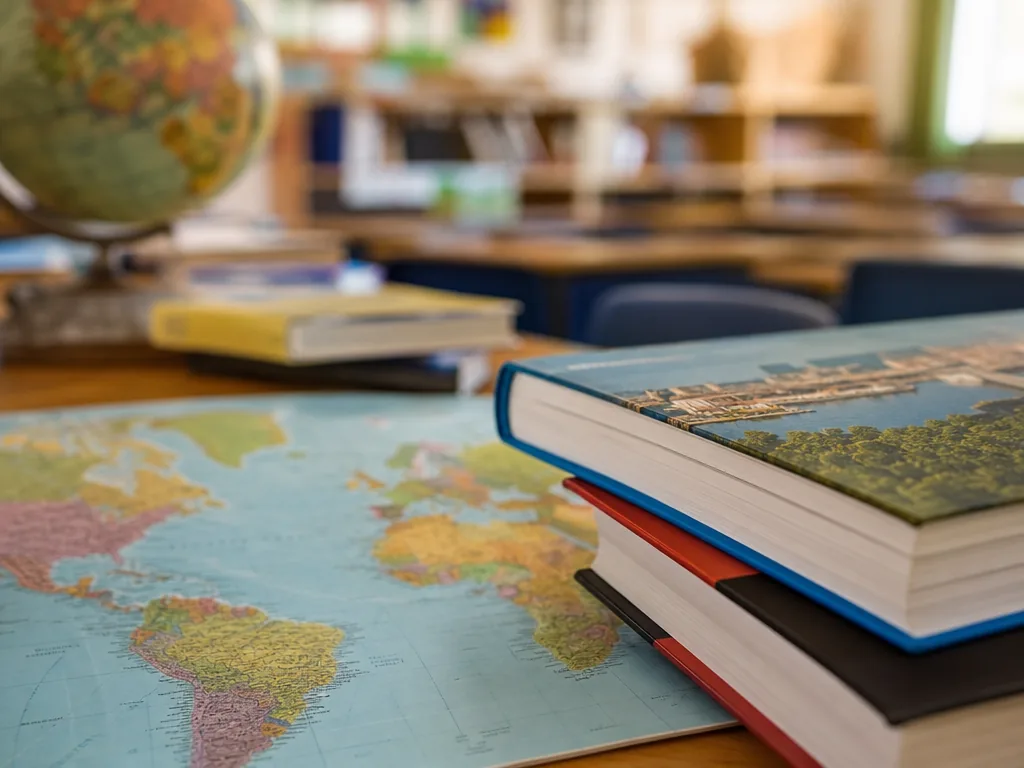
History: Learning from the Past, Preparing for the Future
Students are introduced to key historical periods and events that shape the modern world. Historical studies promote critical thinking and cultural appreciation.
- Ancient Civilizations: Topics include Ancient Egypt, Greece, and the Roman Empire. Students examine innovations, culture, and the lasting impact of early societies.
- Modern History: As they progress, students explore the Industrial Revolution, colonial history, and world wars — understanding how these events influence today’s global landscape.
Culture and Society: Embracing Diversity
Cultural education is a vital part of Social Studies. Students learn to appreciate the customs, traditions, and values of different cultures, which is particularly important in diverse international school settings.
- Global and Local Cultures: From food and languages to festivals, students explore worldwide cultures and develop respect and appreciation for differences.
- Cultural Exchange and Globalization: They also examine how globalization influences economic, technological, and cultural exchanges among nations.
Learning to appreciate different cultures is especially important in diverse international school settings.
Citizenship and Responsibility: Becoming Active Members of Society
Civic education teaches students about their rights, responsibilities, and the importance of being active and ethical members of a community.
- Rules and Laws: Students learn about the role of laws in maintaining social order and protecting rights. They also explore school rules and community guidelines.
- Social Issues and Solutions: Lessons cover real-world problems like poverty, inequality, and environmental pollution. Students are encouraged to think critically and propose thoughtful solutions.
Interdisciplinary Learning: Connecting Social Studies with Other Subjects
Hong Kong international schools often integrate Social Studies with other subjects such as math, science, and language arts to promote a holistic learning experience.
- Social Studies and Math: Students use data, graphs, and charts to analyze social trends — for example, interpreting population statistics or election results.
- Social Studies and Science: They learn how scientific advancements impact society and how technology can address issues like climate change or global communication.
Interactive Learning and Real-World Application
International schools in Hong Kong emphasize hands-on and collaborative learning. Classes often feature group discussions, role-plays, simulations, and real-world projects.
- Simulated Activities: Schools may organize mock elections or mock trials, allowing students to experience legal and political processes firsthand.
- Community Service: Many schools involve students in service-learning projects, helping them apply classroom knowledge while developing empathy and teamwork.
Conclusion: Nurturing Responsible Global Citizens
Overall, the Social Studies curriculum in Hong Kong international primary schools is student-centered and designed to foster critical thinking, global awareness, and real-world problem-solving. Covering geography, history, culture, civics, and environmental education, the program equips students to understand how society functions and inspires them to become active and responsible global citizens.
If you are looking to nurture your child’s understanding of the world and cultivate essential 21st-century skills, the Social Studies curriculum in Hong Kong’s international primary schools is a powerful and enriching choice.
Frequently Asked Questions (FAQ)
Q: What subjects are covered in Social Studies at international primary schools?
Social Studies typically spans geography, history, culture and society, citizenship and civics, and environmental education, often integrated with subjects such as math, science, and language arts.
Q: How do schools make Social Studies interactive?
Lessons often include group discussions, role-plays, simulations, mock elections or mock trials, and community service-learning projects that let students apply classroom knowledge in real situations.
Q: Why is Social Studies important for my child?
It builds social understanding, empathy, and cultural awareness while developing critical thinking and real-world problem-solving skills, helping children grow into active and responsible global citizens.
Q: Does the curriculum encourage global awareness?
Yes. Topics such as environmental awareness, globalization, and cultural exchange are woven throughout the curriculum to help students understand and care for the wider world.
Further Resources & Next Steps
- Official Resources——Check your school’s curriculum guide or the IB Primary Years Programme (PYP) framework for the specific units your child will study.
- Further Reading——Introduce age-appropriate atlases, world maps, and children’s books on ancient civilizations and world cultures to extend learning at home.
- Parent Tips——Talk about current events and family traditions at home, and encourage your child to ask questions about the world around them to reinforce what they learn in class.
Note: The information above is for reference only. Please consult professional education institutions for details.
This article was initially drafted and organised with AI. Editor / Professor Chan Kwok-wai; Managing Editor / Kong Yee-leung
Act Now: Find a Tutor / Register as a Tutor
For parents & students: looking for a home or online tutor for this subject? Click the button below to post a free tuition case (subject, level and preferred time) — TutorZone will match you with suitable tutors:
For tutors: do you teach this subject? Click the button below to register for free and receive more suitable cases — you pay only when a match is made: