 Chinese (Traditional)
 Chinese (Simplified)
 English

What Do Students Learn in Primary Science Curricula at Hong Kong International Schools?
@keyframes tzPulseO { 0%,100% { box-shadow: 0 0 0 0 rgba(255,140,0,.55); transform: scale(1); } 50% { box-shadow: 0 0 0 14px rgba(255,140,0,0); transform: scale(1.04); } }
@keyframes tzPulseN { 0%,100% { box-shadow: 0 0 0 0 rgba(2,30,64,.5); transform: scale(1); } 50% { box-shadow: 0 0 0 12px rgba(2,30,64,0); transform: scale(1.04); } }
.tz-blink-o { animation: tzPulseO 1.6s ease-in-out infinite; }
.tz-blink-n { animation: tzPulseN 1.6s ease-in-out infinite .35s; }
TUTORZONE SUBJECT GUIDE · primary science
As educational approaches evolve, science is no longer seen as just a subject—it is the foundation for developing critical thinking, curiosity, and practical problem-solving skills. In Hong Kong’s international schools, primary science education is designed to spark children’s interest in the natural world while helping them build scientific reasoning abilities. So, what exactly do students learn in the primary science curriculum of these schools? Let’s take a closer look.
Direct Answer:What is the focus of primary science education in Hong Kong international schools?
Primary science develops critical thinking, curiosity, and practical problem-solving skills while exploring scientific concepts.
Foundations of Science: Introducing the Natural World
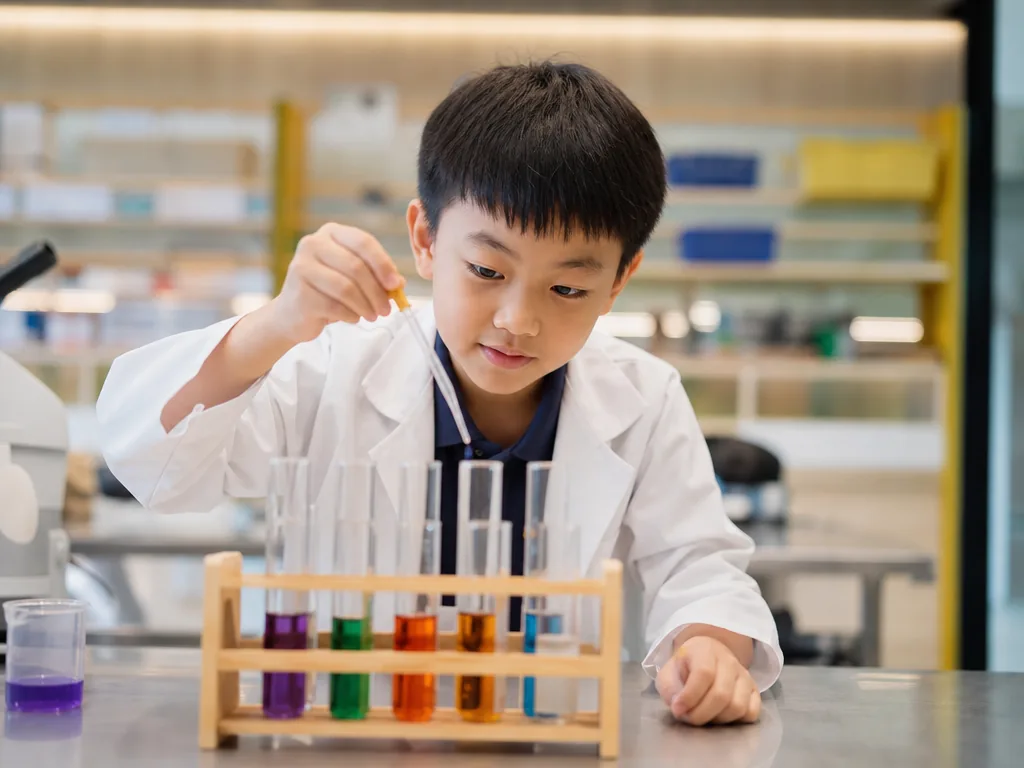
Primary science curricula at Hong Kong international schools often begin with foundational scientific concepts, supported by hands-on activities and simple experiments to help students explore and understand natural phenomena.
Curiosity
Spark children’s interest in the natural world and how it works.
Scientific Reasoning
Build evidence-based thinking through observation and experimentation.
Problem-Solving
Apply scientific principles to real-world, everyday challenges.
Exploring the Physical World
Students learn about basic physics concepts such as force, motion, gravity, and buoyancy. Through hands-on experiments—like using pulleys and levers—they grasp core mechanics and see how these principles apply in everyday life.
Basic Biology
Students are introduced to life science topics such as the definition of life, classification of animals and plants, and the structure and functions of the human body. They may explore cells, organs, and biological systems through observation and experimentation.
Experimentation and Inquiry-Based Learning: Hands-On Discovery
Scientific learning is deeply rooted in observation, experimentation, and inquiry. Hong Kong’s international schools emphasize hands-on activities to strengthen understanding and foster analytical thinking.
Scientific Experiments
Students regularly participate in collaborative group experiments across physics, chemistry, and biology. They learn to formulate hypotheses, collect and analyze data, and draw conclusions—building essential skills in the scientific method.
Inquiry-Based Learning
Teachers encourage students to ask questions and investigate answers themselves. This student-led approach cultivates curiosity and initiative. Questions like “Why do plants need sunlight?” or “Why does ice melt?” lead to experiments, discussions, and deeper learning.
Physical Sciences: Understanding Forces, Energy, and Motion
Physics is a core part of the science curriculum, giving students insight into the laws that govern the physical world.
Forces and Motion
Students learn how to measure and calculate force, speed, and acceleration. Through practical activities, they explore how forces affect the motion of objects.
Energy and Transformation
They study different forms of energy—kinetic, potential, thermal—and how energy is transferred or transformed. Topics may include how generators convert motion into electricity, helping students connect abstract concepts to real-world technology.
Life Sciences: Exploring the Mysteries of Living Organisms
Biology in the primary curriculum focuses on the structure and function of living things and their interactions with the environment.
Structure and Function of Organisms
Students learn about cells, tissues, and organs, and how different species adapt to their habitats. They also explore how to classify plants and animals.
Human Body Systems
Topics include major human body systems such as the respiratory and digestive systems, and how they work together to sustain life.
Biodiversity and Ecosystems
Students learn about food chains, food webs, and the role of organisms in maintaining ecological balance. Field trips and projects deepen their understanding of biodiversity conservation.
Chemistry and Matter: Understanding the World of Substances
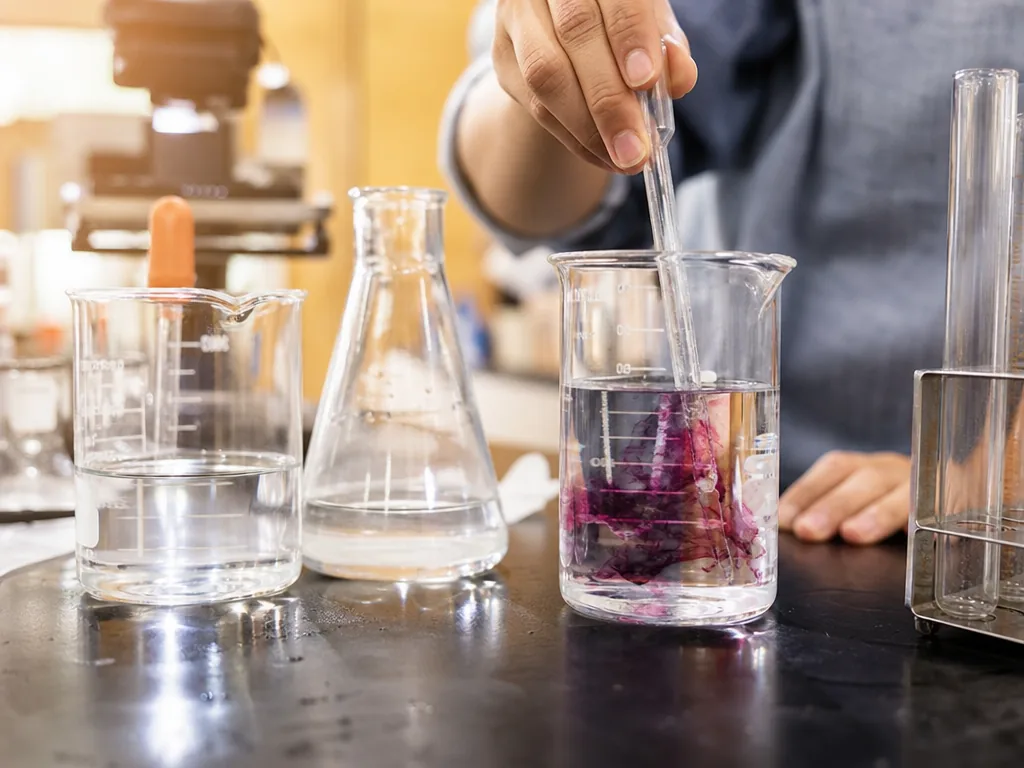
Chemistry introduces students to the composition and transformation of matter and how chemical changes affect everyday life.
Properties and Classification of Matter
Students learn to identify physical properties such as color, texture, density, and understand how to classify materials. They also explore the three states of matter—solid, liquid, and gas—and their transitions.
Simple Chemical Reactions
Through basic experiments, students observe chemical reactions and infer the properties of different substances, such as reactions between acids and bases or between metals and acids.
Environmental Science and Sustainability: Caring for the Planet
Many international schools in Hong Kong incorporate environmental education and sustainability into their science programs to build awareness and responsibility.
Environmental Protection
Students learn about resource conservation, water protection, and how to reduce waste in daily life. Topics like pollution and climate change are also discussed.
Sustainable Development
The curriculum introduces the concept of meeting present needs without compromising future generations. Lessons may cover renewable energy, green architecture, and sustainable practices.
Interdisciplinary Learning: Integrating Math, Tech, and Science
Science education is often integrated with mathematics and technology, helping students apply scientific knowledge in real-world contexts.
Data Collection and Analysis
Students use mathematical tools to collect and interpret data through graphs and tables, reinforcing both math and science skills.
Technology in Science
Students explore the relationship between science and technology, using modern tools (e.g., computer software, sensors) to conduct experiments and analyze findings.
Conclusion: A Student-Centred, Hands-On Approach
Overall, the primary science curriculum in most Hong Kong international schools is student-centered, hands-on, and inquiry-driven. Covering a wide range of topics—from physics and chemistry to biology and environmental science—it nurtures critical thinking, problem-solving skills, and a love for discovery. Interdisciplinary learning further enhances students’ ability to apply scientific principles in everyday life.
Science is the foundation for developing critical thinking, curiosity, and practical problem-solving skills.
If you’re looking for an educational path that fosters curiosity, creativity, and scientific literacy from a young age, the primary science curriculum at Hong Kong international schools is an excellent choice.
Frequently Asked Questions (FAQ)
Q: What age range does the primary science curriculum cover at Hong Kong international schools?
Primary science typically spans the elementary years (roughly ages 5 to 11). The exact year-by-year structure varies by school, so it is best to check each school’s published curriculum guide for details.
Q: Is science taught mainly through experiments or textbooks?
International schools emphasise hands-on, inquiry-based learning. Students run experiments, formulate hypotheses, collect and analyse data, and draw their own conclusions, with textbooks serving as supporting material rather than the main driver.
Q: How is science connected to other subjects such as mathematics and technology?
Science is often taught interdisciplinarily. Students use graphs and tables to analyse data and apply modern tools such as sensors and software to run experiments, reinforcing maths and technology skills at the same time.
Q: Will my child learn about environmental issues and sustainability?
Yes. Many international schools build environmental education into the science programme, covering resource conservation, waste reduction, pollution, climate change, renewable energy, and sustainable development.
Further Resources & Next Steps
- Official Resources——Each school’s published science curriculum guide and the Hong Kong Education Bureau (EDB) website for the official framework and subject information.
- Further Reading——Inquiry-based science education resources such as the International Baccalaureate Primary Years Programme (PYP) science scope and sequence.
- Parent Tips——Try simple home experiments (growing a plant, watching ice melt) and ask open questions to reinforce your child’s inquiry habits.
Note: The information above is for reference only. Please consult professional education institutions for details.
This article was initially drafted and organised with AI. Editor / Professor Chan Kwok-wai; Managing Editor / Kong Yee-leung
Act Now: Find a Tutor / Register as a Tutor
For parents & students: looking for a home or online tutor for this subject? Click the button below to post a free tuition case (subject, level and preferred time) — TutorZone will match you with suitable tutors:
For tutors: do you teach this subject? Click the button below to register for free and receive more suitable cases — you pay only when a match is made: