
 Chinese (Traditional)
 Chinese (Simplified)
 English



Coding in Hong Kong International Primary Schools: What Do Students Learn?
TUTORZONE SUBJECT GUIDE · INTERNATIONAL PRIMARY SCHOOL
In Hong Kong’s international primary schools, coding has moved from an optional extra to a core subject. Here’s what students actually learn — from drag-and-drop blocks to their first lines of Python — and the skills they gain along the way.
Direct Answer:What do students learn in coding classes at Hong Kong international primary schools?
Students learn coding from drag-and-drop blocks to their first lines of Python, gaining core digital skills as part of the curriculum.
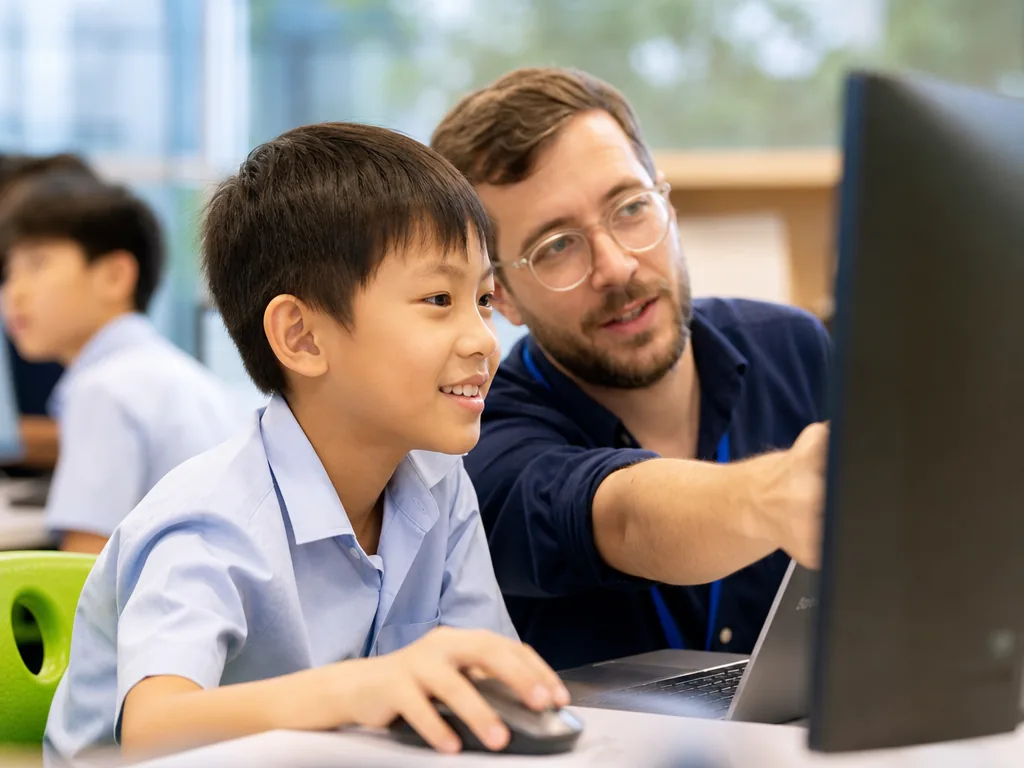
Core Goals of the Coding Curriculum: Fostering Logical Thinking and Innovation
The coding curriculum in Hong Kong’s international primary schools is designed to help students master logical thinking and problem-solving skills through foundational coding knowledge. The main objectives include:
Logical & Algorithmic Thinking
Students learn how to break down problems into smaller steps and solve them through logical reasoning — helping them understand programming structures while sharpening the cognitive abilities they rely on in every other subject.
Creativity & Expression
Coding is about making, not just typing. Students bring their imaginations to life through projects like games, animations, and interactive stories.
Hands-On Problem Solving
Throughout the learning process, students face challenges that require trial, error, debugging, and refinement — building resilience and real-world problem-solving abilities.
Coding isn’t just about writing lines of code — it’s about using those skills to create and express ideas.
Coding Tools and Languages: From Simple to Advanced
To ensure accessibility and engagement, international primary schools in Hong Kong use beginner-friendly coding tools that gradually introduce students to more complex concepts.
Block-Based Programming (e.g. Scratch)
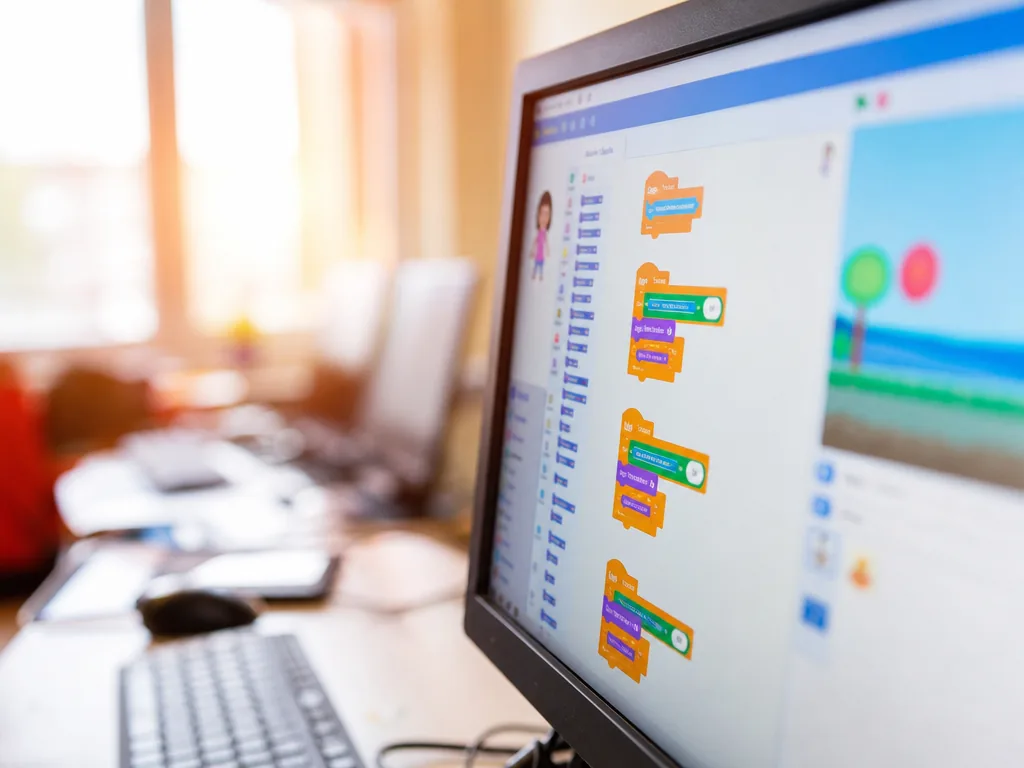
Scratch is a visual programming language designed for children. Instead of typing code, students drag and drop blocks to build programs. This helps them easily grasp programming logic and structure while encouraging creativity through interactive games and animations.
Coding Robots (e.g. Bee-Bot, LEGO Mindstorms)
Many schools incorporate coding robots to make learning interactive and tangible. Bee-Bot helps students understand basic coding commands, while LEGO Mindstorms introduces more advanced concepts like robotics construction and sensor-based programming.
Text-Based Languages (e.g. Python)
As students progress, some schools introduce simple text-based languages like Python. Known for its readability and versatility, Python exposes students to programming fundamentals such as loops, conditionals, and functions.
Creative Projects: Making Learning Fun and Practical
Coding education emphasizes creativity and real-world application. In international schools, students are encouraged to complete hands-on projects that turn their ideas into functional digital products.
Game Design and Development
Many students’ first projects involve designing simple games. This introduces them to key concepts like rules, characters, scenes, and interactivity — all while having fun and learning structured thinking.
Animation and Storytelling
Students also use coding to create animations or digital stories, enhancing both their creativity and storytelling skills. These projects help them understand how code controls character movement, scene changes, and other multimedia elements.
Mini App Development
Older primary students may build simple applications such as calculators or to-do lists. These tasks show students how programming can solve everyday problems and spark innovation.
Collaborative Learning: Teamwork in Coding
Collaborative learning is a vital aspect of modern education, and coding classes provide an ideal setting for students to develop teamwork and communication skills.
- Group Projects——Students often work in small teams to complete coding assignments. This encourages peer learning, idea sharing, and task delegation, while improving collaboration and problem-solving abilities.
- Coding Competitions——Some schools organize coding contests to motivate students, help them showcase their skills, and engage in friendly problem-solving with peers. These events build confidence, creativity, and a healthy sense of competition.
Career-Ready Skills: Preparing for the Future
As coding becomes essential across various industries, learning it in primary school gives students a head start in acquiring valuable career skills.
- Technical Proficiency——Coding boosts students’ technical competencies, preparing them for future roles in fields like engineering, design, data analysis, and software development.
- Innovation and Entrepreneurship——Coding nurtures an entrepreneurial mindset by showing students how to use technology to build products, solve problems, and create new opportunities.
Conclusion: Starting Coding Early Opens a World of Possibilities
In summary, the coding curriculum in Hong Kong’s international primary schools teaches far more than just programming syntax. It develops logical thinking, problem-solving skills, creativity, and collaboration.
With engaging and challenging projects, students not only learn how to code but also how to apply their skills in meaningful ways. As technology continues to evolve, coding will become a cornerstone of education — empowering children to shape the future with creativity, confidence, and code.
Frequently Asked Questions (FAQ)
Q: At what age do students in Hong Kong international primary schools start coding?
Coding is typically introduced in the early primary years through block-based tools such as Scratch and Bee-Bot, with text-based languages like Python phased in for older students as their skills grow.
Q: Do students need any prior coding experience?
No. The curriculum is designed for beginners — it starts with drag-and-drop blocks before moving to typed code, so no prior experience is required.
Q: How does coding benefit subjects other than computing?
Coding strengthens logical reasoning and problem-solving, which transfer directly to mathematics, science, and other academic subjects.
Q: How can parents support coding at home?
Parents can encourage free tools such as Scratch and simple coding robots, celebrate the projects children make, and let them explore through play rather than focusing only on results.
Further Resources & Next Steps
- Official Resources——The Education Bureau’s “Information Technology in Education” initiatives and its STEM / IT-in-education curriculum resources for local and international schools.
- Further Reading——Scratch, developed by the MIT Media Lab, and the free coding courses for primary students on Code.org.
- Parent Tips——Encourage short, playful coding sessions at home with free tools like Scratch; focus on curiosity and problem-solving rather than perfect results.
Note: The information above is for reference only. Please consult professional education institutions for details.
This article was initially drafted and organised with AI. Editor / Professor Chan Kwok-wai; Managing Editor / Kong Yee-leung
Act Now: Find a Tutor / Register as a Tutor
For parents & students: looking for a home or online tutor for this subject? Click the button below to post a free tuition case (subject, level and preferred time) — TutorZone will match you with suitable tutors:
For tutors: do you teach this subject? Click the button below to register for free and receive more suitable cases — you pay only when a match is made: