 Chinese (Traditional)
 Chinese (Simplified)
 English

STEM Curriculum in Hong Kong International Primary Schools: What Do Students Learn?
@keyframes tzPulseO { 0%,100% { box-shadow: 0 0 0 0 rgba(255,140,0,.55); transform: scale(1); } 50% { box-shadow: 0 0 0 14px rgba(255,140,0,0); transform: scale(1.04); } }
@keyframes tzPulseN { 0%,100% { box-shadow: 0 0 0 0 rgba(2,30,64,.5); transform: scale(1); } 50% { box-shadow: 0 0 0 12px rgba(2,30,64,0); transform: scale(1.04); } }
.tz-blink-o { animation: tzPulseO 1.6s ease-in-out infinite; }
.tz-blink-n { animation: tzPulseN 1.6s ease-in-out infinite .35s; }
TUTORZONE SUBJECT GUIDE · STEM CURRICULUM
STEM—Science, Technology, Engineering, and Mathematics—has become a growing global priority, and Hong Kong’s international primary schools are weaving it into education from the earliest years. Here is what students actually learn, and how it builds their creativity and problem-solving skills.
Direct Answer:What does the STEM curriculum include at Hong Kong international primary schools?
STEM education integrates Science, Technology, Engineering, and Mathematics from early years, aiming to build students’ creativity and problem-solv。
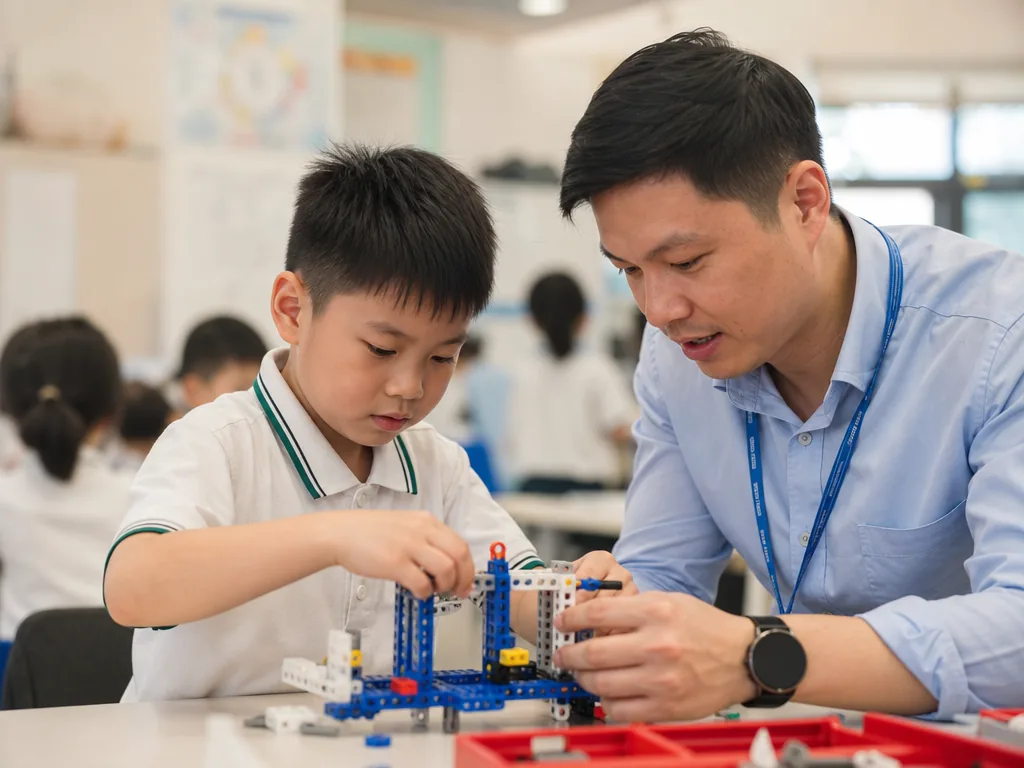
STEM Curriculum: Core Philosophy of STEM: Nurturing Future Innovators and Problem Solvers
As technology rapidly evolves, STEM education—encompassing Science, Technology, Engineering, and Mathematics—has become a growing global priority. Hong Kong’s international schools are no exception. They have actively integrated STEM into primary education to expose students early on to these essential disciplines and cultivate their creativity, problem-solving abilities, and interdisciplinary skills. But what exactly does a STEM curriculum in Hong Kong international primary schools involve? What do students actually learn? Let’s explore.
STEM education is more than teaching math formulas or science experiments—it’s a holistic approach to learning. It sparks curiosity, encourages exploration, and fosters critical and innovative thinking through integrated, cross-disciplinary lessons. In Hong Kong international schools, the STEM curriculum for primary students is designed around these core goals:
Problem-Solving Skills
Students learn to address real-world challenges using scientific inquiry, mathematical reasoning, and technological tools.
Interdisciplinary Learning
STEM emphasizes the connections between subjects, requiring students to integrate knowledge across science, math, technology, and engineering to develop innovative solutions.
Innovation Through Practice
Students are taught to go beyond “why” and focus on “how”—how to turn ideas into tangible outcomes—developing both cognitive and practical innovation skills.
Science: Exploring the Wonders of Nature
Science forms the foundation of the STEM curriculum, helping students understand natural phenomena through hands-on investigation and discovery.
- Experiments and Observation——Students engage in practical activities such as observing plant growth or creating erupting volcano models, learning how to design experiments, analyze results, and draw conclusions.
- Scientific Concepts——Core topics include states of matter, forces and motion, light and sound—equipping students to explain real-life phenomena using scientific reasoning.
- Environment and Ecology——As students progress, they explore topics like climate change, pollution, and sustainability, nurturing environmental awareness and social responsibility.
Technology: Navigating the Digital World
Technology is an integral part of modern education. In Hong Kong’s international primary schools, students acquire foundational digital literacy and learn how to apply tech skills in meaningful ways.
- Basic Coding and Programming——Students often start learning to code with visual programming languages like Scratch or Blockly, designing simple games and animations while developing logical thinking and problem-solving.
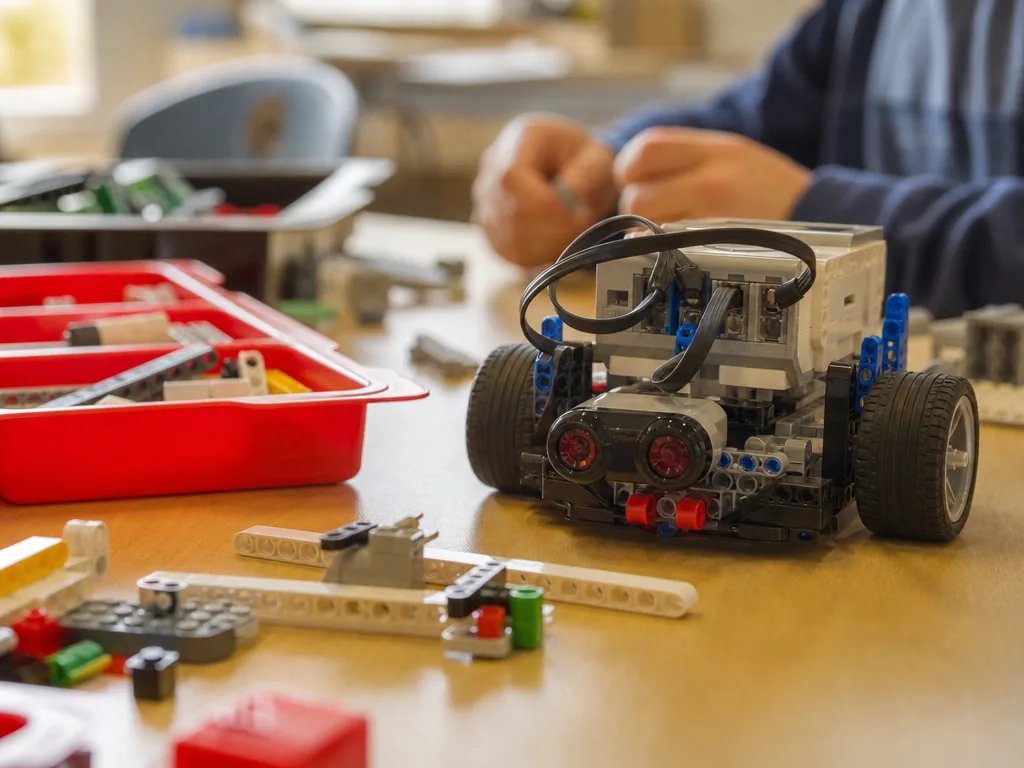
- Robotics——Some schools introduce robotics, allowing students to build and program robots, thereby gaining hands-on experience in engineering concepts and enhancing creativity.
- Digital Tools for Creation——Students use technology to create digital art, music, or videos—developing digital fluency and learning how to express themselves in a tech-driven world.
Engineering: From Design to Execution
Engineering in STEM empowers students to imagine, design, and build. It transforms ideas into real-world applications and deepens understanding of physical and structural principles.
- Design and Construction——Students learn how to plan and build physical models—such as bridges or mechanical devices—gaining insight into mechanics, materials, and structural design.
- Innovation and Iteration——Through continuous testing and refinement, students improve their prototypes. This iterative process hones resilience, creative thinking, and practical problem-solving.
- Teamwork and Communication——Engineering projects typically involve collaboration, helping students strengthen teamwork, leadership, and communication skills in a project-based setting.
Mathematics: The Backbone of Science and Engineering
Mathematics is at the heart of STEM. It equips students with tools to solve problems and analyze data, which are essential in all STEM-related fields.
- Mathematical Reasoning——Students apply mathematical concepts like area, volume, patterns, and data interpretation to real-world problems across science and engineering projects.
- Geometry and Spatial Awareness——Concepts such as shapes, angles, and symmetry help students visualize and solve spatial problems, which supports later learning in physics and architecture.
- Data and Statistics——Students learn how to collect, organize, and analyze data—a crucial skill for interpreting science experiments and evaluating engineering outcomes.
STEM Teaching Methods: Hands-On, Collaborative, and Real-World Focused
STEM teaching in Hong Kong international schools is project-based and experiential. Students move beyond textbook learning to apply knowledge in authentic, real-world contexts.
- Project-Based Learning——Students tackle real-life problems using interdisciplinary approaches. For example, designing an eco-friendly home or creating a simple weather station using sensors.
- Group Work and Collaboration——Students work in teams to brainstorm, build, and reflect—strengthening both interpersonal skills and collaborative problem-solving.
- Challenges and Competitions——Many schools host STEM challenges or competitions where students can test their knowledge, apply creativity, and gain confidence in a fun, competitive environment.
Conclusion: Building the Next Generation of Innovators
In summary, STEM education in Hong Kong’s international primary schools aims to equip students with the critical skills needed for the future—problem-solving, creativity, collaboration, and digital literacy. By engaging with science, technology, engineering, and mathematics through practical and interdisciplinary methods, students are prepared not only for academic success but also for the challenges of the future workforce. In a world driven by innovation, a strong STEM foundation is key to unlocking each child’s potential.
Frequently Asked Questions (FAQ)
Q: At what age do students in Hong Kong international primary schools begin STEM lessons?
STEM is typically introduced from the early primary years, starting with simple hands-on activities such as observing plant growth or playing with visual coding tools like Scratch. As students progress, activities become more structured, covering topics such as states of matter, forces, and basic robotics.
Q: Do children need any prior coding experience to join STEM lessons?
No. Most schools begin with visual programming languages such as Scratch or Blockly, which require no prior coding knowledge. Students develop logical thinking and problem-solving step by step through designing simple games and animations.
Q: How is STEM different from traditional science and maths lessons?
Traditional lessons often teach subjects separately, whereas STEM integrates science, technology, engineering, and mathematics through project-based learning. Students apply knowledge from multiple disciplines at once to solve real-world problems, such as designing an eco-friendly home or building a weather station.
Q: How can parents support STEM learning at home?
Parents can encourage curiosity through everyday activities—cooking to explore measurement, building models to discuss structure, or using free coding apps. Asking open-ended “why” and “how” questions also helps children think like scientists and engineers.
Further Resources & Next Steps
- Official Resources——The Hong Kong Education Bureau and individual international schools publish curriculum guides and STEM programmes for primary students.
- Further Reading——Books and websites on project-based learning, such as Scratch and Blockly tutorials, help families explore coding and engineering at home.
- Parent Tips——Encourage hands-on experimentation at home, support participation in school STEM clubs and competitions, and keep questions open-ended to nurture curiosity.
Note: The information above is for reference only. Please consult professional education institutions for details.
This article was initially drafted and organised with AI. Editor / Professor Chan Kwok-wai; Managing Editor / Kong Yee-leung
Act Now: Find a Tutor / Register as a Tutor
For parents & students: looking for a home or online tutor for this subject? Click the button below to post a free tuition case (subject, level and preferred time) — TutorZone will match you with suitable tutors:
For tutors: do you teach this subject? Click the button below to register for free and receive more suitable cases — you pay only when a match is made: