 Chinese (Traditional)
 Chinese (Simplified)
 English

Hong Kong Primary School “General Studies”
TUTORZONE SUBJECT GUIDE · LOCAL PRIMARY SCHOOL
Hong Kong primary school General Studies (GS) acts as a bridge connecting knowledge and everyday life — integrating science, social studies and humanities to build students’ comprehensive knowledge, life skills and values.
Direct Answer:How does General Studies connect knowledge with life in Hong Kong?
General Studies bridges knowledge and everyday life, integrating science, social studies, and humanities to build knowledge, life skills, and values.
What Is General Studies?
Hong Kong primary school General Studies acts as a bridge connecting knowledge and everyday life. Through diverse teaching methods, it cultivates students’ ability to “learn how to learn” and lays a foundation for subject-based learning in secondary school. The curriculum content is continuously updated to reflect local and global developments and societal needs. The full name of the subject is “General Studies” (abbreviated as GS), and it is one of the core subjects in the primary school curriculum. It integrates science, social studies, and humanities to develop students’ comprehensive knowledge, life skills, and values. The following provides a detailed explanation from various perspectives.
Curriculum Objectives
- Interdisciplinary Integration——combines content from science, history, geography, economics, health, environmental protection, and civic education, breaking traditional subject boundaries.
- Life Application——emphasizes knowledge and skills relevant to daily life, such as safety awareness and basic financial literacy.
- Values Cultivation——builds correct attitudes and values through issue-based inquiry, such as environmental protection and social responsibility.
- Inquiry Spirit——encourages scientific thinking methods like observation, experimentation, and data analysis.
Curriculum Content by Grade Level
Hong Kong primary school General Studies is usually divided into six grade levels, with content progressing year by year. The main areas include:
Lower Grades (Primary 1 to 3)
- Personal and Health——body structure, hygiene habits, nutrition, and emotional management.
- Family and Community——family roles, community facilities, and festival culture (e.g., Mid-Autumn Festival, Chinese New Year).
- Nature and Environment——knowledge of animals and plants, weather changes, basic environmental concepts (e.g., waste sorting).
- Technology and Life——simple tool usage and basic internet safety.
Upper Grades (Primary 4 to 6)
- Scientific Inquiry——mechanics, energy (e.g., solar energy), ecosystems (e.g., food chains).
- Social Issues——Hong Kong history (e.g., colonial period, handover), Chinese culture (e.g., Four Great Inventions), globalization (e.g., trade).
- Civic Education——Basic Law, rule of law, electoral system, international organizations (e.g., United Nations).
- Safety Education——disaster response (e.g., typhoons, fires), anti-fraud skills.
Teaching Methods
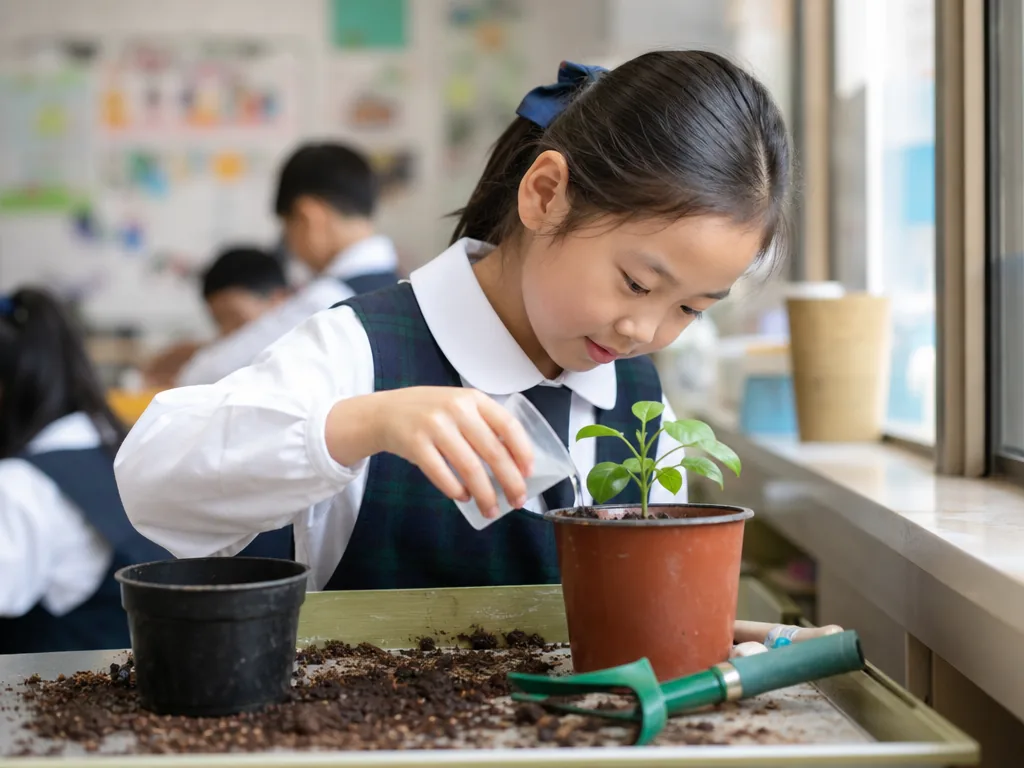
- Activity-based Learning——experiments (e.g., planting), field trips (e.g., visits to museums, wetland parks).
- Project Studies——group research projects (e.g., “Reducing Plastic Waste”) to cultivate critical thinking.
- Technology Integration——using tablets for data collection and creating digital reports.
- Role Play——simulations (e.g., court trials) to understand legal concepts.
Assessment Methods
Assessment in General Studies is deliberately diverse, drawing on several complementary methods:
- Written Tests——multiple choice and short answer questions to test knowledge.
- Practical Assessment——experiment reports, project works (e.g., environmental posters).
- Daily Observation——classroom participation and group cooperation performance.
- School-based Assessment——some schools maintain “growth portfolios” to record long-term student performance.
Connections with Other Subjects
- Science——the natural science parts of General Studies connect with secondary school Science subjects.
- Social Education——covers Hong Kong, China, and world issues, laying the foundation for secondary Geography and History.
- Moral Education——overlaps with “Moral and Civic Education” (e.g., life education).
Curriculum Reform and Features
- STEM Education——in recent years, there is increased integration of science, technology, engineering, and mathematics, such as designing simple mechanical models.
- National Education——increased understanding of national development (e.g., aerospace technology, Belt and Road Initiative) with an emphasis on national identity.
- School-based Flexibility——schools can adapt content according to their characteristics (e.g., rural schools may add ecological conservation topics).
Teaching Materials and Resources
- Textbooks——published according to Education Bureau guidelines and require approval.
- Online Resources——interactive learning platforms provided by the Education Bureau (e.g., “Hong Kong Education City”).
- Community Cooperation——activities co-organized with NGOs (e.g., visits to power plants, police stations).
Significance for Students
General Studies not only imparts knowledge but also emphasizes the cultivation of:
- Core Competencies——communication and collaboration, creative thinking, information literacy.
- Social Participation——understanding social operation and becoming active citizens.
- Global Perspective——awareness of international issues (e.g., climate change).
Frequently Asked Questions (FAQ)
Q: What exactly does General Studies cover?
GS integrates science, social studies and humanities, spanning personal health, family and community, nature and environment, and technology across six grade levels.
Q: How is General Studies different from separate Science or History subjects?
Rather than teaching disciplines separately, GS blends them around everyday topics so students learn through issues and real-life contexts, preparing them for subject-based study in secondary school.
Q: How are students assessed in General Studies?
Assessment is diverse — written tests, practical tasks such as experiment reports and project work, daily observation of participation and cooperation, and, in some schools, growth portfolios.
Q: How can parents support their child’s General Studies learning at home?
Encourage observation and questioning in daily life, visit museums and wetland parks, discuss news and social issues, and reinforce basic safety awareness and financial habits.
Further Resources & Next Steps
- Official Resources——the Hong Kong Education Bureau (EDB) General Studies curriculum guidelines and its official website (www.edb.gov.hk).
- Further Reading——EDB-approved textbooks and interactive learning platforms such as “Hong Kong Education City”.
- Parent Tips——turn everyday outings and conversations into learning moments, and practise safety awareness and basic financial habits at home.
Note: The information above is for reference only. Please consult professional education institutions for details.
This article was initially drafted and organised with AI. Editor / Professor Chan Kwok-wai; Managing Editor / Kong Yee-leung
Act Now: Find a Tutor / Register as a Tutor
For parents & students: looking for a home or online tutor for this subject? Click the button below to post a free tuition case (subject, level and preferred time) — TutorZone will match you with suitable tutors:
For tutors: do you teach this subject? Click the button below to register for free and receive more suitable cases — you pay only when a match is made: