 Chinese (Traditional)
 Chinese (Simplified)
 English

[2024 Edition] Hong Kong Primary School Olympiad Math Training Guide
@keyframes tzPulseO { 0%,100% { box-shadow: 0 0 0 0 rgba(255,140,0,.55); transform: scale(1); } 50% { box-shadow: 0 0 0 14px rgba(255,140,0,0); transform: scale(1.04); } }
@keyframes tzPulseN { 0%,100% { box-shadow: 0 0 0 0 rgba(2,30,64,.5); transform: scale(1); } 50% { box-shadow: 0 0 0 12px rgba(2,30,64,0); transform: scale(1.04); } }
.tz-blink-o { animation: tzPulseO 1.6s ease-in-out infinite; }
.tz-blink-n { animation: tzPulseN 1.6s ease-in-out infinite .35s; }
TUTORZONE SUBJECT GUIDE · Hong Kong Primary School Olympiad Math Training
Mathematical Olympiad is no longer just for gifted students in Hong Kong — it has become a powerful way to develop logical thinking, problem-solving skills, and mental flexibility in young learners. From logical thinking to competition skills, this guide unlocks your child’s mathematical mind.
Direct Answer:What is Hong Kong Primary School Olympiad Math training?
It is a guide to developing logical thinking, problem-solving skills, and mental flexibility in young learners through mathematical olympiad training.
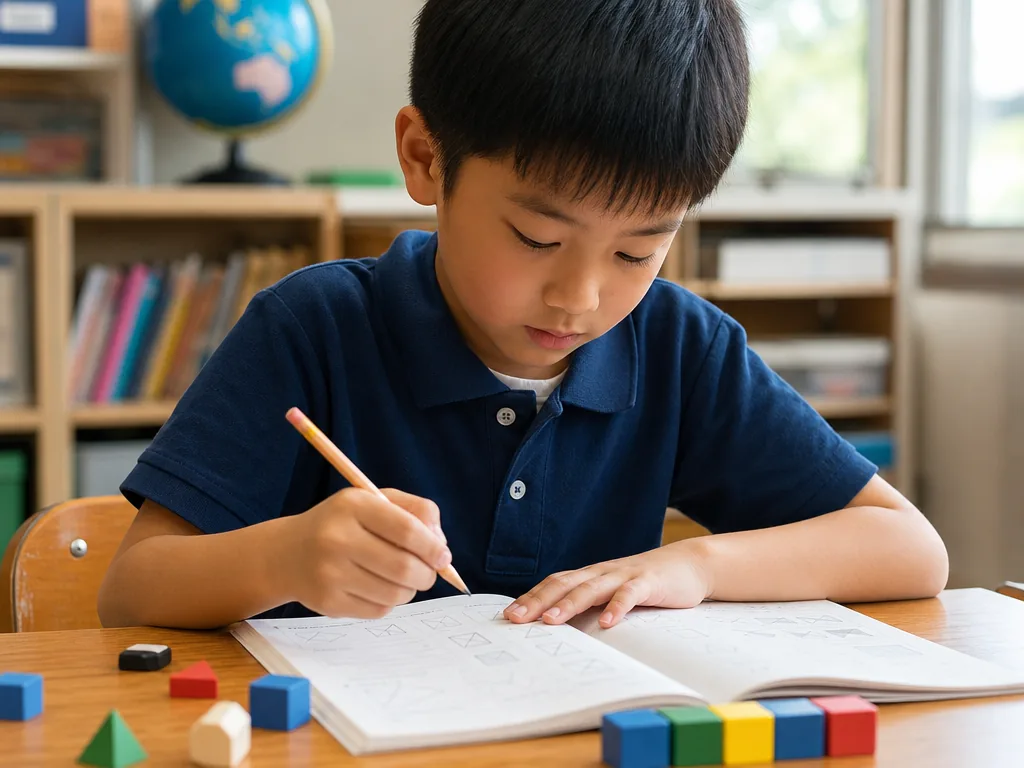
Hong Kong Primary School Olympiad Math Training: Getting Started: What This Guide Covers
In Hong Kong, Mathematical Olympiad (commonly known as “Olympiad Math”) is no longer just for gifted students. It has become a powerful tool for developing logical thinking, problem-solving skills, and mental flexibility in young learners.
This comprehensive guide will break down:
- What Olympiad Math really is——the definition and the mindset behind it.
- Why it’s popular in Hong Kong primary schools——five key reasons that matter.
- How parents can help their children get started——practical at-home training ideas.
- Key stages of training——from foundation to competition readiness.
- Top resources and competition tips——books, platforms, and past papers.
Let’s dive into the world of advanced math thinking for kids!
What Is Olympiad Math?
Olympiad Math refers to non-routine, advanced-level math problems designed to stretch a student’s thinking beyond the standard school curriculum. Instead of memorizing formulas, children learn to:
- Think critically and creatively
- Spot hidden patterns
- Break complex problems into manageable steps
In Hong Kong, Olympiad Math is often introduced as early as Primary 1 (around age 6) through after-school classes, enrichment centres, or private coaching.
Why Is Olympiad Math So Popular in Hong Kong?
- Train Logical Thinking——Olympiad problems emphasize logic, deduction, and analytical reasoning.
- Build Problem-Solving Skills——Children learn to approach challenges from different angles, key to lifelong learning.
- Enhance School Performance——Students trained in Olympiad thinking often do better in regular school math.
- Strengthen Elite School Applications——Top local and international schools in Hong Kong value math competition records.
- Prepare for Competitions——Prestigious contests like the Hong Kong Primary Mathematics Olympiad (HKPMO), SASMO, and APMOPS offer platforms for high-achieving students.
Core Thinking Skills Olympiad Math Develops
| Skill Type | Examples | Real-Life Applications |
|---|---|---|
| Logical Reasoning | Pattern recognition, deduction | Programming, strategy games |
| Spatial Thinking | Visual puzzles, geometry logic | Architecture, design |
| Number Sense | Mental math, estimation, operations | Quick calculations, budgeting |
| Combinatorics | Arrangements, probability, permutations | Event planning, decision making |
| Word Problem Solving | Complex multi-step scenarios | Real-life problem analysis |
Olympiad Training by Age and Level
Primary 1–2 (Ages 6–8) — Foundation Stage
Focus: Building number sense, basic logic, sequencing.
Sample Topics:
- Patterns and sequences
- Odd/even number puzzles
- Simple reasoning problems
Recommended Activities:
- Math board games
- Tangrams and logic blocks
- “Find the mistake” puzzles
Primary 3–4 (Ages 8–10) — Development Stage
Focus: Multi-step problems, abstract thinking.
Sample Topics:
- Age problems
- Logic grid puzzles
- Visual-spatial geometry
Training Tips:
- Use past Olympiad papers
- Time-limited challenge games
Primary 5–6 (Ages 10–12) — Competition Stage
Focus: Competition readiness, speed + accuracy.
Sample Topics:
- Number theory
- Permutations and combinations
- Advanced logic deduction
Popular Exams:
- HKPMO (Hong Kong Primary Mathematics Olympiad)
- SASMO (Singapore and Asian Schools Math Olympiad)
- APMOPS (Asia-Pacific Mathematical Olympiad for Primary Schools)
How to Train Olympiad Thinking at Home
Even if you’re not a math expert, you can help your child train their brain:
🧠 Daily Logic Questions
- Ask “why” and “how” questions: “Why is 0 an even number?”
- Try apps like Math Playground, Prodigy, or Brilliant Kids
🧩 Puzzle Time
- Sudoku, Kakuro, tangrams, and other logic puzzles
- Play brain teasers as family fun
📝 Practice with Purpose
- Focus on thinking steps, not just the correct answer
- Encourage “explain your thinking” out loud
🕒 20-Minute Rule
- Just 20 minutes of focused thinking a day can build lasting skills
- Consistency matters more than cramming
Best Resources for Olympiad Math in Hong Kong
| Type | Resource Name | Description |
|---|---|---|
| Books | Olympiad Math for Primary Students | Progressive topics with detailed solutions |
| Online Platforms | Beestar, Art of Problem Solving | Interactive problem sets & video lessons |
| Coaching Centers | E.g., MathConcept, POP Math, iSmart | Structured courses and competition training |
| Past Papers | HKPMO & APMOPS archives | Essential for real-world practice |
Final Thoughts: Olympiad Math Is About the Mindset
Olympiad training isn’t just about preparing your child for contests — it’s about nurturing a problem-solving mindset that applies to school, careers, and life. With curiosity, perseverance, and the right resources, every child has the potential to become a confident math thinker.
🎯 Start small, stay consistent, and celebrate every “aha!” moment.
Frequently Asked Questions (FAQ)
Q: At what age should my child start Olympiad math training?
In Hong Kong, Olympiad math is often introduced as early as Primary 1 (around age 6) through after-school classes, enrichment centres, or private coaching. Starting early works well as long as the focus stays on curiosity and enjoyment rather than pressure.
Q: Does my child need to be naturally gifted at math to benefit?
Not at all. Olympiad training develops logical thinking and problem-solving skills that help every learner, not just gifted students. With curiosity, perseverance, and consistent practice, any child can grow into a confident math thinker.
Q: How much time should we spend on practice each day?
Just 20 minutes of focused thinking a day can build lasting skills. Consistency matters more than cramming, so a short daily routine is more effective than occasional long sessions.
Q: Which competitions should a Hong Kong primary student aim for?
Popular contests include HKPMO (Hong Kong Primary Mathematics Olympiad), SASMO (Singapore and Asian Schools Math Olympiad), and APMOPS (Asia-Pacific Mathematical Olympiad for Primary Schools). These offer strong platforms for high-achieving students.
Further Resources & Next Steps
- Official Resources——Check the Education Bureau (EDB) of Hong Kong and the official bodies for HKPMO, SASMO, and APMOPS for syllabus details and registration.
- Further Reading——Start with the book Olympiad Math for Primary Students and the online platforms Beestar and Art of Problem Solving for structured practice.
- Parent Tips——Keep a short, consistent 20-minute daily routine and focus on thinking steps rather than only the correct answer.
Note: The information above is for reference only. Please consult professional education institutions for details.
This article was initially drafted and organised with AI. Editor / Professor Chan Kwok-wai; Managing Editor / Kong Yee-leung
Act Now: Find a Tutor / Register as a Tutor
For parents & students: looking for a home or online tutor for this subject? Click the button below to post a free tuition case (subject, level and preferred time) — TutorZone will match you with suitable tutors:
For tutors: do you teach this subject? Click the button below to register for free and receive more suitable cases — you pay only when a match is made: