 Chinese (Traditional)
 Chinese (Simplified)
 English


Overview of the Hong Kong Primary School English Language Curriculum
@keyframes tzPulseO { 0%,100% { box-shadow: 0 0 0 0 rgba(255,140,0,.55); transform: scale(1); } 50% { box-shadow: 0 0 0 14px rgba(255,140,0,0); transform: scale(1.04); } }
@keyframes tzPulseN { 0%,100% { box-shadow: 0 0 0 0 rgba(2,30,64,.5); transform: scale(1); } 50% { box-shadow: 0 0 0 12px rgba(2,30,64,0); transform: scale(1.04); } }
.tz-blink-o { animation: tzPulseO 1.6s ease-in-out infinite; }
.tz-blink-n { animation: tzPulseN 1.6s ease-in-out infinite .35s; }
TUTORZONE SUBJECT GUIDE · HK Primary School English Curriculum
HK Primary School English Curriculum: English is a core subject in every Hong Kong primary school, structured progressively around the four skills of listening, speaking, reading, and writing. This guide walks through the curriculum’s objectives, content, medium of instruction, assessment, and the way it prepares students for secondary school and the DSE.
Direct Answer:How is English taught in Hong Kong primary schools?
English is structured progressively around listening, speaking, reading, and writing, with clear objectives, content, and assessment.
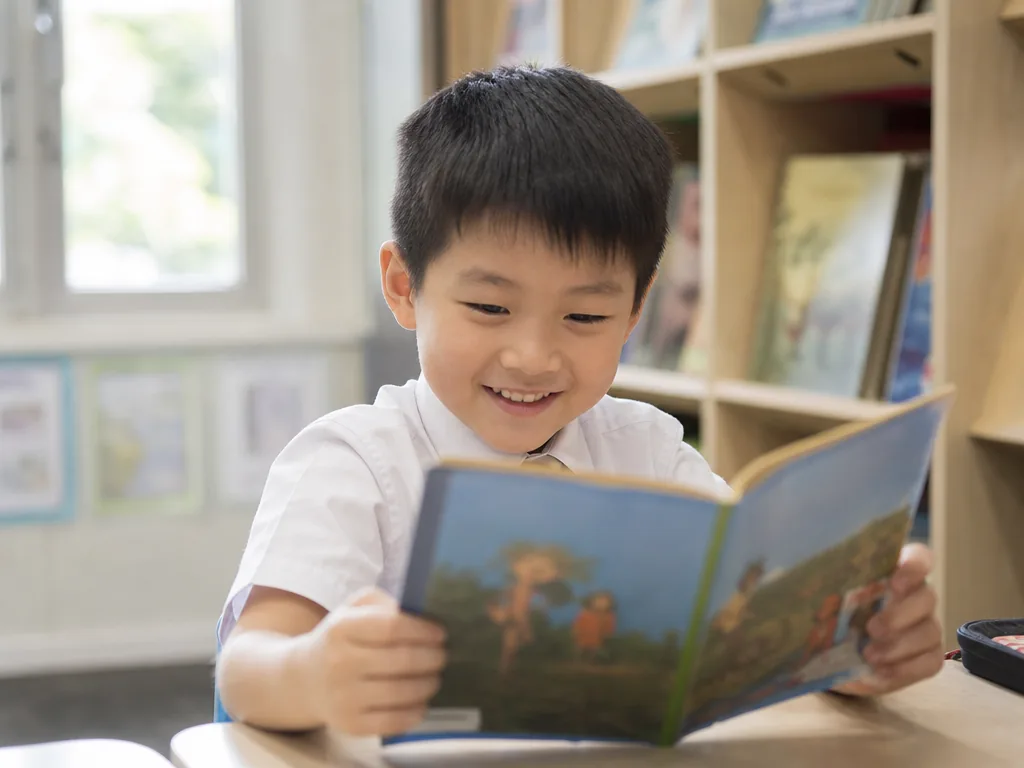
HK Primary School English Curriculum: Curriculum Objectives
The English Language subject sets out four clear goals that shape everything students learn from Primary 1 to Primary 6.
Language Proficiency
Strengthen English communication skills, particularly in listening and speaking, to avoid passive “silent English” learning.
Reading & Writing Skills
Encourage reading English books and writing various text types such as stories and letters.
Global Perspective
Foster international awareness by learning English through exposure to global cultures.
Smooth Transition to Secondary School
Equip students for the DSE English Language exam in secondary school.
Curriculum Content
The curriculum is organized around the Four Skills — Reading, Writing, Listening, and Speaking — and includes grammar and vocabulary building.
Reading
Text Types — lessons use textbooks and graded readers, covering:
- Stories — fairy tales and fables.
- Informational texts — animals, science, and technology.
- Poems and rhymes — to develop phonemic awareness.
Reading Strategies — includes skimming and scanning techniques.
Writing
Basic Writing
- Lower Primary — copying, sentence completion, and short sentence writing.
- Upper Primary — paragraph writing, picture composition, letters, and diaries.
Advanced Writing (Primary 5–6):
- Narrative writing
- Descriptive writing
- Argumentative writing — basic introduction in P6.
Listening
Class Activities — listening to audio and answering questions based on:
- Dialogues — e.g., shopping, asking directions.
- Story comprehension
- Following instructions — e.g., “Draw a circle”.
Pronunciation Practice — focus on distinguishing British and American accents, as well as linking sounds.
Speaking
Speaking Practice
- Lower Primary — simple Q&A (e.g., “What’s your name?”).
- Upper Primary — role play and group discussions.
Presentation Skills — older students are trained to give short presentations.
Grammar & Vocabulary
Grammar
- Lower Primary — verb “to be”, present simple tense.
- Upper Primary — past and future tenses, comparatives.
Vocabulary — learn 10–20 new words per week, with regular practice for consolidation.
Medium of Instruction
- English-Medium Teaching — English is the mandatory language of instruction for the subject, as required by the Education Bureau (EDB).
- Supportive Strategies — some schools may use limited Cantonese explanations in lower primary but gradually shift to full English; teachers also use TPR (Total Physical Response) with actions and visuals to aid comprehension.
Assessment Methods
School-Based Assessments
Tests and Exams
- Reading comprehension — from both textbook and external texts.
- Writing — thematic compositions and practical writing like emails.
- Listening — audio-based questions.
- Speaking — reading aloud, picture description, and group interaction.
Continuous Assessment — project work and class participation.
Territory-Wide Assessments
- TSA (Territory-wide System Assessment) — required for Primary 3 and Primary 6 students to evaluate English proficiency.
- International Exams — some schools encourage students to take Cambridge YLE tests (Starters, Movers, Flyers).
Teaching Materials & Resources
Textbooks (approved by the EDB)
- Longman Express — Pearson.
- New Magic — Oxford University Press.
- PLPR-W — Educational Publishing House.
Supplementary Resources
- Graded readers — e.g., Oxford Reading Tree.
- Online platforms — e.g., Raz-Kids, British Council LearnEnglish Kids.
- Grammar workbooks — e.g., Grammar in Use – Elementary Level.
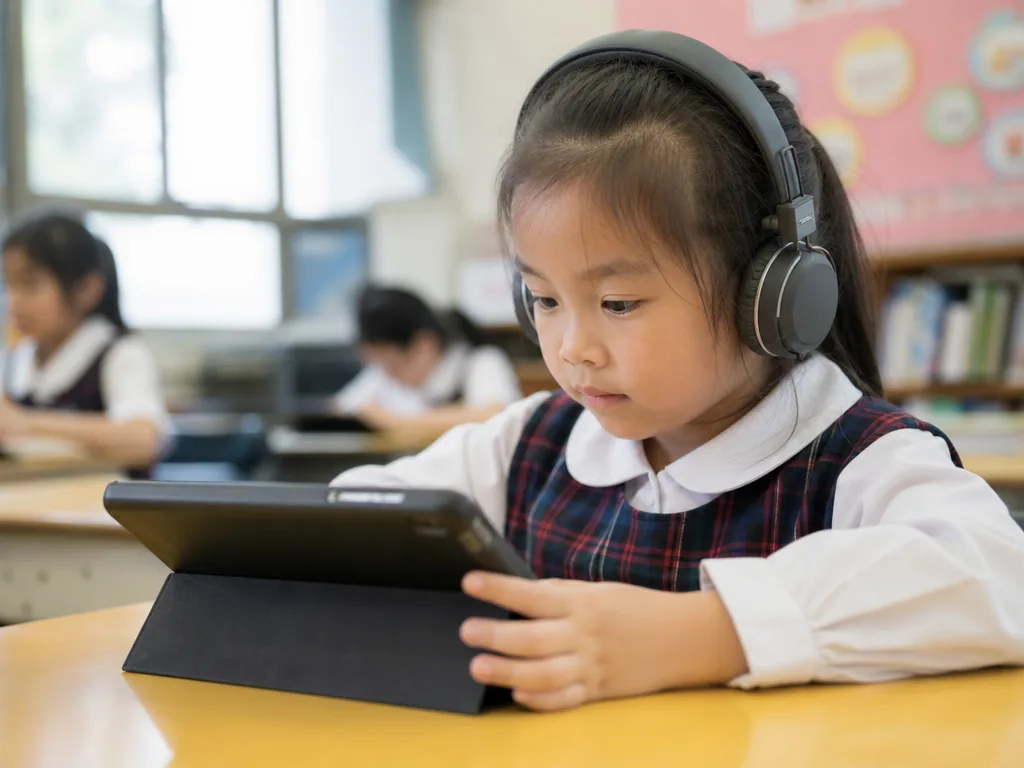
Bridging to Secondary School
The primary curriculum lays the foundation for secondary school English, including:
- Academic English — e.g., essay writing.
- Literature appreciation — e.g., selected Shakespeare passages.
- Critical reading — e.g., analyzing news or advertisements.
Recent Developments & Challenges
Focus on Listening and Speaking
- The English Enhancement Scheme promotes more NETs (Native-speaking English Teachers) in schools.
- Introduction of phonics instruction to improve pronunciation and spelling.
Digital Learning
- Use of interactive apps (e.g., Nearpod) and online reading platforms (e.g., Epic!).
Parental Concerns
- Widening language gap — some students fall behind due to a lack of English exposure at home.
- Cram school culture — many students attend after-school English classes, including Kumon and Cambridge English programs.
Frequently Asked Questions (FAQ)
Q: Is English the mandatory medium of instruction in Hong Kong primary schools?
Yes. The Education Bureau (EDB) requires English to be the language of instruction for the subject, though some schools may use limited Cantonese explanations in lower primary before shifting to full English.
Q: What is the TSA and which year levels take it?
The Territory-wide System Assessment (TSA) is a territory-wide assessment of English proficiency that Primary 3 and Primary 6 students are required to take.
Q: How many new English words should my child learn each week?
The curriculum suggests learning 10–20 new words per week, with regular practice for consolidation. Frequent reading and daily exposure help these words stick.
Q: Do primary schools encourage international exams like Cambridge YLE?
Some schools encourage students to take Cambridge YLE tests (Starters, Movers, Flyers) as a benchmark of progress alongside the school-based and TSA assessments.
Further Resources & Next Steps
- Official Resources — Education Bureau (EDB) website: www.edb.gov.hk.
- Further Reading — Oxford Reading Tree graded readers and Longman Express (Pearson) are widely used in local classrooms.
- Parent Tips — build a daily English habit at home with graded readers and online platforms such as Raz-Kids and British Council LearnEnglish Kids.
Note: The information above is for reference only. Please consult professional education institutions for details.
This article was initially drafted and organised with AI. Editor / Professor Chan Kwok-wai; Managing Editor / Kong Yee-leung
Act Now: Find a Tutor / Register as a Tutor
For parents & students: looking for a home or online tutor for this subject? Click the button below to post a free tuition case (subject, level and preferred time) — TutorZone will match you with suitable tutors:
For tutors: do you teach this subject? Click the button below to register for free and receive more suitable cases — you pay only when a match is made: