 Chinese (Traditional)
 Chinese (Simplified)
 English

Visual Arts in Hong Kong Primary Schools: A Complete Parent Guide
@keyframes tzPulseO { 0%,100% { box-shadow: 0 0 0 0 rgba(255,140,0,.55); transform: scale(1); } 50% { box-shadow: 0 0 0 14px rgba(255,140,0,0); transform: scale(1.04); } }
@keyframes tzPulseN { 0%,100% { box-shadow: 0 0 0 0 rgba(2,30,64,.5); transform: scale(1); } 50% { box-shadow: 0 0 0 12px rgba(2,30,64,0); transform: scale(1.04); } }
.tz-blink-o { animation: tzPulseO 1.6s ease-in-out infinite; }
.tz-blink-n { animation: tzPulseN 1.6s ease-in-out infinite .35s; }
TUTORZONE SUBJECT GUIDE · Visual Arts in Hong Kong Primary Schools
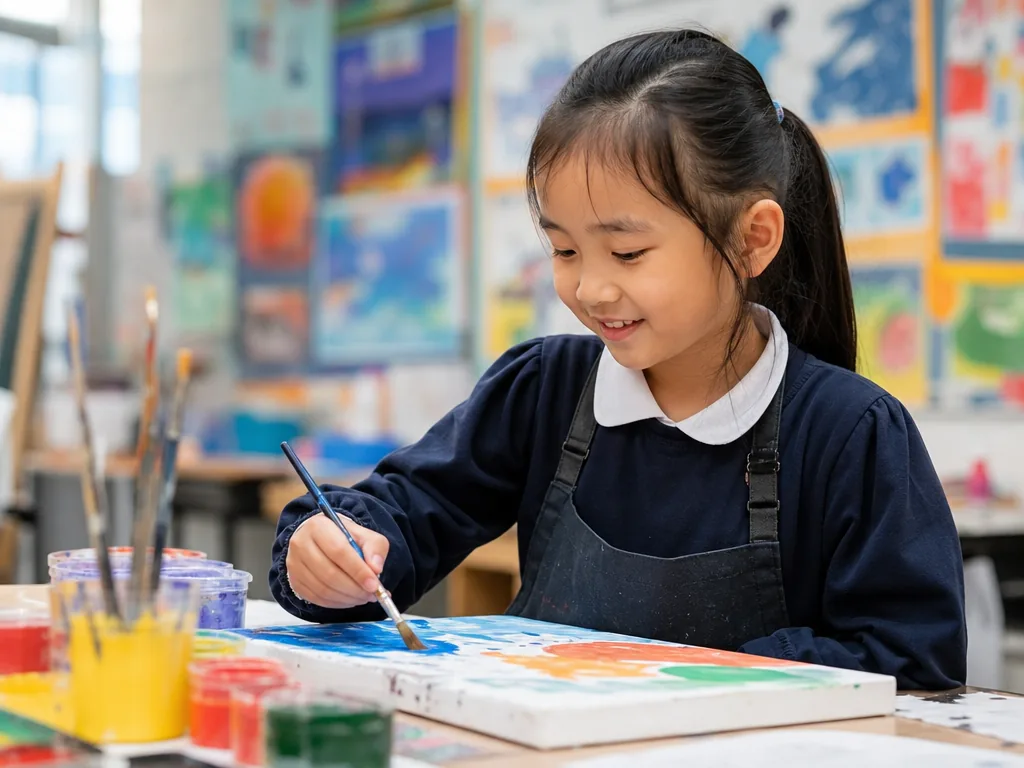
Visual Arts (VA) is a core subject under the Arts Education Key Learning Area in Hong Kong’s primary curriculum. It is not about training professional artists, but rather nurturing creativity, visual literacy, and cultural appreciation through the processes of art creation and art appreciation.
Direct Answer:What is the role of Visual Arts in Hong Kong primary schools?
Visual Arts is a core subject nurturing creativity, visual literacy, and cultural appreciation through art creation and appreciation.
Visual Arts in Hong Kong Primary Schools: Subject Goals and Positioning
The Visual Arts curriculum aims to:
Develop Creativity and Aesthetic Awareness
Children learn to notice and respond to the world around them through making and looking.
Enhance Cultural Understanding
Including Chinese and multicultural perspectives.
Foster Emotional Expression and Personal Values
Art gives children a way to express feelings and reflect their own values.
Build a Foundation
For Junior Secondary Visual Arts and the DSE elective.
Curriculum Structure: The Three Learning Strands
The curriculum is organized around three interconnected learning strands.
Art MakingLearning Strand 1
Art media types:
- 2D Art — drawing (watercolour, crayons), printmaking, collage
- 3D Art — clay modeling, paper sculpture, recycled-material installations
- Digital Art — simple iPad drawing apps, photography
Sample themes:
- Lower Primary: “My Pet”, “Festival Crafts” (e.g. Mid-Autumn lanterns)
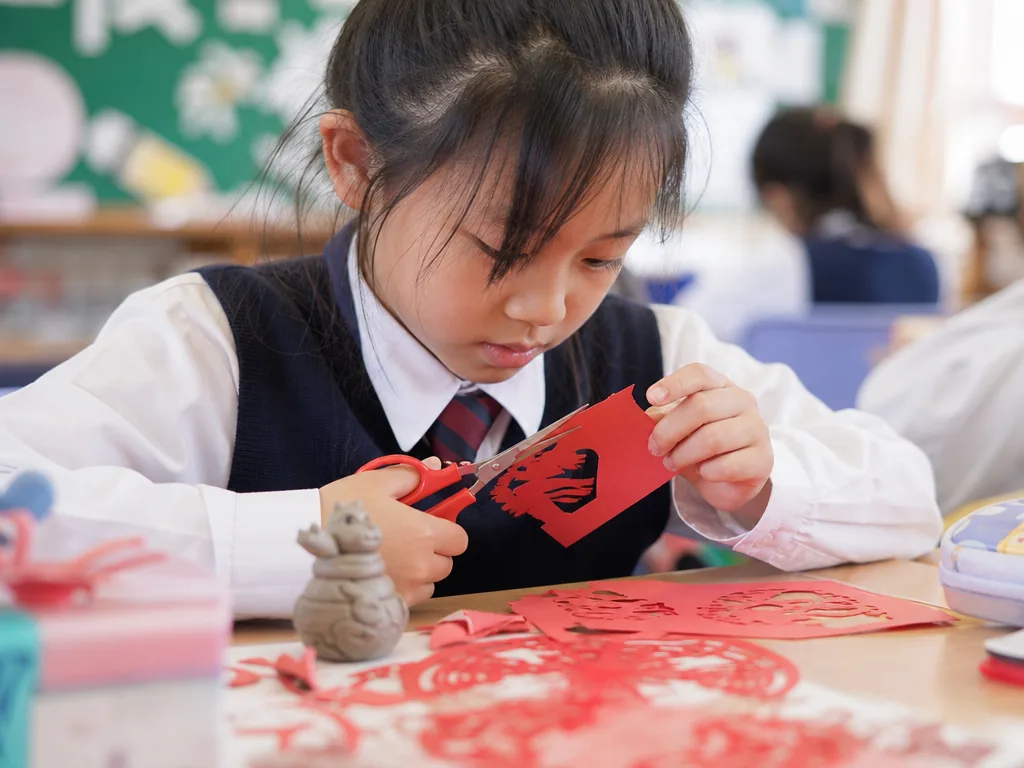
- Upper Primary: “Environmental Issues”, “Chinese Paper-cutting and Heritage”
Art AppreciationLearning Strand 2
Art elements: Students learn to analyze line, color, texture, and composition. For example, “Why did Van Gogh use swirling lines in The Starry Night?”
Cultural and artist exposure:
- Western Art — Vincent van Gogh, Picasso
- Chinese Art — Qi Baishi, calligraphy traditions
- Local Art — Hong Kong illustrators (e.g. Din Dong)
Learning experiences: Visits to museums like M+ and the Hong Kong Museum of Art are encouraged.
Art and LifeLearning Strand 3
- Design Applications — greeting card designs, poster making
- Cross-curricular Projects — collaborating with General Studies (e.g. 3D dinosaur models)
Teaching Features
- Inquiry-Based Learning — tactile exploration (e.g. fabrics, wood, metal) sparks ideas
- School-based Curriculum — e.g. campus mural projects
- STEAM Integration — combines tech (3D pens), math (symmetrical patterns)
Assessment Approach
| Assessment Type | Focus Areas |
|---|---|
| Process-Based | Creativity, techniques, participation in making art |
| Student Portfolios | Sketches, reflection journals, progress documentation |
| Final Products | Display at school exhibitions or public competitions like the “HK Children’s Drawing Contest” |
Emphasis is on individual expression and artistic growth, not technical perfection.
Learning Materials and Resources
- No official textbooks; units are teacher-designed
- Basic Tools — paper, paint, soft clay
- Advanced Tools (in some schools) — printmaking kits, digital tablets
- Community Resources — school workshops with the Art Promotion Office
Trends and Challenges
- Digital Integration — AR tools to explore virtual art galleries
- Cultural Focus — growing emphasis on Chinese art (e.g. ink painting, ceramics)
- Inequality in Resources — not all schools can afford space or materials for sculpture
Home Support for Art Learning
How parents can help:
- Do crafts together — holiday DIY (e.g. Dragon Boat Festival sachets), nature collages
- Visit free exhibitions — using the Museum Pass
- Respect originality — avoid imposing adult standards like “make it realistic”
- Celebrate effort, not outcome!
Educational Value and the 2017 Curriculum Update
Visual Arts is one of the few subjects that focuses on right-brain development in the Hong Kong primary system. It provides:
- A non-academic platform for student expression
- A nurturing ground for future creative thinkers and designers
- Vital support for whole-person development, especially emotionally and culturally
In 2017, the Hong Kong Education Bureau updated its Arts Education Curriculum Guide, emphasizing a balance between art creation and appreciation, and recommending 1–2 Visual Arts lessons per week (each 35–40 minutes).
Frequently Asked Questions (FAQ)
Q: What is the Visual Arts subject in Hong Kong primary schools?
Visual Arts (VA) is a core subject under the Arts Education Key Learning Area. It develops creativity, visual literacy, and cultural appreciation through art creation and art appreciation — rather than training professional artists.
Q: How is Visual Arts assessed?
Assessment is process-based, focusing on creativity, techniques, and participation, and is supported by student portfolios and final products shown at school exhibitions or public competitions.
Q: How can I prepare my child for children’s art competitions?
Encourage regular, open-ended practice, keep a portfolio of sketches and reflections, and enter school exhibitions or public events such as the “HK Children’s Drawing Contest” — while keeping the emphasis on expression and enjoyment rather than winning.
Q: What are the best home art activities for kids?
Holiday DIY such as Dragon Boat Festival sachets and Mid-Autumn lanterns, nature collages, watercolour drawing, and simple crafts done together; free exhibition visits using the Museum Pass also spark inspiration.
Q: How can I improve my child’s creativity through art?
Offer varied materials and time for open-ended making, ask questions about their choices, avoid adult standards such as “make it realistic”, and celebrate effort and ideas rather than the final result.
Further Resources & Next Steps
- Official Resources——Hong Kong Education Bureau (EDB) Arts Education page at edb.gov.hk, and the Art Promotion Office for community workshops.
- Further Reading——Visit M+ and the Hong Kong Museum of Art, and explore public events such as the “HK Children’s Drawing Contest”.
- Parent Tips——Keep basic tools (paper, paint, soft clay) at home and pair craft time with festival traditions such as Mid-Autumn lanterns and Dragon Boat Festival sachets.
Note: The information above is for reference only. Please consult professional education institutions for details.
This article was initially drafted and organised with AI. Editor / Professor Chan Kwok-wai; Managing Editor / Kong Yee-leung
Act Now: Find a Tutor / Register as a Tutor
For parents & students: looking for a home or online tutor for this subject? Click the button below to post a free tuition case (subject, level and preferred time) — TutorZone will match you with suitable tutors:
For tutors: do you teach this subject? Click the button below to register for free and receive more suitable cases — you pay only when a match is made: