
 Chinese (Traditional)
 Chinese (Simplified)
 English



A-level Global Perspectives: A Comprehensive Guide to Understanding Global Issues and Developing Critical Thinking Skills
TUTORZONE SUBJECT GUIDE · A-LEVELS
A-level Global Perspectives is an interdisciplinary course that helps students understand major global issues from a broad perspective and develop in-depth critical thinking within diverse cultural contexts. Focusing on globalization, sustainability, and social justice, it builds the practical problem-solving skills students need to become responsible global citizens.
Direct Answer:What is A-level Global Perspectives?
An interdisciplinary A-level course exploring global issues like globalization, sustainability, and social justice while building critical thinking。
Curriculum Overview
The curriculum for A-level Global Perspectives is highly flexible, covering various thematic areas that align with real-world challenges. Students learn to analyze global issues from different viewpoints and use critical thinking to develop solutions. The course consists of the following key components:
1. Identifying and Analyzing Global Issues
Students learn to recognize and analyze the key global issues facing the world today, including:
- Environmental Issues — Climate change, resource depletion, biodiversity loss.
- Economic Issues — Income inequality, global trade, international financial crises.
- Social Issues — Gender inequality, human rights, educational disparities.
- Political and Conflict Issues — Geopolitics, international conflicts, migration challenges.
- Public Health Issues — Disease control, public health policies.
2. Developing a Global Perspective
This component emphasizes the importance of understanding global perspectives and teaches students how to view problems from multiple angles. Students learn how to:
- Analyze Problems from Multiple Angles — Understand global issues from cultural, economic, social, and political perspectives, recognizing that different countries adopt unique strategies when addressing the same issue.
- Cross-Cultural Understanding and Communication — Appreciate diverse cultural backgrounds and develop effective communication skills with people from different cultures.
- Assess Global Impact — Analyze how global issues affect various nations, social groups, and individuals, and explore possible solutions.
3. Critical Thinking and Problem-Solving
Students apply critical thinking to solve current global issues by:
- Analysis and Evaluation — Learn how to systematically assess the root causes of issues and evaluate possible solutions.
- Action Plans — Based on their understanding of issues, students develop practical action plans and assess their feasibility.
- Questioning and Reflection — Students are encouraged to challenge existing viewpoints and solutions, fostering innovation and sustainability.
4. Collaboration and Teamwork
This course encourages teamwork, which not only enhances collaboration skills but also deepens students’ understanding of diversity and global interconnectedness.
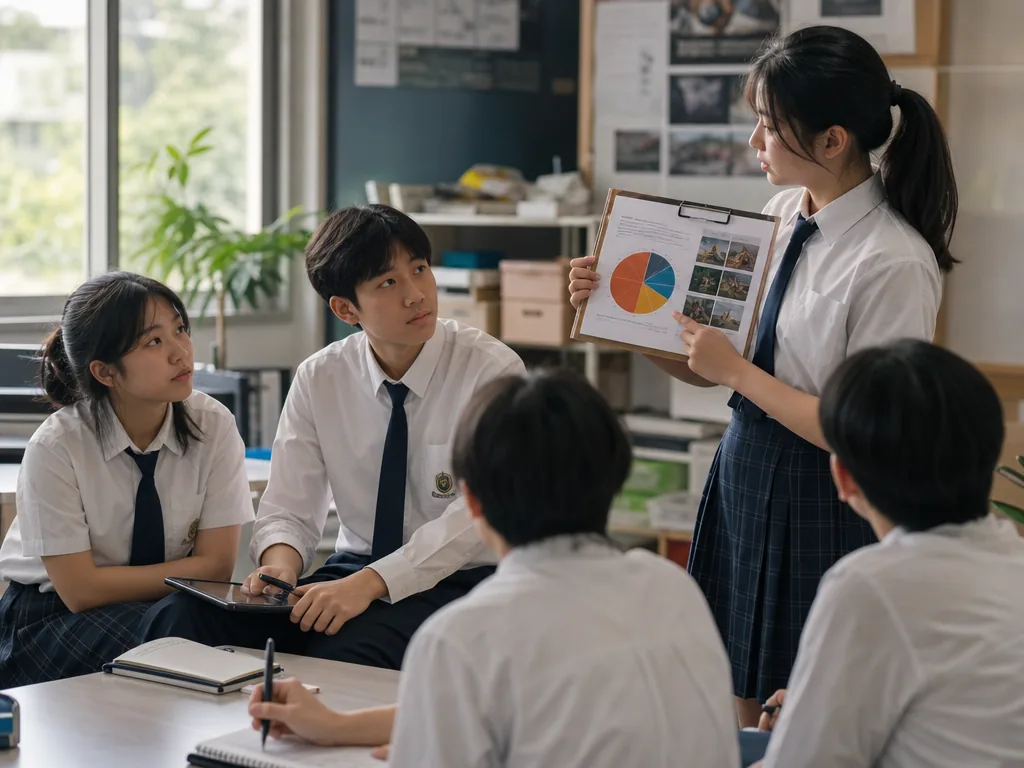
- Group Discussions and Collaborative Research — Students collaborate on research projects and discuss global issues and solutions.
- Interdisciplinary Collaboration — Emphasizing interdisciplinary learning, students combine knowledge from various fields to address complex global problems.
5. Individual Research Project
Students choose a global issue for in-depth individual research, culminating in a report or presentation. This project enhances independent thinking and research skills.
Learning Objectives
The primary learning objectives of the A-level Global Perspectives course are to:
Enhance Global Awareness
Help students understand global challenges and view problems from various perspectives.
Develop Critical Thinking
Improve students’ ability to critically analyze, question, and solve problems.
Improve Problem-Solving Skills
Teach students how to develop feasible solutions and create effective action plans from a global perspective.
Foster Cross-Cultural Understanding
Cultivate respect and understanding of different cultural, social, and economic backgrounds to collaborate effectively with people from diverse settings.
Encourage Leadership and Collaboration
Students learn leadership and teamwork skills, working together to achieve common goals.
Assessment Methods
A-level Global Perspectives is assessed through the following methods:
Written Exam
The exam assesses students’ knowledge and understanding of global issues and their critical thinking abilities. Students analyze and explain current global issues and propose potential solutions.
Individual Research Project
Students conduct detailed research on a global issue, culminating in a report or oral presentation that demonstrates their findings and problem-solving strategies.
Career Opportunities and Further Education
Studying A-level Global Perspectives opens up various career paths for students, particularly in fields related to global affairs and sustainability. Potential career options include:
- International Relations and Diplomacy — Work in international relations, diplomacy, or multinational corporations, helping to resolve conflicts and promote global cooperation.
- International Organizations and NGOs — Careers in organizations such as the United Nations, World Bank, or World Health Organization, or work with non-governmental organizations (NGOs) focused on development and humanitarian aid.
- Policy Analysis and Public Affairs — Become a policy analyst, researching and analyzing the global impact of issues to provide recommendations for governments or corporations.
- Multinational Corporations and Global Marketing — Work in multinational companies in roles such as market research or global marketing, supporting international expansion.
- Sustainability and Environmental Protection — Focus on sustainability, environmental protection, resource management, and climate change-related careers.
Additionally, A-level Global Perspectives provides a solid foundation for further studies in areas such as international relations, political science, environmental science, sociology, economics, and more.

Conclusion
A-level Global Perspectives is an essential course for students interested in understanding and addressing global challenges. It enhances global awareness, critical thinking, problem-solving, and cross-cultural understanding, preparing students for various career opportunities in international affairs, sustainability, policy analysis, and more. This course is ideal for students passionate about international issues, global problems, and sustainable development.
Frequently Asked Questions (FAQ)
Q: What is A-level Global Perspectives?
It is an interdisciplinary course that helps students understand major global issues — such as globalization, sustainability, and social justice — from multiple perspectives, while developing critical thinking and practical problem-solving skills.
Q: How is A-level Global Perspectives assessed?
Assessment typically combines a written exam that tests knowledge and critical analysis of global issues, together with an individual research project on a chosen global issue that culminates in a report or oral presentation.
Q: What skills will I develop in this course?
You will strengthen global awareness, critical thinking, problem-solving, cross-cultural communication, leadership, and teamwork — all highly transferable skills for university study and future careers.
Q: What careers does A-level Global Perspectives lead to?
Common pathways include international relations and diplomacy, international organizations and NGOs, policy analysis and public affairs, multinational corporations and global marketing, and sustainability and environmental protection.
Further Resources & Next Steps
- Official Resources — Cambridge Assessment International Education (CAIE), which designs and administers the A-level Global Perspectives & Research syllabus and specimen papers.
- Further Reading — The textbooks and course materials recommended by your school or exam board for A-level Global Perspectives, plus current-affairs sources such as the United Nations Sustainable Development Goals website.
- Parent Tips — Encourage discussion of current affairs at home — news, documentaries, and debates — to build the broad perspective and questioning habits the course rewards.
Note: The information above is for reference only. Please consult professional education institutions for details.
This article was initially drafted and organised with AI. Editor / Professor Chan Kwok-wai; Managing Editor / Kong Yee-leung
Act Now: Find a Tutor / Register as a Tutor
For parents & students: looking for a home or online tutor for this subject? Click the button below to post a free tuition case (subject, level and preferred time) — TutorZone will match you with suitable tutors:
For tutors: do you teach this subject? Click the button below to register for free and receive more suitable cases — you pay only when a match is made: