
 Chinese (Traditional)
 Chinese (Simplified)
 English



DSE Further Mathematics: A Comprehensive Guide for Advanced Mathematics Students in Hong Kong
TUTORZONE SUBJECT GUIDE · DSE
A complete guide to the DSE Further Mathematics elective — from complex numbers, matrices and differential equations to proof-based assessment — and why this rigorous course is the springboard Hong Kong students need for STEM degrees at university.
Direct Answer:What is DSE Further Mathematics?
DSE Further Mathematics is an advanced elective covering complex numbers, matrices, differential equations, and proof-based assessment, serving as 。

What Is Further Mathematics?
Further Mathematics is an advanced mathematics course that extends beyond standard math curricula (such as Hong Kong’s compulsory mathematics) to explore deeper and broader mathematical concepts. It is designed to develop students’ abstract thinking and logical reasoning abilities, laying a strong foundation for future studies in STEM fields such as engineering, physics, and computer science.
Further Mathematics is not just more maths — it is a different kind of thinking, built on proof, abstraction and the ability to connect ideas across topics.
Course Content (DSE Example)
The DSE Further Mathematics course is divided into two main parts:
Core Part (Further Pure Mathematics)
- Algebra and Calculus——Complex Numbers, Matrices, Further Calculus, Differential Equations.
- Vectors and Geometry——Three-dimensional vector operations, applications in spatial geometry.
- Series and Number Theory——Taylor Series, basic concepts in number theory (such as modular arithmetic).
Elective Part (Optional Units)
- Statistics and Probability——Advanced distributions (Poisson, Normal), hypothesis testing.
- Mechanics Mathematics——Rigid body mechanics, torque, advanced kinematics.
- Algorithms and Computation——Numerical methods, graph theory fundamentals.
Key Features of the Course
High Abstractness and Rigor
Emphasizes proofs and derivations, such as the geometric interpretation of complex numbers and matrix transformations.
Wide Applicability
Content is aligned with university-level courses, such as calculus used in physical modeling and matrices applied in computer graphics.
Challenging Difficulty
Requires a solid understanding of basic mathematics (like DSE Mathematics core content) and the ability to integrate knowledge from multiple areas.
Why Study Further Mathematics?
- Academic Advantages——Top universities in the UK (such as Cambridge and Imperial College) often require Further Mathematics for admissions to their mathematics and engineering programs. In Hong Kong, universities consider students with a background in Further Mathematics for STEM programs, especially in fields like quantitative finance and engineering.
- Skill Development——Further Mathematics enhances logical thinking and problem-solving abilities, crucial for fields like programming and data analysis.
- University Transition——The course provides a direct link to first-year university mathematics, including topics like linear algebra and multivariable calculus.
Assessment Methods (DSE Example)
- Public Examination——Divided into multiple papers, covering both pure and applied mathematics units, with question types including: long questions (requiring detailed derivations), proof questions (such as mathematical induction), and application questions (such as analyzing mechanical scenarios).
- No School-Based Assessment (SBA)——The entire evaluation depends on performance in the written examination.
Who Should Take Further Mathematics?
- Students with Strong Mathematical Ability——A solid grasp of basic mathematics (such as algebra and calculus) is essential.
- Interest-Driven Students——Ideal for students who enjoy abstract thinking or plan to pursue a career in STEM fields.
- Good Time Managers——Due to the intensive nature of the course, students must dedicate significant time to practice and mastering concepts.
Common Challenges and Solutions
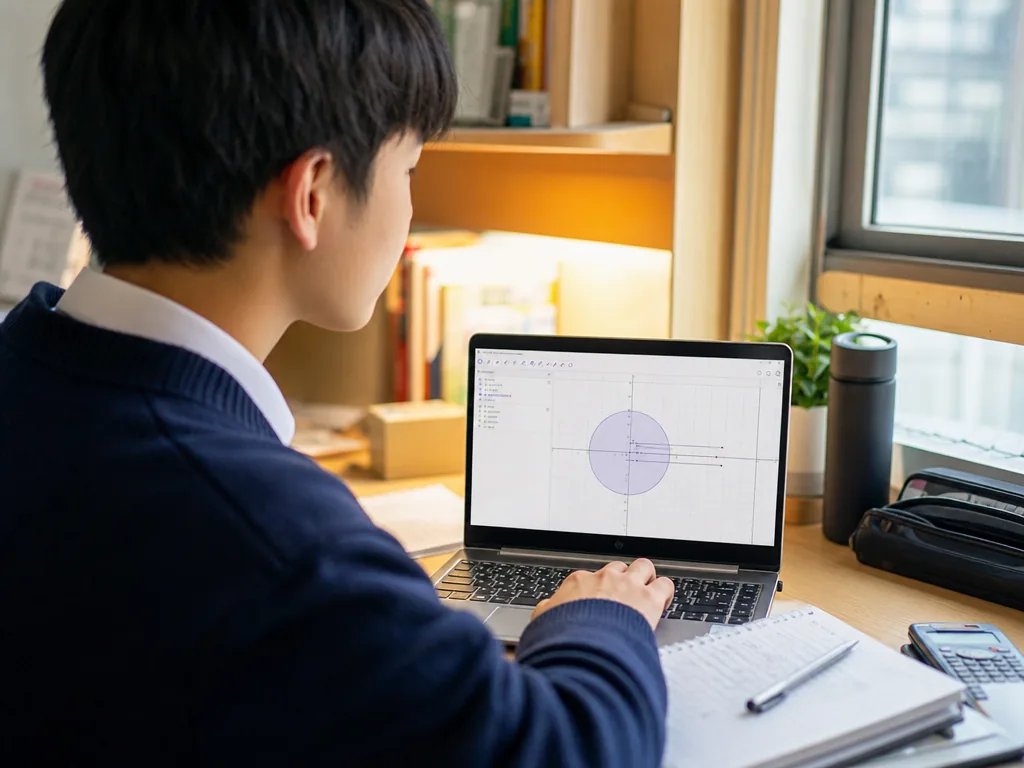
- Difficulty Understanding Abstract Concepts——Use visual tools (e.g., GeoGebra for visualizing the complex plane) to aid understanding.
- Diverse Question Types——Practice with past exam papers to familiarize yourself with cross-topic integration questions (e.g., combining calculus and matrices).
- Time Pressure——Learn efficient problem-solving techniques, such as symmetry analysis, to save time during exams.
International Comparisons
- UK A-Level——Further Mathematics is an independent subject, often covering more advanced topics, such as group theory.
- USA AP——Similar courses include AP Calculus BC or AP Statistics, though they have a narrower scope compared to Further Mathematics.
- Singapore——H3 Mathematics covers similar high-level content.
Frequently Asked Questions (FAQ)
Q: Is Further Mathematics compulsory for DSE students?
No. It is an elective typically chosen by students aiming for STEM degrees, and it sits alongside — not instead of — the compulsory mathematics curriculum.
Q: Do universities require Further Mathematics for admission?
Top UK universities such as Cambridge and Imperial College often require it for mathematics and engineering programs, while Hong Kong universities look favourably on it for STEM fields like quantitative finance and engineering.
Q: Is there any school-based assessment in this course?
No. There is no School-Based Assessment (SBA); the entire evaluation depends on performance in the written public examination.
Q: What should I master before taking Further Mathematics?
A solid grasp of basic mathematics — algebra, calculus and the DSE core content — is essential, along with the willingness to invest significant time in practice.
Further Resources & Next Steps
- Official Resources——Hong Kong Examinations and Assessment Authority (HKEAA) DSE Further Mathematics syllabus, past papers and assessment information.
- Textbooks——Further Pure Mathematics (Pearson); DSE Advanced Mathematics (Hong Kong Publishers).
- Online Platforms——Khan Academy (Advanced Calculus); MIT OpenCourseWare (Linear Algebra).
- Further Reading——Explore introductory linear algebra and multivariable calculus to bridge the gap into first-year university mathematics.
- Parent Tips——Encourage regular, visual-assisted practice (such as GeoGebra) and realistic time management, as the course’s intensity rewards steady, long-term dedication.
Note: The information above is for reference only. Please consult professional education institutions for details.
This article was initially drafted and organised with AI. Editor / Professor Chan Kwok-wai; Managing Editor / Kong Yee-leung
Act Now: Find a Tutor / Register as a Tutor
For parents & students: looking for a home or online tutor for this subject? Click the button below to post a free tuition case (subject, level and preferred time) — TutorZone will match you with suitable tutors:
For tutors: do you teach this subject? Click the button below to register for free and receive more suitable cases — you pay only when a match is made:
