
 Chinese (Traditional)
 Chinese (Simplified)
 English



DSE Engineering and Production: Complete Study Guide
TUTORZONE SUBJECT GUIDE · DSE
DSE Engineering and Production is your gateway into engineering, manufacturing, industrial design, and automation — combining core theory with hands-on practice in drawing, CNC machining, 3D printing, and quality control.
Direct Answer:What does DSE Engineering and Production cover?
It covers engineering, manufacturing, industrial design, and automation, combining theory with hands-on practice in drawing, CNC machining, 3D prin。
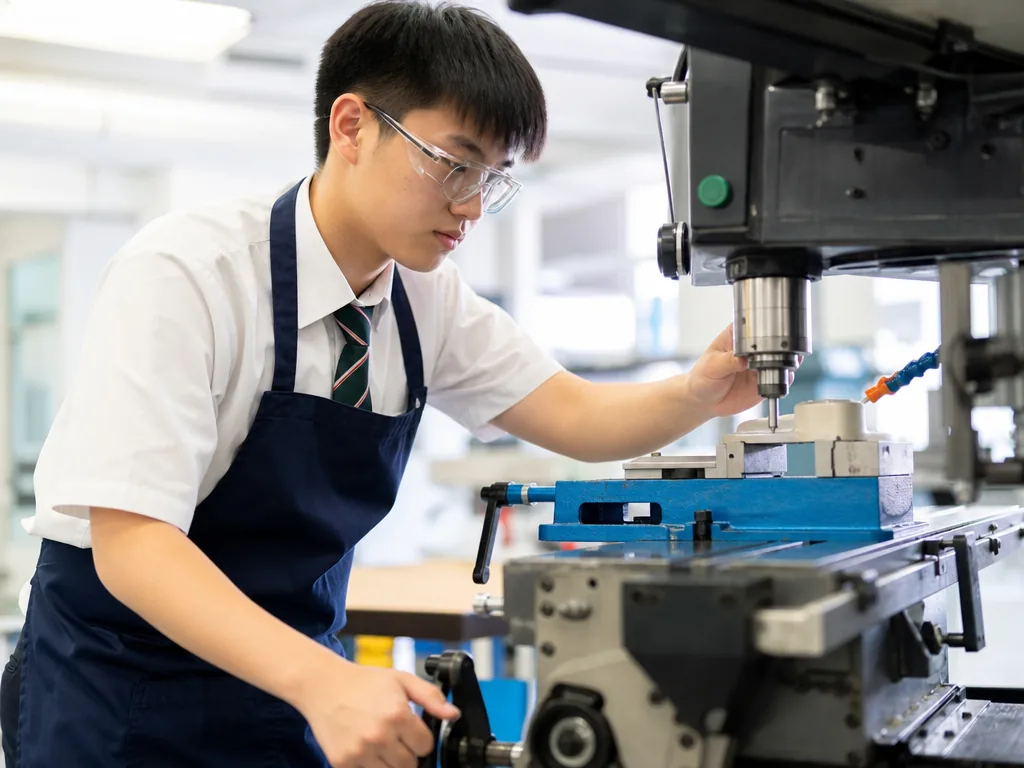
Course Objectives & Who Should Choose This Subject?
DSE Engineering and Production is a pivotal subject for students interested in engineering, manufacturing, industrial design, and automation. The course provides essential knowledge and practical skills that form the foundation for further studies in engineering, industrial management, and product design.
Ideal Candidates
- Students with a passion for technology: If you are keen on subjects like mechanical engineering, electronics, or industrial automation, this subject is for you.
- Students aiming for careers in engineering, design, or manufacturing: This course prepares you for a seamless transition into engineering-related university courses or job roles.
Key Features
Theory + Practice
Learn foundational engineering concepts in mechanical, electronic, and automation fields.
Hands-on Learning
Participate in activities like drawing, model-making, CNC machining, and 3D printing.
Problem-Solving Focus
Tackle real-life industrial challenges like production optimization and quality control.
Course Content Overview
The Engineering and Production course is divided into core units and elective units, ensuring a comprehensive learning experience.
Core UnitsMandatory for all students
- Engineering Fundamentals
- Materials: Metals, plastics, composites
- Mechanical Principles: Mechanics, gears, transmission systems
- Electronics & Electrical Basics: Circuits, motors, sensors
- Engineering Drawing: Hand-drawing and CAD (Computer-Aided Design)
- Manufacturing & Production Technologies
- Traditional Machining: Lathe, milling machine, welding
- CNC Technologies: CNC machines, laser cutting, 3D printing
- Production Systems: Assembly lines, automation, industrial robots
- Quality Control: QC inspections, Six Sigma methodology
Elective UnitsStudents choose one
- Electronic & Control Engineering
- PCB design, microcontrollers (e.g. Arduino), PLC (Programmable Logic Controllers)
- IoT (Internet of Things) and smart systems applications
- Mechanical & Structural Engineering
- Mechanical design: Transmission systems, hydraulics & pneumatics
- Structural analysis: Bridge design, building mechanics
- Energy & Sustainability: Solar energy, wind power applications
Assessment Breakdown
Public Exam70%
- Paper 1: Multiple-choice and short-answer questions (30%)
- Tests basic understanding of engineering principles and manufacturing technologies.
- Paper 2: Long-answer and design questions (40%)
- Requires analysis of engineering problems and drawing design solutions or calculating system parameters (e.g., mechanical or electronic systems).
School-Based Assessment (SBA)30%
Students complete a practical project, which may include:
- Designing and building a mechanical device (e.g., automatic door, solar-powered car)
- Optimizing a production process (e.g., improving part manufacturing using CNC)
- Developing an electronic control system (e.g., smart home devices)
Project Report includes:
- Design process
- Testing data
- Recommendations for improvements
Further Study and Career Paths
University Pathways
- Local Universities:
- University of Hong Kong (HKU): Mechanical Engineering, Industrial Engineering
- Hong Kong University of Science and Technology (HKUST): Electronic Engineering, Computer Engineering
- Polytechnic University (PolyU): Product Design, Manufacturing Systems Engineering
- Overseas Universities:
- Engineering-related programs in the UK, Australia (e.g., Mechanical Engineering, Automation Engineering)
Career Opportunities
Graduates of this course are well-equipped to pursue careers in:
- Mechanical, Electronic, or Production Engineering
- Industrial Design
- Automation & Robotics Technician
- Production Management & Quality Control Specialist

Learning Tips for Success
Hands-On Practice Is Key
Engage in workshops, competitions (e.g., robotics), and internships to gain practical experience.
Master CAD Software
Proficiency in AutoCAD and SolidWorks is essential for engineering design tasks. Get comfortable using these tools in your studies and projects.
Stay Updated with Industry Trends
Focus on emerging technologies like automation, green energy, and smart manufacturing to stay ahead in the field.
Why Choose DSE Engineering and Production?
The Engineering and Production course is perfect for students who enjoy solving technical problems and working with their hands. The course provides a solid foundation in mechanical, electronics, and production management, preparing students for university studies or entering the workforce in engineering-related fields.
If you’re passionate about building, designing, and innovating, this is the subject for you.
Sample Exam Question Breakdown
- Example Question: “Design a mechanism for an automated door using gears and sensors.”
- High-Scoring Response:
- Clearly labels mechanical components (gears, motors, sensors).
- Draws a detailed CAD diagram of the mechanism.
- Calculates motor torque and gear ratios.
Common Mistake
Failing to label components or ignoring important calculations.
Next Steps for Success
Monthly Plan
- Month 1: Focus on mastering CAD skills and basic engineering principles.
- Month 2–3: Start a practical project (e.g., designing a simple mechanical device).
- Month 4: Begin practicing past papers and mock exams.
Form a Study Group
Collaborate with peers for mock board meetings, decision-making exercises, and design reviews.
Useful Resources
| Resource Type | Recommended | Application |
|---|---|---|
| Textbook | Engineering & Production Fundamentals | Core theory & practice |
| Past Papers | DSE Engineering Papers (2012–2023) | Exam preparation and familiarization with question formats |
| Software | AutoCAD, SolidWorks, CNC Simulators | Engineering design and production simulations |
| Industry News | Hong Kong Economic Journal, IEEE Spectrum | Keep updated with new developments in automation, robotics, and sustainable energy |
Want to Know More?
If you have any questions about exam techniques, project ideas, or specific topics in Engineering and Production, feel free to reach out. We’re here to help you succeed!
Frequently Asked Questions (FAQ)
Q: Is this subject suitable for students who are not strong in mathematics?
It helps to be comfortable with basic calculations such as motor torque and gear ratios, but the subject rewards practical, hands-on understanding far more than advanced mathematics. A genuine interest in building, designing, and solving technical problems matters most.
Q: What software should I learn before taking this subject?
Start with AutoCAD and SolidWorks for engineering drawing and design, and explore Arduino-based microcontrollers for electronics. CNC simulators are also useful for visualising production processes.
Q: How is the School-Based Assessment (SBA) project graded?
You complete a practical project — for example a mechanical device, an optimised production process, or an electronic control system — and submit a report covering the design process, testing data, and recommendations for improvement.
Q: What university programmes can this subject lead to?
Common pathways include Mechanical, Electronic, Industrial, and Manufacturing Systems Engineering, as well as Product Design — offered locally at HKU, HKUST, and PolyU, and by many universities in the UK and Australia.
Further Resources & Next Steps
- Official Resources — The Hong Kong Examinations and Assessment Authority (HKEAA) and the Hong Kong Education Bureau (EDB) provide the latest syllabus, assessment framework, and sample papers.
- Further Reading — Engineering & Production Fundamentals textbook, plus IEEE Spectrum for industry trends in automation and robotics.
- Parent Tips — Encourage your child to join robotics clubs or competitions and to practise CAD software early; hands-on projects build both skills and a strong portfolio for the SBA.
Note: The information above is for reference only. Please consult professional education institutions for details.
This article was initially drafted and organised with AI. Editor / Professor Chan Kwok-wai; Managing Editor / Kong Yee-leung
Act Now: Find a Tutor / Register as a Tutor
For parents & students: looking for a home or online tutor for this subject? Click the button below to post a free tuition case (subject, level and preferred time) — TutorZone will match you with suitable tutors:
For tutors: do you teach this subject? Click the button below to register for free and receive more suitable cases — you pay only when a match is made: