
 Chinese (Traditional)
 Chinese (Simplified)
 English



Generative AI
TUTORZONE SUBJECT GUIDE · COMPUTER
Generative AI is a key branch of artificial intelligence that learns from vast amounts of data to create entirely new content — text, images, audio, video, and even code. This guide explains how it works, the techniques behind it, where it is used, and the challenges it raises.
Direct Answer:What is generative AI?
Generative AI is a branch of AI that learns from data to create new content such as text, images, audio, video, and code.
What Is Generative AI?
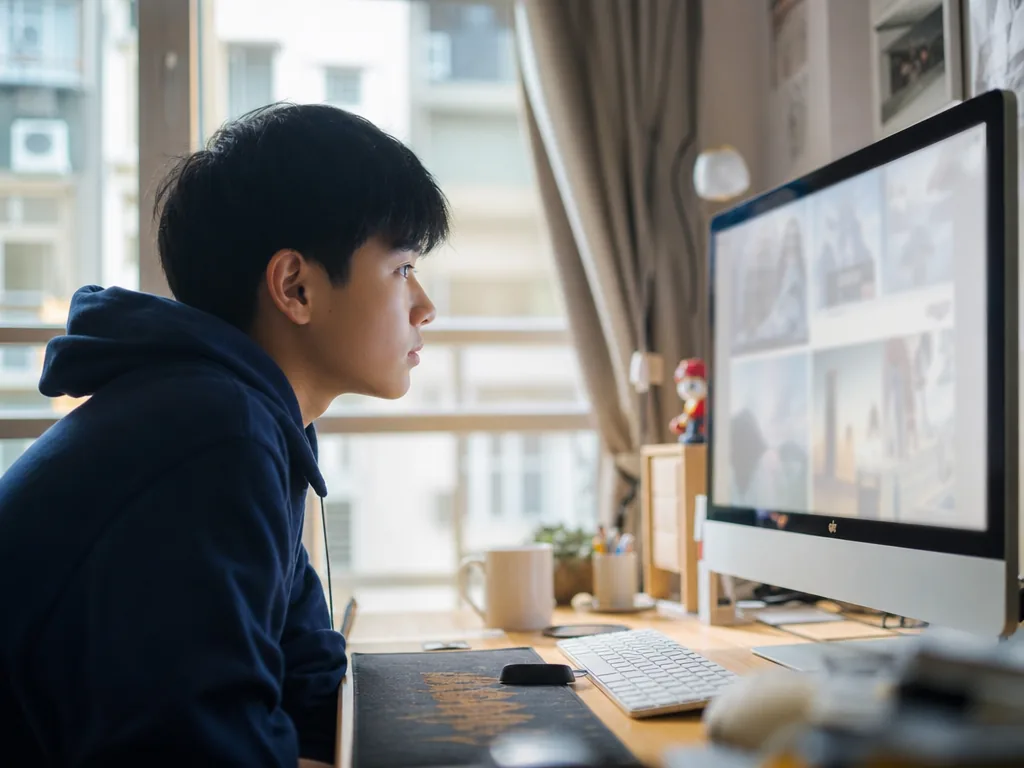
Generative AI is a key branch of artificial intelligence, referring to AI technologies capable of creating entirely new content. Unlike traditional AI, generative AI doesn’t simply make decisions or categorize content based on established rules. Instead, it learns from large amounts of data to generate new content with creative, innovative, or practical value. This content can include text, images, audio, video, or even code.
The core of generative AI lies in “generation” — that is, it not only analyzes or processes existing data, but can create brand new data, which gives it great application potential in many fields such as creativity, design, art, entertainment, writing, and more.
Basic Concepts of Generative AI
The goal of generative AI is to enable machines to mimic human creativity, identifying patterns from large amounts of data and then using these patterns to create new content. This content can be more than just a combination of past data; it must be innovative and diverse, often based on statistical knowledge gained during training.
Learn Patterns
Identify structures and regularities in massive real-world datasets such as language, images, and music.
Create Anew
Produce genuinely new, innovative, and diverse content rather than merely recombining past data.
Add Value
Deliver content with creative, innovative, or practical value across many fields.
How Generative AI Works
Training Process
Generative AI learning typically relies on massive datasets. These datasets contain a wide range of real-world information, such as language, images, and music. AI models learn from this data, capturing patterns, structures, and regularities within it.
Generating New Content
When generative AI receives input (such as text, images, or other conditions), it generates new content based on the rules it has learned. The quality and creativity of this content often depends on the diversity of the training data, the complexity of the model, and the control parameters during the generation process.
Backward Feedback and Adjustment
Training generative AI often requires the use of techniques such as Generative Adversarial Networks (GANs). This approach optimizes generated content by comparing it to real content. The generator generates new content, while the discriminator determines its authenticity. This interplay ultimately makes the generated content more authentic and innovative.
Common Generative AI Techniques
Generative Adversarial Networks (GANs)
GANs are one of the most innovative approaches in generative AI. They consist of two neural networks: a generator and a discriminator. The generator creates fake data (such as images and text), while the discriminator determines whether the data is real or fake. These two networks compete against each other, continuously improving to ultimately generate high-quality content.
Variational Autoencoders (VAEs)
VAEs are an unsupervised learning technique that learns the underlying structure of data by encoding and decoding it. VAEs are often used to generate new images or other data types and have good generative capabilities, being able to learn the underlying distribution of data during training.
Transformer Architecture
The Transformer is a neural network architecture based on the self-attention mechanism, particularly effective in natural language processing (NLP). OpenAI’s GPT (Generative Pre-trained Transformer) series uses this architecture. This type of model can generate high-quality text and support translation between different languages, summarization, and other tasks.

Application Areas of Generative AI
Text Generation
- Language models (such as the GPT series): These models are trained on large amounts of text data and are able to generate fluent and grammatically correct articles, stories, blog content, and more, based on given prompts. Generative AI has significant advantages in automated writing, news generation, email drafting, and other areas.
- Machine translation: Generative AI has been widely used in the field of language translation and can achieve high-quality automatic translation.
Image and Vision Generation
- DeepArt and DALL·E: These models can generate novel, creative images. Users simply provide a simple text description, and generative AI creates the corresponding artistic image. These technologies are already being used in art, design, advertising, game development, and other fields.
- Image restoration and enhancement: Generative AI can also restore, reconstruct, and even improve the resolution of old images, which is very important for historical preservation or film post-production.
Music and Audio Creation
- AI Music Generation: Generative AI can create original music and even mimic the styles of certain musicians. Tools like OpenAI’s Jukedeck and Google’s Magenta can create background music, melodies, and more.
- Speech synthesis: Using generative AI, the system can synthesize natural and fluent speech, which can be applied in virtual assistants, voice navigation, barrier-free services, and other fields.
Video Generation
Generative AI is rapidly gaining applications in video creation. It can automatically generate short clips, animations, and even create entirely new video content using text descriptions.
Data Augmentation and Generation
In machine learning, generative AI can also be used to create additional training data, which is particularly useful in areas where data is scarce. For example, in medical imaging, generative AI can be used to generate additional medical images to enhance the training dataset.
Challenges and Risks of Generative AI
Ethical and Copyright Issues
Should content created by generative AI (such as images, music, or text) be protected by copyright? Since generative AI uses a large amount of existing data in the creative process, this has also triggered discussions about the ownership and intellectual property rights of creations.
Disinformation and Deepfakes
Generative AI’s powerful capabilities in video and audio creation also pose risks. It could be used to create misleading content or “deepfake” videos, which can be used to manipulate public opinion or fabricate evidence.
Data Bias
If the data used to train generative AI is itself biased, the content generated by the AI may also reflect these biases. For example, a language model may generate text that is biased towards gender or race.
Technology Costs and Computing Resources
Training generative AI models typically requires a lot of computing resources and data, which may make it unaffordable for some small businesses or developers.
Summary
Generative AI is a highly innovative and promising technology in the field of artificial intelligence. It enables machines to create entirely new content, such as text, images, and music. These technologies have a wide range of applications, from entertainment and artistic creation to professional fields such as healthcare and finance. However, the development of generative AI also brings challenges and risks, particularly in the areas of ethics, law, and data bias. Therefore, the responsible development and use of generative AI technology is a key issue in its future development.
It learns from large amounts of data to generate new content with creative, innovative, or practical value.
Frequently Asked Questions (FAQ)
Q: Is content created by generative AI protected by copyright?
This is still an open and evolving question. Because generative AI draws on large amounts of existing data during the creative process, the ownership and intellectual property rights of AI-generated works remain unsettled and can vary between jurisdictions.
Q: What is a deepfake, and why is it risky?
A deepfake is synthetic, AI-generated video or audio that can convincingly imitate real people. It can be misused to create misleading content, manipulate public opinion, or fabricate evidence.
Q: Can generative AI produce biased output?
Yes. If the training data itself is biased, the model can reflect and even amplify those biases in its output — for example, a language model may generate text biased towards gender or race.
Q: Do I need powerful hardware to use generative AI?
Using pre-trained models is increasingly accessible through cloud services, but training large generative models from scratch requires substantial computing resources and data, which can be costly for small businesses or individual developers.
Further Resources & Next Steps
- Official Resources——Follow reputable AI research institutions such as OpenAI, Google AI, and DeepMind for technical overviews and responsible-AI guidance.
- Further Reading——Start with introductory machine-learning courses and books on deep learning to understand GANs, VAEs, and the Transformer architecture.
- Parent Tips——Encourage students to treat AI-generated content critically, verify facts, and learn about the ethical and copyright questions surrounding AI creation.
Note: The information above is for reference only. Please consult professional education institutions for details.
This article was initially drafted and organised with AI. Editor / Professor Chan Kwok-wai; Managing Editor / Kong Yee-leung
Act Now: Find a Tutor / Register as a Tutor
For parents & students: looking for a home or online tutor for this subject? Click the button below to post a free tuition case (subject, level and preferred time) — TutorZone will match you with suitable tutors:
For tutors: do you teach this subject? Click the button below to register for free and receive more suitable cases — you pay only when a match is made: