
 Chinese (Traditional)
 Chinese (Simplified)
 English



What Is IB Geography SL? Full Syllabus Breakdown, IA Tips, and HL Comparison (2025)
TUTORZONE SUBJECT GUIDE · IB
IB Geography Standard Level (SL) is an interdisciplinary subject that blends the natural and social sciences, built around three compulsory core units, two electives, a fieldwork-based Internal Assessment and two external exam papers. Here is the full syllabus breakdown, an IA guide, and how SL compares with HL.
Direct Answer:What is IB Geography SL?
IB Geography SL is an interdisciplinary subject blending natural and social sciences, with three core units, two electives, a fieldwork-based inter。

Core Topics (Compulsory)
Every SL student must study the following three essential units, which together cover population, climate and the resources that shape our world.
Core Unit 1: Population and Development
This unit covers population change, population pyramids, and population policies. It also explores development gaps, the impact of globalization, and the Sustainable Development Goals (SDGs).
Core Unit 2: Global Climate Change and Environmental Management
Students examine the climate system, global warming, and extreme weather events, alongside environmental policies such as the Paris Agreement, carbon footprints, and renewable energy.
Core Unit 3: Global Resource Consumption and Sustainability
This section focuses on water resources, food security, and the energy crisis, leading students into resource management strategies such as the circular economy.
Elective Topics (Choose Two)
Besides the core units, students select two electives. Common choices include:
- Urban Environments——urbanization, slums and smart cities.
- Oceans and Coastal Management——coral reef degradation and coastal erosion.
- Risks and Disasters——earthquakes, hurricanes and disaster management.
- Leisure and Tourism——eco-tourism and overtourism.
Internal Assessment (IA)
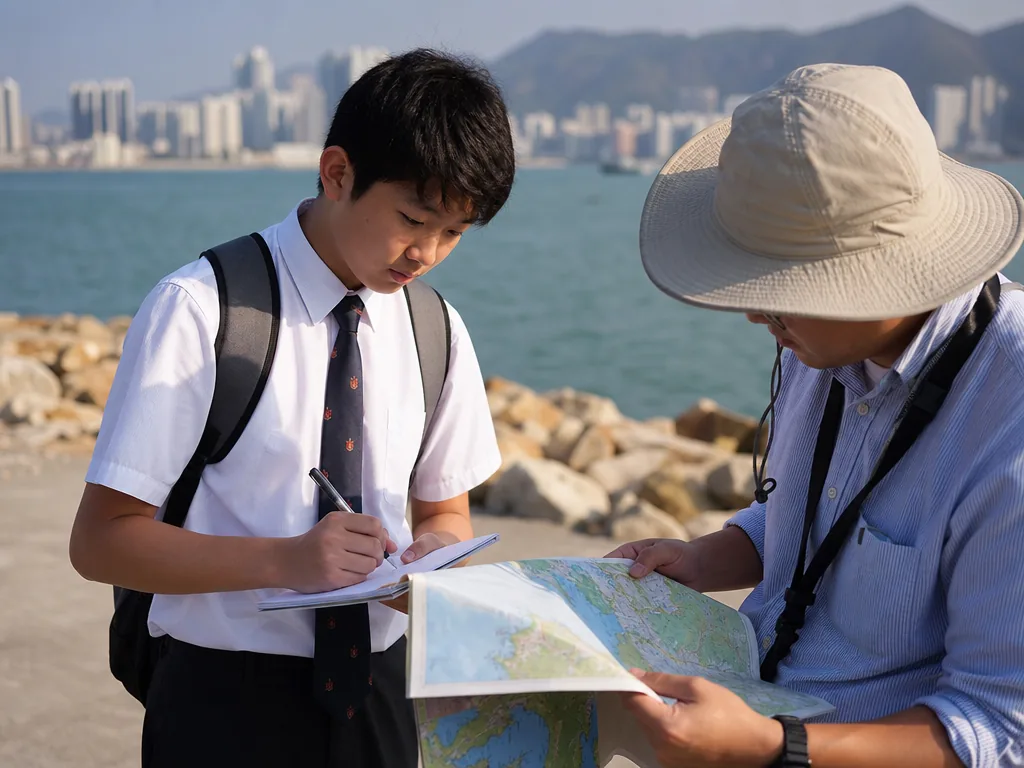
The Internal Assessment accounts for 25% of the total score. Students must conduct fieldwork and write a 2500-word report. Example research topics include urban heat island effects, river erosion and deposition, or pedestrian flow patterns in commercial areas.
External Exams (75%)
- Paper 1 (35%)——multiple-choice and short-answer questions on the core topics (1 hour 30 minutes).
- Paper 2 (40%)——essay questions about the elective topics (1 hour 30 minutes).
IB Geography SL vs HL: Key Differences
| Aspect | SL (Standard Level) | HL (Higher Level) |
|---|---|---|
| Teaching hours | 150 hours | 240 hours |
| Core topics | 3 units | 3 units (deeper content) |
| Electives | Choose 2 | Choose 3 |
| Exam difficulty | Basic level | More advanced, includes HL extension |
Who Is This Course For?
If you are interested in environmental and social issues and enjoy a cross-disciplinary approach that combines science and humanities, this course suits you well. It is also ideal if you plan to study environmental science, urban planning, international relations, or economics at university.
Advantages of IB Geography SL
Practical Learning
Understand how to analyze global issues such as climate change and resource shortages.
Research Skills
Enhance data collection and analysis through fieldwork (IA).
International Perspective
Study cases from different countries to grasp global inequalities and sustainable development challenges.
Summary
In conclusion, IB Geography SL is an interdisciplinary subject combining natural and social sciences. It emphasizes critical thinking, data analysis, and sustainability, and it lays a strong foundation for university courses in environmental science, sociology, economics, and related fields. If you care about global issues, IB Geography SL is a valuable choice.
Frequently Asked Questions (FAQ)
Q: Is IB Geography SL much easier than HL?
SL is lighter in load: it requires 150 teaching hours versus 240 for HL, only two electives instead of three, and a less demanding exam. The core topics are the same, but HL goes deeper and adds an extension.
Q: How much does the Internal Assessment count?
The IA is worth 25% of the final grade. Students carry out their own fieldwork and write a 2500-word report, on topics such as urban heat island effects or pedestrian flow patterns.
Q: Do I need a strong science background?
No single prerequisite is required. The course is deliberately cross-disciplinary, combining science and humanities, so genuine interest in environmental and social issues matters more than prior expertise.
Q: Which university courses does it prepare me for?
It builds a strong foundation for environmental science, urban planning, international relations, economics, sociology and related fields.
Further Resources & Next Steps
- Official Resources——the IB Geography subject brief and full syllabus at www.ibo.org.
- Further Reading——past papers, case-study databases and field-study guides covering the population, climate and resource units.
- Parent Tips——encourage students to connect everyday news such as weather, energy prices and urban development to the syllabus topics they study.
Note: The information above is for reference only. Please consult professional education institutions for details.
This article was initially drafted and organised with AI. Editor / Professor Chan Kwok-wai; Managing Editor / Kong Yee-leung
Act Now: Find a Tutor / Register as a Tutor
For parents & students: looking for a home or online tutor for this subject? Click the button below to post a free tuition case (subject, level and preferred time) — TutorZone will match you with suitable tutors:
For tutors: do you teach this subject? Click the button below to register for free and receive more suitable cases — you pay only when a match is made: