
 Chinese (Traditional)
 Chinese (Simplified)
 English



IB Geography HL tutor
TUTORZONE SUBJECT GUIDE · IB
IB Geography Higher Level (HL) is an advanced, integrative subject that merges natural system science with human-social analysis — adding 60 extra hours and deeper theory, methodology and case-study work on top of Standard Level. This guide walks through the course structure, the HL-specific assessment framework, the core competencies you build and the university pathways the subject opens up.
Direct Answer:What is IB Geography HL?
IB Geography HL is an advanced, integrative subject merging natural system science with human-social analysis, with 60 extra hours and deeper theor。

Course Essence and Academic Positioning
IB Geography Higher Level (HL) is an advanced, integrative subject that merges natural system science with human-social analysis. This course is designed for learners who possess the following qualities:
- Human-environment curiosity——Passionate about exploring human-environment interactions.
- Data fluency——Able to handle complex quantitative and qualitative data.
- Spatial thinking——Willing to conduct cross-scale spatial analyses (from local to global).
Core Differences Between HL and SL
The primary differences between HL and Standard Level (SL) Geography are found in three key dimensions:
Theoretical Depth
HL students need to master advanced models like vulnerability theory and the core-periphery model.
Methodological Rigor
Statistical tests and GIS spatial analysis are required at HL level.
Complexity of Topics
HL explores cutting-edge contemporary topics such as “risk society”.
Course Structure and HL-Specific Content
Four Major Modules
HL includes 60 more hours of instruction than SL, providing in-depth learning in the following modules:
| Module | HL Depth Requirements | Typical Case Study Analysis |
|---|---|---|
| Core Unit: Global Change | Use systems theory to analyze climate feedback mechanisms; quantify carbon footprint (including calculation problems). | Simulate an IPCC report: predict flood risks for the Pearl River Delta under the RCP8.5 scenario. |
| HL Extension Unit | Choose one for deep study: Advanced Urbanization (Global Cities Theory) or Geopolitical Conflict Geography. | Apply Friedmann’s World City Theory to analyze the competitive relationship between Hong Kong and Singapore. |
| Two Elective Topics | Analyze 50% more cases than SL (e.g., choose ‘Tourism Geography’ and research six tourist area carrying capacity models). | Compare Venice and Jiuzhaigou’s sustainable tourism management strategies. |
| Internal Assessment | 3,500-word fieldwork report (SL is 2,500 words), requiring relevance tests and GIS mapping. | Use SPSS to analyze the Pearson correlation between visitor volume and air quality in Hong Kong’s country parks. |
HL-Specific Assessment Framework
External Assessment (80%)
- Paper 1: Core Unit Application Questions
- 3 questions on data analysis (SL has 2 questions), including:
- 15-minute essay questions (integrating at least 3 theoretical models).
- Calculation problems (e.g., deriving dependency ratio from population pyramids). Example: use Malthus and Boserup theories to evaluate Ethiopia’s food crisis.
- 3 questions on data analysis (SL has 2 questions), including:
- Paper 2: HL Extension Unit
- Choose one of two 25-point questions, requiring:
- Cross-country comparison (at least 3 countries).
- Policy effectiveness evaluation (including cost-benefit analysis). Example: critically analyze the impact of the Belt and Road Initiative on Central Asia’s water resource geopolitics.
- Choose one of two 25-point questions, requiring:
- Paper 3: Comprehensive Application
- A unique HL paper based on pre-released case study data:
- Complete 2 questions in 90 minutes.
- Propose original solutions (e.g., designing a city resilience index system).
- A unique HL paper based on pre-released case study data:
Internal Assessment (20%)
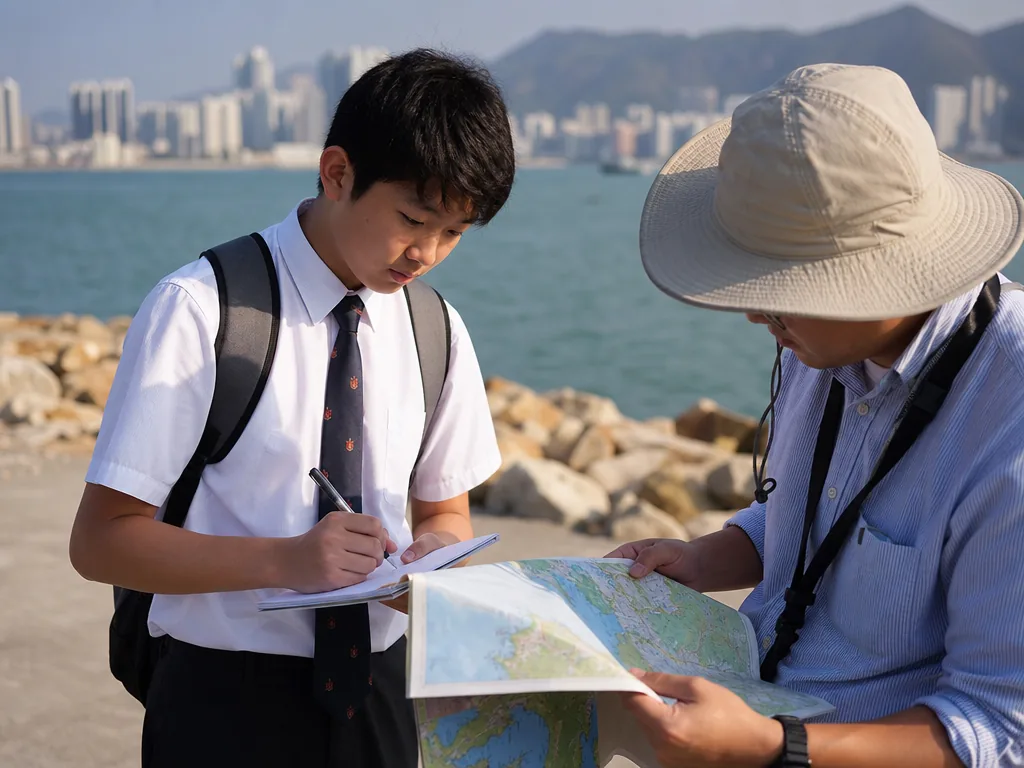
- Advanced Fieldwork:
- Employ mixed research methods (survey, GIS, field measurements).
- Verify hypotheses (e.g., “land prices and greenery are negatively correlated”).
- Include uncertainty analysis.
HL Core Competencies Development
Key Skills Acquired in HL Geography
- Spatial Modeling Skills
- Use QGIS for heatmap analysis. Example: map the spatial concentration of subdivided flats in Hong Kong and their accessibility to public services.
- Critical Evaluation Frameworks
- Apply the DPSIR (Driving Forces-Pressure-State-Impact-Response) model. Example: evaluate the ecological and economic effects of the Yangtze River fishing ban.
- Risk Governance Thinking
- Design disaster response plans considering political and economic factors. Example: formulate priorities for earthquake retrofitting in high-rise buildings in Taiwan’s seismic zones.
University Pathways and Strategic Learning Tools
University Admission Advantages
- Top Geography Departments — the London School of Economics (LSE) requires HL Geography with a score of 6+ and SL Mathematics 5.
- Environmental Engineering — ETH Zurich accepts HL Geography as a substitute for Physics.
- International Organization Internships — the UNEP Youth Program gives priority to HL Geography students with a score of 7.
Strategic Learning Tools for HL Students
| Skill Area | HL-Specific Resources | Application Example |
|---|---|---|
| Spatial Analysis | ArcGIS Pro (heat zone analysis, 3D modeling) | Simulate the impact of sea level rise on the Tokyo Bay area. |
| Statistical Tests | Jamovi (free alternative to SPSS for ANOVA) | Verify air pollution differences across income groups. |
| Academic Writing | Writing Geography by Kenneth Foote (report structure guidelines) | Submit IA reports formatted according to Nature journal standards. |
Key Success Factors for HL Students
Success in HL Geography is built on interdisciplinary integration, data literacy, and current affairs sensitivity.
- Interdisciplinary Integration
- Apply economic externalities to pollution analysis.
- Use Theory of Knowledge (TOK) to explore the “political nature of maps”.
- Data Literacy
- Complete monthly IMF/World Bank data visualization assignments.
- Master basic Python libraries for geography, such as geopandas.
- Current Affairs Sensitivity
- Maintain a global issue tracking table (e.g., COP28 climate negotiations progress).
Ideal Learner Profile and Skills Developed
The HL Geography course is best suited for learners who:
- Commit time——Are willing to dedicate 6+ hours per week to in-depth research.
- Love data——Have a strong interest in data-driven human analysis.
- Have a direction——Plan to pursue fields such as urban planning, environmental policy, or international development.
Skills Developed Through HL Training
- Equivalent to second-year university spatial analysis skills.
- Ability to formulate policy recommendations with systematic thinking.
- Enhanced critical judgment for tackling “ambiguous problems”.
Frequently Asked Questions (FAQ)
Q: How is IB Geography HL different from SL?
HL adds 60 more instruction hours, requires advanced theory such as vulnerability theory and the core-periphery model, demands statistical tests and GIS analysis, and covers more contemporary topics — plus a longer 3,500-word internal assessment.
Q: How is HL Geography assessed?
External assessment counts for 80% across three papers (core application, HL extension unit, and a pre-released comprehensive paper), while the 20% internal assessment is a 3,500-word fieldwork report using mixed methods, hypothesis testing and uncertainty analysis.
Q: What skills will I build in HL Geography?
You will develop spatial modeling (QGIS/ArcGIS), critical evaluation frameworks such as DPSIR, risk-governance thinking, statistical testing (Jamovi/SPSS) and academic writing — skills comparable to second-year university spatial analysis.
Q: Which university courses value HL Geography?
Top geography departments (LSE requires a 6+), environmental engineering (ETH Zurich accepts it in place of Physics), and international organizations such as the UNEP Youth Program all give HL Geography strong recognition, especially at score 7.
Further Resources & Next Steps
- Official Resources——International Baccalaureate official website: www.ibo.org.
- Further Reading——Writing Geography by Kenneth Foote for report and IA structure guidelines.
- Parent Tips——Encourage a weekly routine of data-visualization practice (IMF/World Bank) and a current-affairs tracking table (e.g., COP28) to build data literacy early.
Note: The information above is for reference only. Please consult professional education institutions for details.
This article was initially drafted and organised with AI. Editor / Professor Chan Kwok-wai; Managing Editor / Kong Yee-leung
Act Now: Find a Tutor / Register as a Tutor
For parents & students: looking for a home or online tutor for this subject? Click the button below to post a free tuition case (subject, level and preferred time) — TutorZone will match you with suitable tutors:
For tutors: do you teach this subject? Click the button below to register for free and receive more suitable cases — you pay only when a match is made: