
 Chinese (Traditional)
 Chinese (Simplified)
 English



What is Computer Vision?
TUTORZONE SUBJECT GUIDE · COMPUTER
Computer vision gives machines the power to “see” — to recognize, analyze and understand images and video much as the human eye does. This guide explains what it is, how it works, and where it is already changing the world.
Direct Answer:What is computer vision?
Computer vision gives machines the power to recognize, analyze, and understand images and video, much like the human eye.
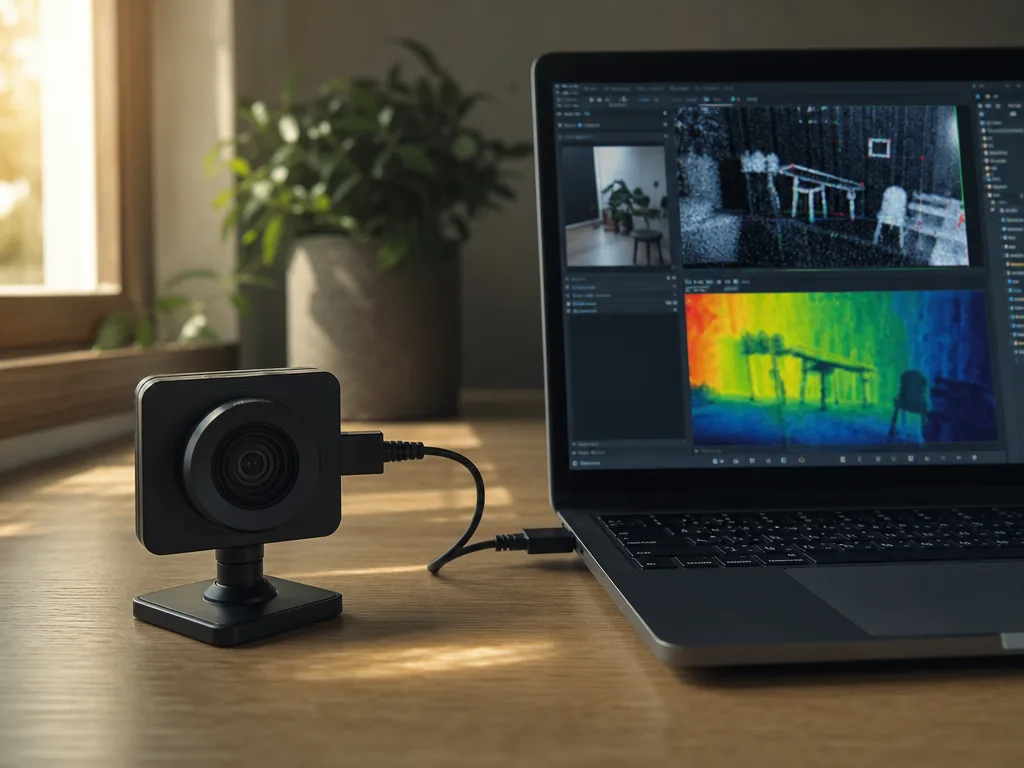
What Is Computer Vision?
Computer vision is a technology that enables computers or machines to “understand” images and videos. It combines artificial intelligence (AI), machine learning, and deep learning technologies to enable machines to mimic the human visual system, performing image recognition, analysis, and understanding, and making intelligent judgments.
Simply put, computer vision is the technology that enables machines to learn to “see”, “understand” and “respond” to visual information.
Key Features of Computer Vision
Image Classification
Classify an entire image into a specific category, such as identifying whether a photo is of a cat or a dog.
Object Detection
Find the location of specific objects in images or videos and add tags, such as automatically detecting faces, vehicles, or pedestrians.
Image Segmentation
Classify each pixel in an image into different regions, such as accurately marking the extent of a tumor in medical images.
Pose Estimation
Analyze the joint positions of characters and predict movements or dynamic behaviors, such as motion analysis or AR applications.
Face Recognition
Identify facial features of specific people for unlocking mobile phones, social media tagging, surveillance systems, etc.
Image Generation & Restoration
Use generative adversarial networks (GANs) technology to generate images, denoise, and repair damaged photos.
The Technical Foundation
Computer vision rests on a set of core techniques drawn from deep learning and artificial intelligence:
| Technology | Description |
|---|---|
| Convolutional Neural Networks (CNNs) | The most common image processing neural network architecture in deep learning, suitable for image recognition and classification. |
| Transfer Learning | Use trained models to quickly apply to new tasks, saving training time and resources. |
| Reinforcement Learning | This method combines environmental feedback for optimization and is commonly used in robotic vision and autonomous driving. |
| Combination of Natural Language Processing (Vision + NLP) | For example, image captioning allows the system to understand and describe the content of the picture in words. |
Real-World Applications
Autonomous Driving
Computer vision helps vehicles identify road signs, pedestrians, and obstacles, and perform path planning and obstacle avoidance.
Medical Imaging
Used for automatic detection of abnormalities in X-ray, MRI, and CT scan images, such as cancer diagnosis and lesion tracking.
Smart Surveillance
Automatically identify suspicious behavior, illegal parking, and crowd gatherings to improve public safety.
Industrial Automation
Quality control inspection for defective products, automated sorting and vision guidance of robotic arms.
Retail & Marketing
Customer behavior analysis, unmanned store checkout systems (such as Amazon Go), and smart shelf management.
Augmented Reality and Virtual Reality (AR/VR)
Accurately track user position and movements to achieve an immersive interactive experience.
AgriTech
Use image recognition technology to detect crop pests and diseases, estimate yields, and monitor farmland conditions.

Why Computer Vision Matters More Than Ever
The amount of data is exploding
The image data from smartphones, surveillance cameras, and social media is increasing rapidly. Computer vision can help quickly analyze and extract value.
Technology is evolving rapidly
As GPU computing power increases and deep learning technology matures, the accuracy of computer vision has approached or even surpassed that of humans.
It is widely applied across fields
From healthcare, transportation, finance to entertainment, various industries are actively introducing computer vision technology to improve efficiency and create new business opportunities.
The foundation of automation and intelligence
Computer vision is the core foundation of smart manufacturing, smart cities, smart healthcare, and more.
Computer Vision and Artificial Intelligence
Computer vision is a branch of artificial intelligence (AI). In simple terms, the relationship follows a clear hierarchy:
Artificial Intelligence → Machine Learning → Deep Learning → Computer Vision
Computer vision uses deep learning technology to allow the system to automatically learn features and patterns from large amounts of image data, and then make intelligent judgments.
Summary
Computer vision is redefining the world, from facial recognition technology in our phones and self-driving cars to smart factories and medical diagnostics. As technology advances, computer vision will become even more deeply embedded in our lives, becoming an indispensable core force in artificial intelligence.
Mastering computer vision technology means mastering the key competitiveness in the intelligent era!
Frequently Asked Questions (FAQ)
Q: Is computer vision the same as image processing?
Not quite. Image processing focuses on enhancing or transforming pixels, such as sharpening or resizing a photo, while computer vision goes further by understanding what is in the image and making decisions — for example, recognizing whether a photo contains a cat or a dog.
Q: Do I need to know programming to learn computer vision?
Programming helps, especially Python, because most computer vision libraries such as OpenCV and PyTorch are Python-based. However, beginners can start with visual tools and drag-and-drop platforms before moving on to writing code.
Q: How is computer vision different from human vision?
Human vision is guided by experience and context, while computer vision relies on training data and mathematical models. On well-defined tasks such as object detection, computers can now match or even exceed human accuracy, though they still struggle with commonsense reasoning.
Q: What should a student study to prepare for a career in computer vision?
Mathematics (especially linear algebra and calculus), statistics, programming, and basic machine learning are the key foundations. Courses in computer science and artificial intelligence provide the most direct pathway.
Further Resources & Next Steps
- Official Resources — OpenCV (opencv.org), a free open-source computer vision library widely used in industry and education.
- Further Reading — “Deep Learning” by Ian Goodfellow, Yoshua Bengio, and Aaron Courville (MIT Press), a standard reference on the deep learning behind modern computer vision.
- Parent Tips — Encourage hands-on projects such as building a simple face-detection app or exploring online courses, which help students turn theory into practical skills.
Note: The information above is for reference only. Please consult professional education institutions for details.
This article was initially drafted and organised with AI. Editor / Professor Chan Kwok-wai; Managing Editor / Kong Yee-leung
Act Now: Find a Tutor / Register as a Tutor
For parents & students: looking for a home or online tutor for this subject? Click the button below to post a free tuition case (subject, level and preferred time) — TutorZone will match you with suitable tutors:
For tutors: do you teach this subject? Click the button below to register for free and receive more suitable cases — you pay only when a match is made: