
 中文(繁體)
 中文(簡體)
 English



Guqin (Chinese Zither): Complete Overview, History and Learning Guide
TUTORZONE SUBJECT GUIDE · PLUCKED STRING INSTRUMENTS
From its 3,000-year-old origins in the Western Zhou dynasty to its modern revival on the international stage, the guqin is China’s “national instrument” — serene, philosophical, and deeply tied to the literati tradition. This guide covers its history, its master players, and the classic works every learner should know.
Direct Answer:What is the guqin?
The guqin is China’s ‘national instrument’, a serene, philosophical zither with 3,000-year-old literati origins.
What Is the Guqin?
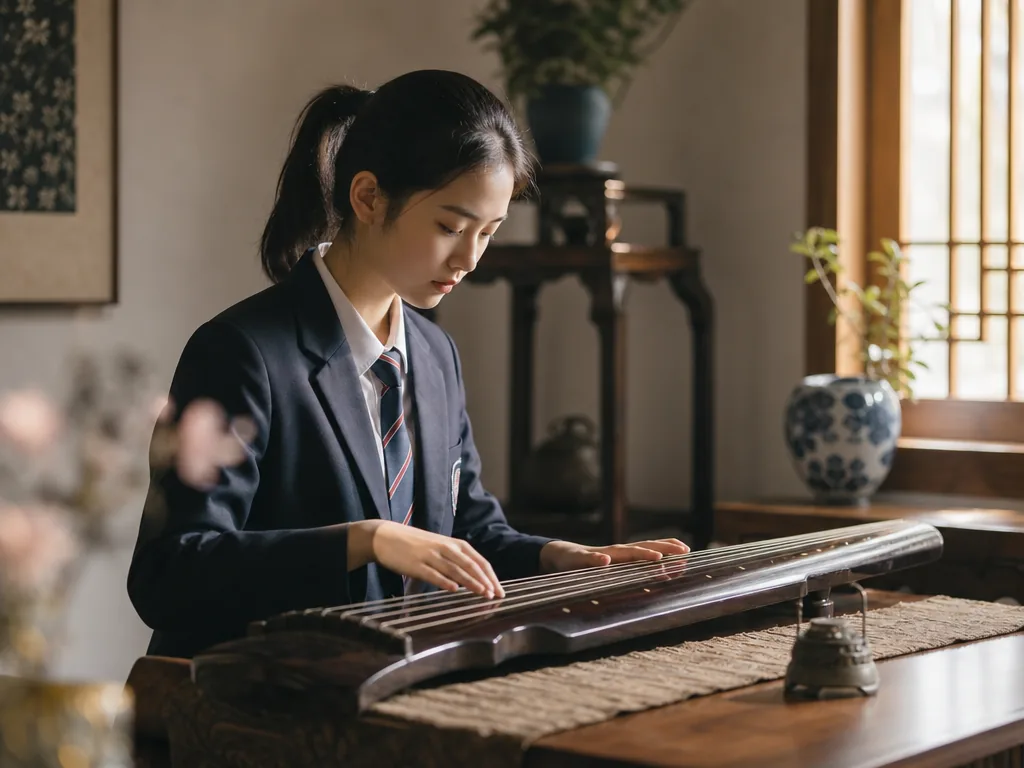
The guqin, one of China’s oldest plucked string instruments, has a history of about 3,000 years. It is known as China’s “national instrument”. Its tone is serene and melodious and full of profound philosophy, and it is often regarded as the representative instrument of the ancient Chinese literati. The guqin’s playing technique, tonal expression and cultural connotations are deeply embedded in traditional Chinese culture and philosophical thought.
Origins of the Guqin
- Early origins——The origins of the guqin can be traced back to the Western Zhou dynasty (1046–771 BC), when records of the qin already existed. The earliest guqin differed somewhat in shape from today’s instrument, but its basic structure and playing method were already taking shape.
- Development in the Han dynasty——By the Han dynasty (206 BC–220 AD), the guqin gradually became an important instrument of the literati. At that time, qin culture was not only a means of musical expression but also a symbol of a scholar’s identity and cultivation.
- The Tang and Song dynasties——During the Tang and Song dynasties, guqin music reached a peak and played an important role in the daily lives of the literati. The guqin appears frequently in Tang poetry and music, and there were dedicated guqin masters; poets such as Wang Zhihuan and Li Bai were accompanied by the guqin.
Evolution of the Guqin
- The Yuan, Ming and Qing dynasties——The guqin underwent further development through the Yuan, Ming and Qing dynasties and gradually became integrated into Chinese opera music. During this time the guqin gradually split into different schools, and its expression placed greater emphasis on “vivid vitality” and a sense of “emptiness”.
- Modern development——With the arrival of the 20th century, the guqin experienced a large-scale revival, began to merge with modern musical elements, and moved onto the international stage.
Notable Guqin Masters and Their Representative Works
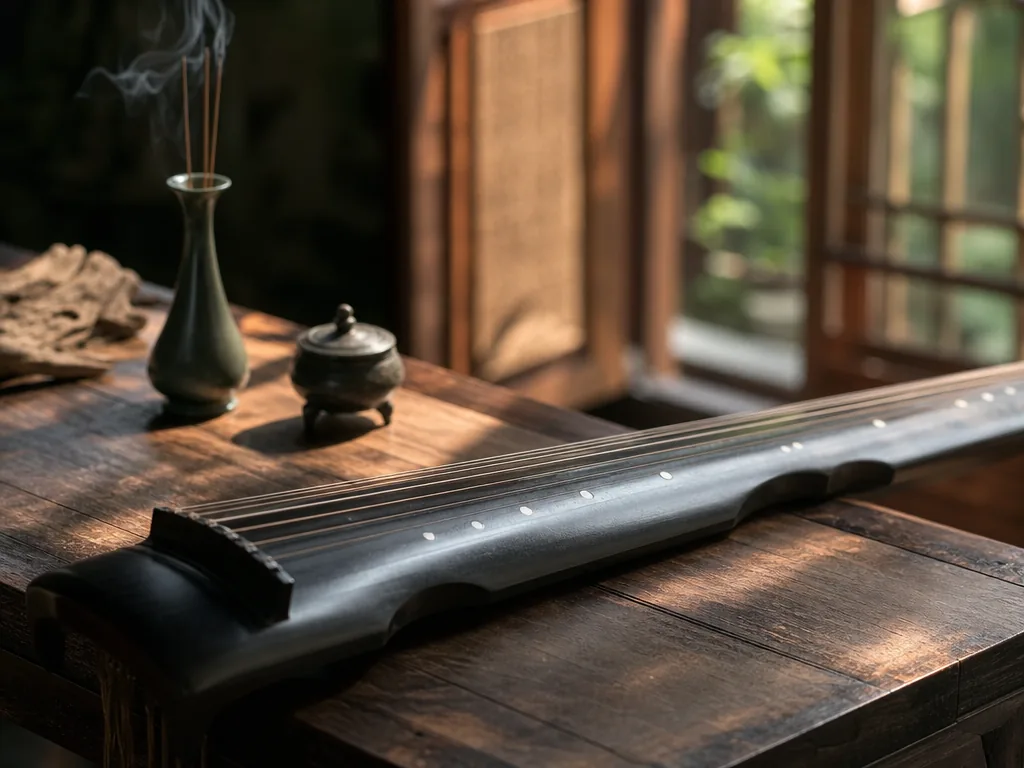
The art of guqin performance has attracted the deep study and interpretation of many musical masters. These masters not only strive for technical excellence but also further express the philosophy and cultural connotations of the guqin. Below are several influential guqin masters and their representative works.
1. Wu Jinglue
- Nationality——China
- Contribution——Wu Jinglue is one of the most influential guqin masters in contemporary China. He made a great contribution to the inheritance and development of guqin music and achieved outstanding results in guqin playing technique, musical interpretation and teaching. His playing style is unique and can deeply express the inner meaning of guqin music.
Representative works:
- Plum Blossom Melody (Meihua San Nong)——This piece expresses the symbolic spirit of the plum blossom — strength, aloofness and purity. Wu Jinglue’s playing is full of charm, and his delicate fingering shows the plum blossom’s nobility.
- High Mountains and Flowing Water (Gao Shan Liu Shui)——One of the classics of guqin music; Wu Jinglue’s interpretation is deeply emotional, expressing the grandeur of nature and the remoteness of the human heart.
2. Jiao Yuanpu
- Nationality——China
- Contribution——Jiao Yuanpu is regarded as one of the greatest guqin players of the 20th century; his research into guqin music is profound and pioneering. His qin playing reached a very high technical level, and he also made outstanding contributions to music theory, guqin restoration and education.
Representative works:
- Flowing Water (Liu Shui)——With its clear tone and flowing melody, this work has become a guqin classic; Jiao Yuanpu’s interpretation expresses the naturalness and change of flowing water.
- New Waters of Dongting (Dong Ting Xin Shui)——This work vividly expresses the tranquillity and vastness of Dongting Lake; Jiao Yuanpu’s technique is superb and the musical expression highly profound.
3. He Houhua
- Nationality——China
- Contribution——He Houhua is one of China’s contemporary guqin masters, skilled at combining the guqin with modern musical elements. His playing style is highly technical, and he is able to add more innovation and a modern feel to guqin music.
Representative works:
- Ode to the Great Tang (Da Tang Fu)——A guqin work with a strong epic feel; He Houhua’s delicate technique demonstrates the magnificent momentum of the flourishing Tang dynasty.
- Wild Geese Descending on the Sandbank (Ping Sha Luo Yan)——This work expresses the tranquillity of the Jiangnan landscape; He Houhua’s interpretation is highly poetic, evoking the serenity and beauty of nature.
4. Tan Dun
- Nationality——China
- Contribution——Tan Dun is a world-renowned composer and conductor whose works span classical and modern music and who has won many international awards including the Oscar. Tan Dun has also worked on guqin composition and performance, combining the guqin with modern music, film scores and other forms to create many innovative guqin works.
Representative works:
- The Myth (Shen Hua)——The soundtrack of this film incorporates guqin elements; by combining the guqin with modern music, Tan Dun created modern musical works with a Chinese flavour.
- Heaven, Earth and Man (Tian Di Ren)——A creation by Tan Dun themed on the guqin, expressing the idea of the unity of heaven and humanity in Chinese philosophy.
Recommended Classic Guqin Works
| Composer/Musician | Work | Musical style | Characteristics |
|---|---|---|---|
| Wu Jinglue | Plum Blossom Melody | Classical | Full of charm, showing the nobility of the plum blossom |
| Jiao Yuanpu | Flowing Water | Classical | Clear and flowing, expressing the natural change of water |
| He Houhua | Ode to the Great Tang | Classical | Grand and magnificent, showing the splendour of the Tang dynasty |
| Tan Dun | The Myth | Modern | Combining the guqin with modern music, showing Chinese flavour |
Frequently Asked Questions (FAQ)
Q: How old is the guqin, and where did it come from?
The guqin has a history of about 3,000 years. Its origins can be traced back to the Western Zhou dynasty (1046–771 BC), when records of the qin already existed, and it became an important instrument of the literati by the Han dynasty (206 BC–220 AD).
Q: Which guqin pieces are considered essential classics?
Among the most recommended works are Wu Jinglue’s “Plum Blossom Melody” and “High Mountains and Flowing Water”, Jiao Yuanpu’s “Flowing Water”, He Houhua’s “Ode to the Great Tang”, and Tan Dun’s modern “The Myth”.
Q: What role does the guqin play in Chinese culture?
It is known as China’s “national instrument” and is regarded as the representative instrument of the ancient Chinese literati. Its playing technique, tonal expression and cultural connotations are deeply embedded in traditional Chinese culture and philosophical thought.
Q: Is the guqin suitable for modern learners?
With the 20th-century revival, the guqin began to merge with modern musical elements and moved onto the international stage. Contemporary masters such as He Houhua and Tan Dun show how the instrument can combine with modern music, making it accessible to today’s learners.
Further Resources & Next Steps
- Official Resources——Consult professional music and guqin institutions for certified tuition and repertoire guidance.
- Further Reading——Explore recordings of the classic works above, together with the biographies of Wu Jinglue, Jiao Yuanpu, He Houhua and Tan Dun.
- Parent Tips——Encourage regular, mindful practice and introduce learners to the guqin’s cultural and philosophical background alongside technique.
Note: The information above is for reference only. Please consult professional education institutions for details.
This article was initially drafted and organised with AI. Editor / Professor Chan Kwok-wai; Managing Editor / Kong Yee-leung
Act Now: Find a Tutor / Register as a Tutor
For parents & students: looking for a home or online tutor for this subject? Click the button below to post a free tuition case (subject, level and preferred time) — TutorZone will match you with suitable tutors:
For tutors: do you teach this subject? Click the button below to register for free and receive more suitable cases — you pay only when a match is made: