 中文(繁體)
 中文(簡體)
 English



IB Chinese A: Language and Literature HL – Course Guide
TUTORZONE SUBJECT GUIDE · IB CHINESE A: LANGUAGE AND LITERATURE HL
IB Chinese A: Language and Literature HL is the most advanced Chinese literature course in the IB, built for students with native-level proficiency. This guide maps the 2025 syllabus, the theory-led assessment model, and the road from HL study into top university programmes.
Direct Answer:What is IB Chinese A: Language and Literature HL?
It is the most advanced IB Chinese literature course for native-level students, with a theory-led assessment model and pathway to top university pr。
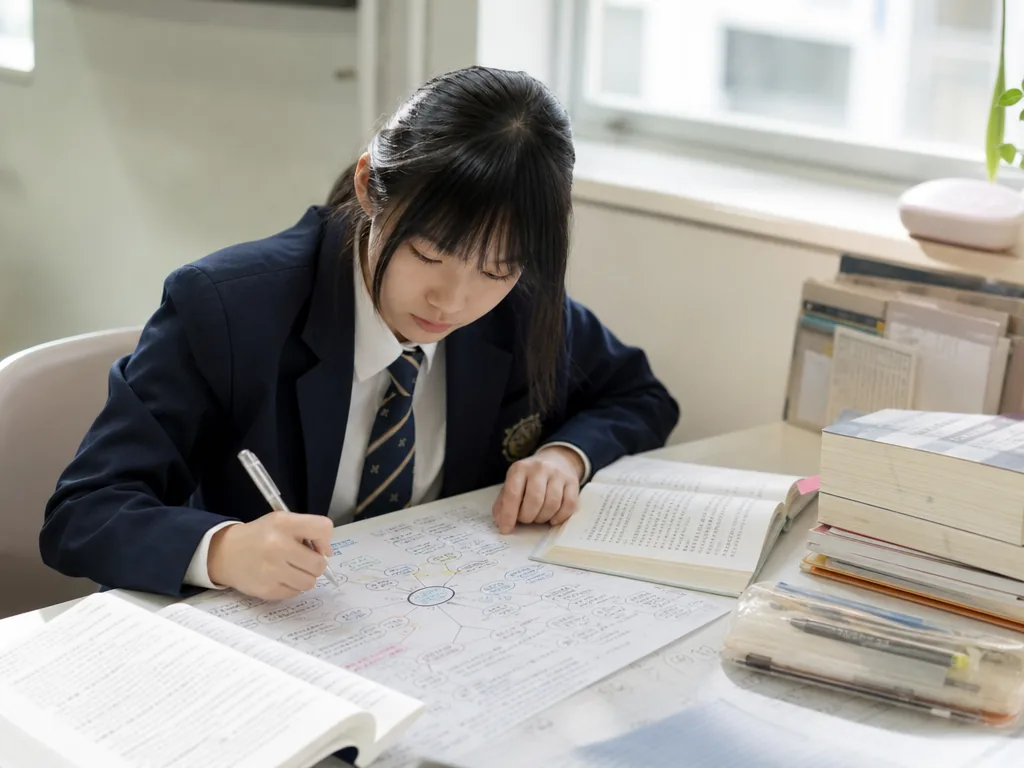
IB Chinese A: Language and Literature HL: Course Positioning & Core Requirements
IB Chinese A: Language and Literature HL is the most advanced Chinese literature course in the IB, designed for students with native-level proficiency. Its core features include:
- In-depth literary study — 13 works must be studied closely (9 at SL).
- Theory application — literary critical theory must be applied (such as narratology and reception aesthetics).
- Cross-cultural comparison — texts from at least 3 Chinese-language cultural spheres must be included (such as mainland China, Taiwan, Hong Kong/Macau and Singapore/Malaysia).
- Independent research — a 1,200–1,500-word HL essay must be completed.
The Unique Value of HL
Academic Text Analysis
Develop academic-level text analysis.
University Foundation
Lay a foundation for university Chinese or comparative literature degrees.
Cultural-Critical Thinking
Develop cultural-critical thinking.
Course Structure (2025 Syllabus)
| Study module | HL reinforcement content | Recommended text combinations |
|---|---|---|
| Study of literary genres | 4 classic works from different periods | Classical: extracts from Dream of the Red Chamber Modern: Qian Zhongshu’s Fortress Besieged |
| Analysis of cultural context | 3 cross-regional Chinese-language texts | Taiwan: Huang Chunming’s The Sandwich Man Hong Kong: Xi Xi’s My City |
| Language-change topic | 2 texts on linguistic phenomena | Research reports on internet language Policy documents on dialect protection |
| HL extension unit | 1 in-depth study of a self-selected work | Contemporary experimental literature may be chosen (such as Dung Kai-cheung’s works) |
| Multimodal texts | Analysis of 2 film/digital-media works | The film A Sun The WeChat public-account phenomenon |
Assessment in Detail
External assessment (80%):
- Paper 1 (2 hours 15 minutes) — analysis of an unseen literary text (choose 1 of 2).
- Paper 2 (2 hours 15 minutes) — comparative literary essay (choose 1 of 4).
- HL essay — independent academic research.
Internal assessment (20%):
- Individual oral (15 minutes) — comparing 1 literary + 1 non-literary text, and applying a literary theory framework.
HL Essay Assessment Criteria
- Appropriateness of theory application — 30%.
- Originality of analysis — 25%.
- Rigour of sources — 20%.
- Academic conventions — 15%.
- Language expression — 10%.
Key Differences Between HL and SL
| Dimension | HL | SL |
|---|---|---|
| Depth of text analysis | Must annotate narrative structure/discourse strategies | Basic rhetorical analysis |
| Theory requirement | At least 2 literary theories must be applied | Theory not compulsory |
| Comparison dimension | Cross-cultural/cross-temporal comparison required | Single-culture analysis is sufficient |
| Academic writing | The essay requires academic citation format | No essay requirement |
| Teaching hours | 240 hours | 150 hours |
Advanced Study Strategies
Practical Application of Literary Theory
Narratology analysis template:
- Type of narrator (omniscient/limited perspective)
- Spatial-temporal structure (linear/fragmented)
- Power relations in discourse
Recommended theory combinations:
- Structuralism — for analysing mythological archetypes.
- Postcolonial theory — for interpreting diasporic literature.
HL Essay Topic Directions
- Linguistics topic — a comparison of political rhetoric across mainland China, Hong Kong and Taiwan.
- Cultural studies — the construction of identity in Hong Kong cinema.
- Digital humanities — the interactive narrative features of web literature.
Advanced Oral Techniques
- Theoretical dialogue framework — textual phenomenon, then theoretical explanation, then questioning and revision, then new interpretation.
Classic & Modern Text Combinations
| Analysis dimension | Traditional classic | Contemporary text |
|---|---|---|
| Narrative innovation | Wu Ming-yi’s The Magician on the Skywalk | Chan Ho-kei’s 13.67 |
| Language experimentation | Wang Wen-hsing’s Family Catastrophe | Kan Yao-ming’s Ghost Slayer |
| Cultural critique | Lu Xun’s The True Story of Ah Q | Han Song’s Subway |
| Multimodal texts | Hou Hsiao-hsien’s The Assassin | Game texts from Genshin Impact |
Research tools:
- CNKI — China National Knowledge Infrastructure, academic literature.
- Voyant Tools — text data analysis.
- Chinese word-frequency analysers — for close language study.
Common Challenges & Solutions
Forced Use of Theory
Solution steps:
- First complete a plain-text analysis.
- Mark the points where theory could be applied.
- Choose the most fitting theory.
Difficulty with Cross-Cultural Comparison
Practical tools:
- Book a mock assessment with an IB examiner.
- Make a “cultural keywords” comparison table: for example, the concept “internet” is expressed as “hulianwang” (mainland China), “wonglok” (Hong Kong/Macau) and “wangji wanglu” (Taiwan).
Choosing an HL Essay Topic
Screening criteria:
- Sufficient primary texts are available.
- There is room for academic debate.
- Research materials are accessible.
University Transition & Development
Recognition by Top Universities
- China — an advantage in Chinese department interviews at Peking University and Tsinghua University.
- UK/US — Oxford Oriental Studies / Harvard East Asian Studies.
- Hong Kong/Singapore — Chinese studies at HKU / NUS.
Research Directions
- Digital humanities methodology.
- Comparative Sinophone literature.
- Contemporary cultural-critical theory.
Study Progression Roadmap
| Stage | Core task | Quality standard |
|---|---|---|
| Term 1 | Build a theory toolbox | Master 3 literary criticism methods |
| Term 2 | Begin the HL essay | Complete a literature review + research question |
| Term 3 | Cross-cultural comparison training | Accumulate 5 cross-cultural analysis cases |
| Final sprint | Think like an examiner | Be able to anticipate the features of a Level 7 response |
Academic Writing Example
HL essay proposal structure:
The modern transformation of Taiwanese Hokkien opera (using an adaptation of The Peony Pavilion as an example)
- Research question — When traditional opera meets digital media, how is its narrative mode reconstructed?
- Theoretical framework — oral-formulaic theory (the Lord-Parry theory), and media ecology (Postman’s theory).
- Subjects of analysis — traditional Taiwanese opera recordings (1980s), and a modern immersive theatre version (2022).
Why HL: The Big Picture
Chinese A: Language and Literature HL is:
Golden Starting Point
A golden starting point for Chinese literary studies.
Thinking Training Ground
A training ground for cultural-critical thinking.
University Preparation
A preparatory course for university humanities research.
Frequently Asked Questions (FAQ)
Q: Is Chinese A: Language and Literature HL only for native speakers?
Yes — it is designed for students with native-level proficiency, and the syllabus assumes the ability to study 13 works closely and apply literary theory at an academic level.
Q: How many works do HL students study compared with SL?
HL students study 13 works closely, compared with 9 at SL. HL also requires applying at least 2 literary theories and a cross-cultural, cross-temporal comparison.
Q: What is the HL essay, and how long should it be?
The HL essay is an independent academic research essay of 1,200–1,500 words, assessed on theory application, originality, source rigour, academic conventions and language expression.
Q: How is the course assessed overall?
External assessment is worth 80% (Paper 1, Paper 2 and the HL essay), while the 15-minute individual oral — comparing one literary and one non-literary text through a theory framework — makes up the remaining 20%.
Further Resources & Next Steps
- Official Resources — the official International Baccalaureate website (www.ibo.org) for the current syllabus and assessment details.
- Further Reading — CNKI, Voyant Tools and Chinese word-frequency analysers for text-analysis research.
- Parent Tips — help your child build a “cultural keywords” comparison table early, and book a mock oral with an IB examiner before the real assessment.
Note: The information above is for reference only. Please consult professional education institutions for details.
This article was initially drafted and organised with AI. Editor / Professor Chan Kwok-wai; Managing Editor / Kong Yee-leung
Act Now: Find a Tutor / Register as a Tutor
For parents & students: looking for a home or online tutor for this subject? Click the button below to post a free tuition case (subject, level and preferred time) — TutorZone will match you with suitable tutors:
For tutors: do you teach this subject? Click the button below to register for free and receive more suitable cases — you pay only when a match is made: