 中文(繁體)
 中文(簡體)
 English



IB Chinese A: Language and Literature SL – Course Guide
TUTORZONE SUBJECT GUIDE · IB CHINESE A: LANGUAGE AND LITERATURE SL
Everything you need to know about IB Chinese A: Language and Literature SL — from the 2025 syllabus structure and assessment weighting to study strategies, recommended texts and university recognition.
Direct Answer:What is IB Chinese A: Language and Literature SL?
It is an IB course balancing literary appreciation with non-literary text analysis, covering the 2025 syllabus, assessment weighting, texts, and un。
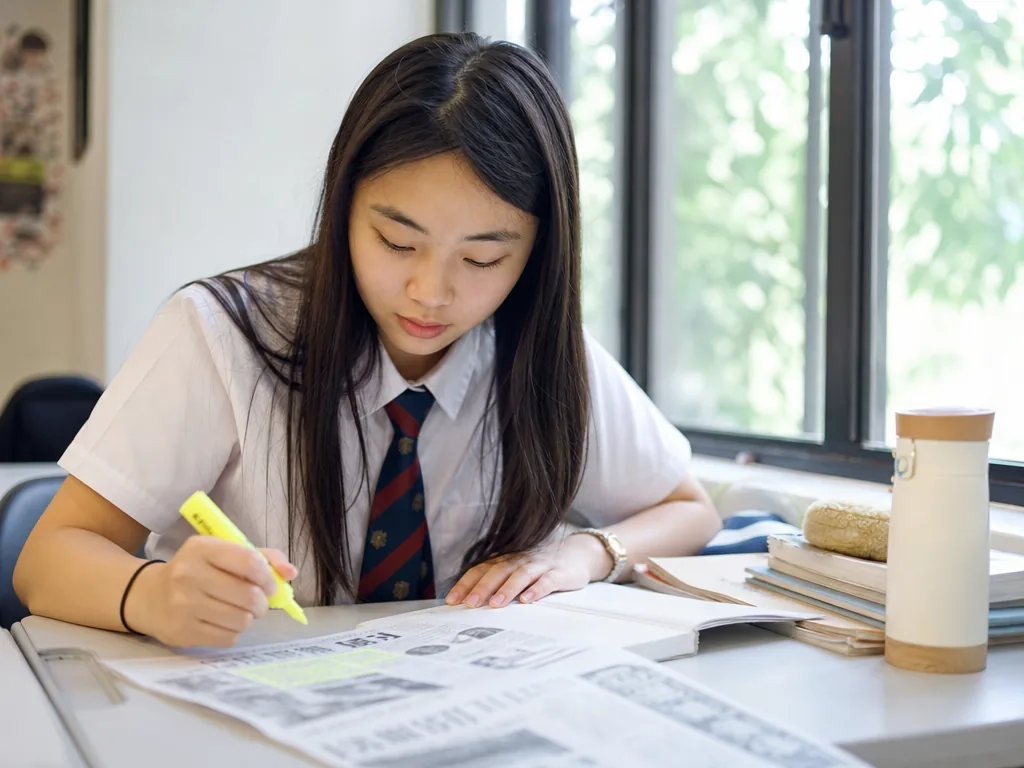
IB Chinese A: Language and Literature SL: Course Positioning and Features
IB Chinese A: Language and Literature SL is designed for IB students whose mother tongue is Chinese, balancing language analysis with literary appreciation. Its features include:
- Dual focus — 50% literary texts + 50% non-literary text analysis
- Cultural depth — focus on linguistic phenomena in Chinese-speaking societies
- Practical orientation — develop lifelong text-interpretation skills
- Lighter workload — only 9 works need to be studied (13 at HL)
Course Structure (2025 Syllabus)
| Study module | Focus | Text examples |
|---|---|---|
| Literary appreciation | 2 core literary works | Lu Xun’s Call to Arms, Pai Hsien-yung’s Taipei People |
| Culture and communication | 3 non-literary texts | Editorials, advertisements, speeches |
| Cross-media study | 2 multimodal texts | The film Farewell My Concubine, news documentaries |
| Self-selected unit | 2 works chosen by the student | Web literature or popular songs may be chosen |
Assessment in Detail
External Assessment (70%)
- Paper 1 (1.5 hours) — analysis of an unseen non-literary text (choose 1 of 2)
- Paper 2 (1.5 hours) — comparative literary question (choose 1 of 4)
Internal Assessment (30%)
- Individual oral (10-minute recording):
- Analysing 1 literary + 1 non-literary text
- Must be linked to a global issue (such as identity)
Assessment Criteria
- Depth of text interpretation — 40%
- Rigour of analytical structure — 30%
- Accuracy of language expression — 20%
- Breadth of cultural perspective — 10%
Key Differences Between SL and HL
| Dimension | SL | HL |
|---|---|---|
| Number of texts | 9 works | 13 works |
| Examination difficulty | One fewer question choice in the paper | Additional requirement to apply theory |
| Research depth | Basic rhetorical analysis | Must explore the influence of literary movements |
| Writing task | No essay | Must submit a 1,200-word research essay |
Effective Study Strategies
Literary Analysis Techniques
- Use the “three-dimensional reading method”: the surface of the text leads to rhetorical devices, cultural context and authorial intention.
Non-Literary Text Practice
Advertisement analysis framework:
- Audience positioning (age/class)
- Appeal strategy (emotional/rational)
- Cultural codes (traditional/modern)
Oral Exam Preparation
- Make an “issue linkage” comparison table:
- Global issue — urbanisation
- Literary text — Lao She’s Rickshaw Boy
- Non-literary text — reports on household-registration policy in Beijing, Shanghai, Guangzhou and Shenzhen

Recommended Text Combinations
| Type | Classic choice | Modern choice |
|---|---|---|
| Novel | Eileen Chang’s Love in a Fallen City | Liu Cixin’s The Three-Body Problem (extracts) |
| Essay | Yu Qiuyu’s Cultural Perplexity | Lung Ying-tai’s Seeing Off |
| Multimodal | The film A City of Sadness | Analysis of a Douyin cultural phenomenon |
| Practical text | A speech by Jack Ma | Palace Museum cultural-creative advertising |
Digital resources:
- Chinese classics database (online texts)
- Chinese rhetorical analysis tools (online corpora)
Common Difficulties and Solutions
Weak Literary Background
Solution:
- Start with contemporary texts (such as Chu Yu-hsun’s The Shadow)
- Use a “text dissection table” to analyse paragraph by paragraph
Difficulty with Non-Literary Analysis
Practical tools:
- The six-elements news annotation method (5W1H)
- A quick-reference handbook of advertising semiotics
Time Management
The exam-clock method:
- Paper 1 — 15 minutes planning + 60 minutes writing + 15 minutes checking
- Paper 2 — 5 minutes choosing questions + 70 minutes writing + 15 minutes revising
University and Career Advantages
University Recognition
- Meets the Chinese-language requirements of top universities worldwide
- Especially helpful for applying to:
- “Double First-Class” universities in mainland China
- Chinese-related courses in Hong Kong, Macau and Singapore
- International sinology programmes
Career Applications
- Cultural communication industries
- Chinese-language teaching
- Cross-border business communication
Study Progress Plan
| Stage | Core task | Checkpoint |
|---|---|---|
| Term 1 | Build a text-analysis framework | Complete close-reading notes on 3 works |
| Term 2 | Strengthen non-literary analysis | Accumulate 10 practical-text analyses |
| Term 3 | Mock examination practice | Reach Level 5 in a mock oral |
| Final sprint | Targeted error improvement | Build a personal weakness map |
Examination Technique Essentials
Golden Structure for Paper 1
- Introduction (3 sentences):
- Text type + core issue
- Body (3 paragraphs):
- Rhetorical features, then social context, then audience impact
- Conclusion (2 sentences):
- Summary + extended reflection
Tips for Paper 2
- Suggested comparison dimensions:
- Differences in narrative perspective
- Reflection of the spirit of the age
- Contrasting aesthetic pursuits
Summary and Action Plan
Chinese A: Language and Literature SL is:
- The best way to maintain depth in your mother tongue
- An academic window into Chinese-speaking societies
- An anchor of cultural identity within the IB
Take action now:
Build a personal text database
Collect quotations, rhetorical examples and cultural references from every work you study.
Practise 1 timed analysis each week
Recreate exam conditions to sharpen planning, pacing and revision.
Join an online literature discussion community
Debate interpretations to broaden your cultural perspective.
Frequently Asked Questions (FAQ)
Q: Is IB Chinese A: Language and Literature SL only for native Chinese speakers?
It is aimed at students whose mother tongue is Chinese and who want to keep studying their first language at a high level. If Chinese is your strongest academic language, SL (9 works) offers real depth with a lighter workload than HL (13 works).
Q: How does this subject differ from IB Chinese B?
Chinese B is designed for learners of Chinese as a foreign or second language and focuses on communication skills. Chinese A: Language and Literature assumes first-language proficiency and centres on literary and non-literary text analysis.
Q: How is the 10-minute individual oral structured?
You analyse one literary and one non-literary text and link them to a global issue such as identity. It is recorded and counts for 30% of the final grade.
Q: How much self-study time should I set aside each week?
A common target is 4–6 hours a week, balancing close reading of set works with weekly timed practice on Paper 1 and Paper 2 skills.
Further Resources & Next Steps
- Official Resources — The International Baccalaureate website (www.ibo.org) and the official Language A: Language and Literature subject guide for the current (2025) syllabus.
- Further Reading — Core works such as Lu Xun’s Call to Arms, Pai Hsien-yung’s Taipei People, Lao She’s Rickshaw Boy and Eileen Chang’s Love in a Fallen City, plus modern choices like Liu Cixin’s The Three-Body Problem.
- Parent Tips — Encourage daily reading of Chinese news and opinion pieces, and discuss global issues at home to help your child build material for the individual oral.
Note: The information above is for reference only. Please consult professional education institutions for details.
This article was initially drafted and organised with AI. Editor / Professor Chan Kwok-wai; Managing Editor / Kong Yee-leung
Act Now: Find a Tutor / Register as a Tutor
For parents & students: looking for a home or online tutor for this subject? Click the button below to post a free tuition case (subject, level and preferred time) — TutorZone will match you with suitable tutors:
For tutors: do you teach this subject? Click the button below to register for free and receive more suitable cases — you pay only when a match is made: