
 中文(繁體)
 中文(簡體)
 English



Konghou (Chinese Harp): Complete Overview, History and Learning Guide
TUTORZONE SUBJECT GUIDE · PLUCKED STRING INSTRUMENTS
The konghou is one of China’s most fascinating traditional plucked string instruments — a harp-like instrument with a gentle, ethereal voice that has echoed through court, religious and folk music for more than two thousand years. This guide traces its origins and evolution, profiles its leading masters, and recommends the classic works every student should know.
Direct Answer:What is the konghou?
The konghou is a traditional Chinese harp-like plucked string instrument with a gentle, ethereal voice.
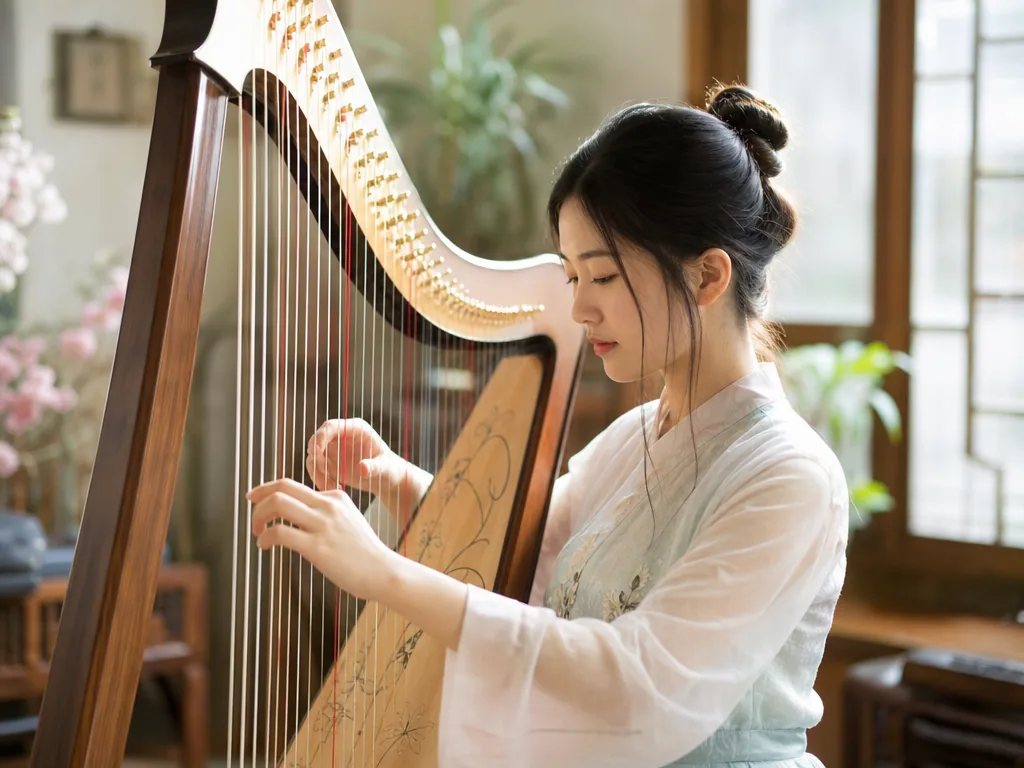
What Is the Konghou?
The konghou, one of China’s traditional string instruments, has a long history. It is a plucked instrument similar to the guzheng, usually with two sound boxes and a dozen or more strings. The konghou’s tone is gentle and highly distinctive, and it has long played an important role in ancient Chinese court music, religious music and folk music. Its tone is clear and charming, and its playing technique is unique.
Origins & Evolution
Trace the konghou from the Warring States era to its modern revival.
Masters & Works
Meet four leading konghou masters and their signature pieces.
Listening & Learning
Start with recommended classics and practical next steps.
Origins of the Konghou
- The earliest records — The history of the konghou can be traced back to the Spring and Autumn and Warring States periods (770–221 BC), when the konghou was a relatively simple string instrument and already held an important place in the musical culture of the time.
- Development in the Han dynasty — By the Han dynasty (206 BC–220 AD), the konghou gradually developed into an instrument of high musical expressiveness and was widely used in court and sacrificial music. The Han-dynasty konghou had a relatively powerful tone and fairly mature playing technique.
- The Tang and Song dynasties — During the Tang and Song dynasties the konghou developed further and became an important instrument in court music and religious ceremonies. Tang literati such as Bai Juyi and Li Bai often mentioned the konghou in their poetry, showing its cultural standing at the time.
Evolution and Revival of the Konghou
- The Yuan, Ming and Qing dynasties — During the Yuan, Ming and Qing dynasties, the konghou was gradually replaced by instruments such as the guzheng and pipa, though it retained a place in folk and temple music. The konghou music of this period was mostly conservative, without major technical innovation.
- The 20th century to the present — From the 20th century, with the revival of Chinese musical culture, the konghou experienced a relative revival and gradually returned to the stage in modern music. Contemporary musicians combine traditional konghou technique with modern musical elements, further promoting its development.
From court music to the modern stage, the konghou’s gentle, ethereal voice has endured for more than two thousand years.
Notable Konghou Masters and Their Representative Works
Although the konghou went through a period of dormancy in history, with the renewed attention of musicians it has gradually returned to the musical stage and won new attention in contemporary music. Below are several outstanding konghou masters and their representative works.
1. Wang Jianguo
Nationality: China
Contribution: Wang Jianguo is one of the most influential konghou players in contemporary China. He is a pioneer of Chinese konghou studies, combining the ancient art of the konghou with modern musical language and working to promote the konghou’s development on the international music stage.
Representative works:
- Zhaojun Goes Beyond the Great Wall (Zhao Jun Chu Sai) — Based on an ancient Chinese historical story, Wang Jianguo’s performance is highly emotional, vividly expressing Zhaojun’s tragedy and resolve.
- Flowing Water Without Trace (Liu Shui Wu Hen) — This work expresses the softness and tranquillity of flowing water; Wang Jianguo’s technique is superb, and the music is full of an ethereal atmosphere.
2. Zhu Yulian
Nationality: China
Contribution: Zhu Yulian is an outstanding figure in the contemporary konghou field, with deep konghou performance skills and a great contribution to konghou education and research. Her playing style is rich and emotional, and she often performs at international music festivals.
Representative works:
- Moonlit Night on the Spring River (Chun Jiang Hua Yue Ye) — A classic work of Chinese music; Zhu Yulian’s interpretation is elegant and deeply affectionate, fully expressing the beauty of a spring night in Jiangnan.
- Mooring at Night by Niuzhu, Recalling the Past (Ye Bo Niu Zhu Huai Gu) — Adapted from classical poetry, Zhu Yulian’s performance is delicate, combining ancient sentiments with modern emotion.
3. Li Ruobing
Nationality: China
Contribution: Li Ruobing is an outstanding figure in Chinese konghou music; her playing style has a modern feel, and she dares to incorporate new musical elements into the ancient konghou. Her playing has a strong personal style, and she has unique insights into the innovation of konghou music.
Representative works:
- Tide Rising over the Blue Sea (Bi Hai Chao Sheng) — This work is full of the rise and fall of ocean waves, and Li Ruobing expresses this natural scene vividly, with dynamic music.
- Autumn Waters Share the Colour of the Vast Sky (Qiu Shui Gong Chang Tian Yi Se) — Based on classical Chinese poetry, Li Ruobing’s interpretation is deep and tranquil, perfectly showing the serene beauty of autumn.
4. Huang Chenxi
Nationality: China
Contribution: Huang Chenxi is a rising force in the contemporary konghou world, actively innovating in modern konghou composition and blending konghou music with other modern musical styles. Her playing technique is extremely flexible and her musical expression delicate.
Representative works:
- When the Wild Geese Return (Yan Zi Hui Shi) — This work is full of poetry; Huang Chenxi’s performance is full of emotion, perfectly expressing the sorrow and tenderness of the music.
- Flowers in a Mirror, Moon in the Water (Jing Hua Shui Yue) — This work expresses the “moon in the water, flowers in a mirror” imagery of classical Chinese poetry; her playing is highly ethereal and dreamlike.
Recommended Classic Konghou Works
| Composer/Musician | Work | Musical style | Characteristics |
|---|---|---|---|
| Wang Jianguo | Zhaojun Goes Beyond the Great Wall | Classical | Expresses the tragedy of Zhaojun, full of emotion |
| Zhu Yulian | Moonlit Night on the Spring River | Classical | Full of the poetry of a Jiangnan night, elegant and affectionate |
| Li Ruobing | Tide Rising over the Blue Sea | Modern | Full of ocean-wave feeling, dynamic rhythm |
| Huang Chenxi | When the Wild Geese Return | Classical | Emotionally deep, expressing solitude and memory |
Frequently Asked Questions (FAQ)
Q: What is the konghou, and how is it related to the guzheng?
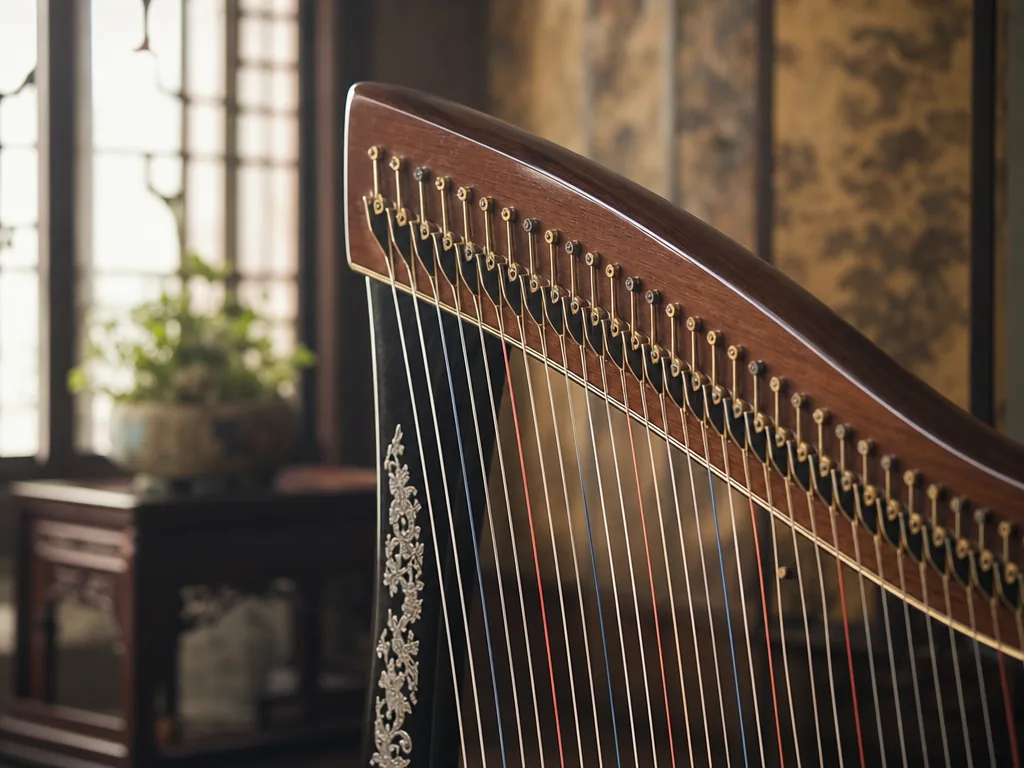
The konghou is an ancient Chinese plucked string instrument similar to the guzheng, usually built with two sound boxes and a dozen or more strings. Its tone is gentle, clear and highly distinctive, which is why it has featured so prominently in court, religious and folk music.
Q: How long has the konghou been around?
The earliest records trace the konghou back to the Spring and Autumn and Warring States periods (770–221 BC). It reached high musical expressiveness by the Han dynasty (206 BC–220 AD) and flourished further through the Tang and Song dynasties.
Q: What happened to the konghou after the Tang and Song dynasties?
During the Yuan, Ming and Qing dynasties it was gradually replaced by instruments such as the guzheng and pipa, surviving mainly in folk and temple music. From the 20th century onward it enjoyed a revival and returned to the modern concert stage.
Q: Which konghou works should a beginner listen to first?
Start with the classics: “Zhaojun Goes Beyond the Great Wall” by Wang Jianguo, “Moonlit Night on the Spring River” by Zhu Yulian, “Tide Rising over the Blue Sea” by Li Ruobing, and “When the Wild Geese Return” by Huang Chenxi.
Further Resources & Next Steps
- Official Resources — Professional music education institutions and konghou performance ensembles for authoritative repertoire and instruction.
- Further Reading — Biographies and recordings of leading masters such as Wang Jianguo, Zhu Yulian, Li Ruobing and Huang Chenxi.
- Parent Tips — Encourage children to listen to classic konghou pieces and build guzheng fundamentals before beginning konghou lessons.
Note: The information above is for reference only. Please consult professional education institutions for details.
This article was initially drafted and organised with AI. Editor / Professor Chan Kwok-wai; Managing Editor / Kong Yee-leung
Act Now: Find a Tutor / Register as a Tutor
For parents & students: looking for a home or online tutor for this subject? Click the button below to post a free tuition case (subject, level and preferred time) — TutorZone will match you with suitable tutors:
For tutors: do you teach this subject? Click the button below to register for free and receive more suitable cases — you pay only when a match is made: