
 中文(繁體)
 中文(簡體)
 English



Mandolin: Complete Overview, History and Learning Guide
TUTORZONE SUBJECT GUIDE · PLUCKED STRING INSTRUMENTS
With four pairs of strings and a bright, ringing tone, the mandolin has travelled from Renaissance Italy to the heart of bluegrass, classical and modern pop. This guide traces its history, profiles its most influential players, and rounds up the works and resources every learner should know.
Direct Answer:What is the mandolin?
The mandolin is a plucked string instrument with four pairs of strings and a bright, ringing tone, originating in Renaissance Italy and used in blu。

What Is the Mandolin?
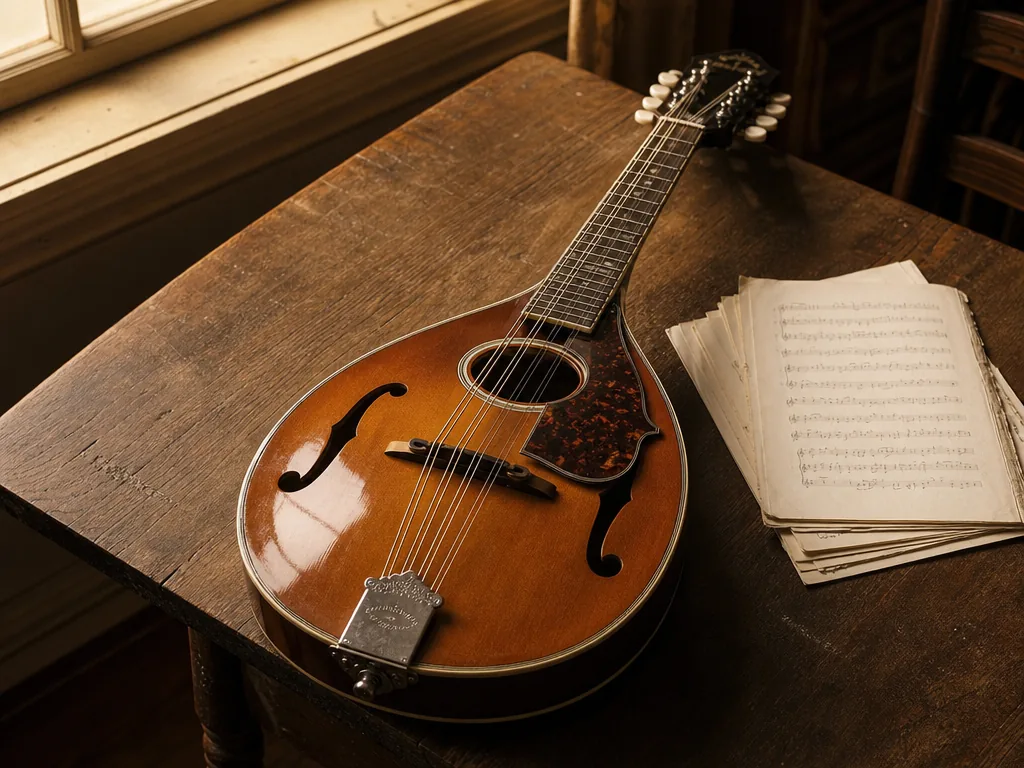
The mandolin is a string instrument with four pairs of strings and a bright, clear tone, widely used in folk music, classical music and some modern musical styles. The mandolin originated in Europe, and over the following centuries it continued to evolve and develop until it became one of the world’s popular instruments.
Four pairs of strings, one bright and clear voice — a small instrument that has travelled from the courts of Italy to the modern stage.
Origins and Early Development
- Ancient roots: The origins of the mandolin can be traced back to the Italian lira and lute, which were very popular in the medieval and Renaissance periods. These string instruments often had many strings and were used in court and folk music. The name “mandolin” first appeared in 16th-century Italy, when the mandolin usually had a smaller body and a more compact structure.
- Development in the 17th century: In the 17th century the Italian mandolin gradually spread to other European countries. Italian composers and performers began to incorporate the mandolin into opera, instrumental ensembles and chamber music, gradually raising its musical status.
- Improvement in the 18th century: In the 18th century the sound quality of the mandolin was further improved and it began to take on the basic structure of the modern mandolin. In Italy especially, the design and manufacture of the mandolin gradually evolved, and it became one of the important instruments of Baroque music.
Evolution and Modernisation
- Popularisation in the 19th century: From the 19th century, the mandolin spread from Italy to other European countries and became popular in the United States and elsewhere. With the waves of immigration to America, the mandolin gradually became an important instrument in American folk music, bluegrass and classical music.
- Diversification in the 20th century: In the 20th century, with the diversification of musical styles, the mandolin became ever more widely used. It is a common instrument not only in folk, bluegrass and classical music but has also found a place in modern rock and popular music. Many musicians began to incorporate the mandolin into other musical styles and to innovate technically.
Notable Mandolin Masters and Their Representative Works
Many outstanding mandolin masters have emerged during the development of the instrument, and their works and playing styles have continually injected innovation into mandolin music. Below are several outstanding mandolin players and their representative works.
1. Chris Thile
Nationality: United States
Contribution: Chris Thile is one of the most influential mandolin players of the contemporary era and a representative figure of bluegrass and modern folk music. His technique is superb and his playing style innovative, and he has made many innovations in mandolin technique.
Representative works:
- The Goat Rodeo Sessions——A classic collaborative album with other musicians, showing his superb mandolin technique and his fusion of bluegrass and other musical styles.
- Not All Who Wander Are Lost——A representative work; his playing style is free and flexible, full of emotion, showing the mandolin’s diverse tone.
2. David Grisman
Nationality: United States
Contribution: David Grisman is a celebrated mandolin player and composer, and one of the pioneers of bluegrass and newgrass music. The David Grisman Quintet he founded combined the mandolin with jazz, bluegrass and folk elements, creating a brand-new musical style.
Representative works:
- David Grisman Quintet——An album blending the mandolin with jazz and bluegrass, a classic of modern mandolin music.
- Mondo Mando——A signature work incorporating various musical styles, showing the mandolin’s limitless possibilities in modern music.
3. Bill Monroe
Nationality: United States
Contribution: Bill Monroe was one of the founders of bluegrass music; although he mainly played the fiddle and guitar, he also played a key role in the development and popularisation of the mandolin. His musical style had a profound influence on later mandolin players.
Representative works:
- Blue Moon of Kentucky——A bluegrass classic; the mandolin playing in it adds rich emotion to the whole song.
- Muleskinner Blues——This song blends bluegrass and early rock elements, and the mandolin playing adds layers to the song’s dynamism and rhythm.
4. André Hagué
Nationality: France
Contribution: André Hagué is one of the most respected mandolin players of the contemporary era, known for his superb technique and deep understanding of the mandolin. His musical style blends classical, jazz and folk music, and his playing is varied and full of emotion.
Representative works:
- The Mandolin in the Classical Style——This album shows André Hagué’s modern interpretation of the mandolin, combining its tone with classical music to create a refreshing musical style.
- Mandolin Jazz Suite——An innovative jazz interpretation, skilfully blending the mandolin’s tone into jazz music.
Recommended Classic Mandolin Works
| Composer/Musician | Work | Musical style | Characteristics |
|---|---|---|---|
| Chris Thile | The Goat Rodeo Sessions | Bluegrass | Created by several musicians, blending bluegrass and classical elements |
| David Grisman | David Grisman Quintet | Bluegrass/Jazz | A landmark album of modern mandolin music, innovative style |
| Bill Monroe | Blue Moon of Kentucky | Bluegrass | A bluegrass classic with an emotionally rich mandolin part |
Frequently Asked Questions (FAQ)
Q: Is the mandolin difficult for beginners to learn?
The mandolin is approachable for beginners. Its four pairs of strings are tuned in unison pairs, the fretboard is compact, and simple melodies and chords can be picked up quickly — which is why many teachers recommend it as a friendly first string instrument.
Q: How is the mandolin different from a guitar?
A guitar has six single strings, while a mandolin has four pairs of double strings (called courses) tuned like a violin to G–D–A–E. This pairing gives the mandolin its bright, ringing tone and makes it well suited to tremolo and fast melodic lines.
Q: What musical styles can I play on the mandolin?
The mandolin is highly versatile. It is a core instrument in folk, bluegrass and classical music, and it also appears in jazz, rock and popular music. Players such as Chris Thile and David Grisman have shown just how wide its range can be.
Q: At what age can children start learning the mandolin?
Children can often begin around age six or seven, once their hands are large enough for the fretboard. Smaller-bodied and child-sized mandolins are available, and early lessons usually focus on posture, simple melodies and basic picking technique.
Further Resources & Next Steps
- Official Resources——Mandolin Cafe (mandolincafe.com) is a well-established online hub for mandolin lessons, forums, tabs and instrument news.
- Further Reading——Start with a graded mandolin method and a collection of classical études, then explore the landmark albums listed in the table above (The Goat Rodeo Sessions, David Grisman Quintet, Blue Moon of Kentucky).
- Parent Tips——Keep practice short and frequent, and play recordings of bluegrass, folk and classical mandolin at home so children build their ear and enthusiasm early.
Note: The information above is for reference only. Please consult professional education institutions for details.
This article was initially drafted and organised with AI. Editor / Professor Chan Kwok-wai; Managing Editor / Kong Yee-leung
Act Now: Find a Tutor / Register as a Tutor
For parents & students: looking for a home or online tutor for this subject? Click the button below to post a free tuition case (subject, level and preferred time) — TutorZone will match you with suitable tutors:
For tutors: do you teach this subject? Click the button below to register for free and receive more suitable cases — you pay only when a match is made: