
 中文(繁體)
 中文(簡體)
 English



Saxophone: Complete Overview, History and Learning Guide
TUTORZONE SUBJECT GUIDE · WIND INSTRUMENTS
The saxophone is a reed-driven wind instrument with a brass body, invented in 1846 by Adolphe Sax to combine the flexibility of the woodwinds with the volume of the brass. From military bands to jazz and pop, it has become one of music’s most expressive and widely loved voices.
Direct Answer:What is covered in the saxophone guide?
It covers the saxophone’s invention by Adolphe Sax in 1846, its structure, and its role from military bands to jazz and pop.

Origins of the Saxophone
The Invention and Development of the Saxophone
The innovations of Adolphe Sax
- Adolphe Sax was a maker passionate about instrument innovation, and he wanted to create an instrument that combined the flexibility of the woodwinds with the volume of the brass. After lengthy experimentation and refinement, Sax successfully invented the saxophone in 1846 and registered the patent in the same year. The design of the saxophone combines the structure of a tube, the appearance of brass and a reed-based method of sound production.
- The distinctive feature of the saxophone is that its tone has both the softness and delicacy of a woodwind and the power and penetration of a brass instrument. This made it widely used in military bands, orchestras, jazz and many other musical fields.
Early applications
- The saxophone was originally designed for military bands, especially to enhance the band’s volume and tone. In the late 19th century, as it became popular in the military, the saxophone gradually entered more musical fields and was incorporated by composers into orchestral scoring.
- In the early years the saxophone did not immediately gain widespread recognition, but over time it found its place in many musical forms, especially jazz.
Structure and Characteristics of the Saxophone
The saxophone’s structure is similar to other woodwinds and uses a reed to produce sound, but it has the appearance of a brass instrument. It is made up of the following main parts:
- Reed and mouthpiece — The saxophone uses a reed similar to the clarinet’s, but larger and fixed to the mouthpiece. The player blows to make the reed vibrate and produce sound.
- Body — The body of the saxophone is usually made of a copper alloy and has many tone holes and keys. The design of the tone holes and keys allows the player to change pitch.
- Key system — The saxophone’s key system is more complex than that of other woodwinds, with multiple keys that allow the player to perform a wider range.
- Range and tone — The saxophone has a wide range, covering roughly two octaves. Its tone is full of emotion and can express music of all kinds, from soft and warm to strong and impassioned.
The Saxophone in Music
The saxophone’s tone and technique make it an important instrument in many musical styles, particularly in the following fields:
- Military bands — The saxophone was originally designed as part of the military band, intended to complement the volume and tone of the brass instruments. Its powerful tone led to its widespread use in military bands.
- Orchestras — Over time the saxophone also entered the orchestra and began to play an important role in the works of many composers. For example, the French composers Olivier Messiaen and Maurice Ravel both used the saxophone in their orchestral works.
- Jazz — One of its most influential fields is jazz. The saxophone became one of the most representative instruments of jazz, especially in the early 20th century, when many celebrated jazz musicians began using the saxophone for improvisation. The saxophone’s emotional expression and improvisational ability make it very popular in jazz.
- Popular music — As the saxophone became more widespread, it also gained a place in popular music, especially in 1980s pop, where the saxophone often appeared in the arrangements of hit songs.
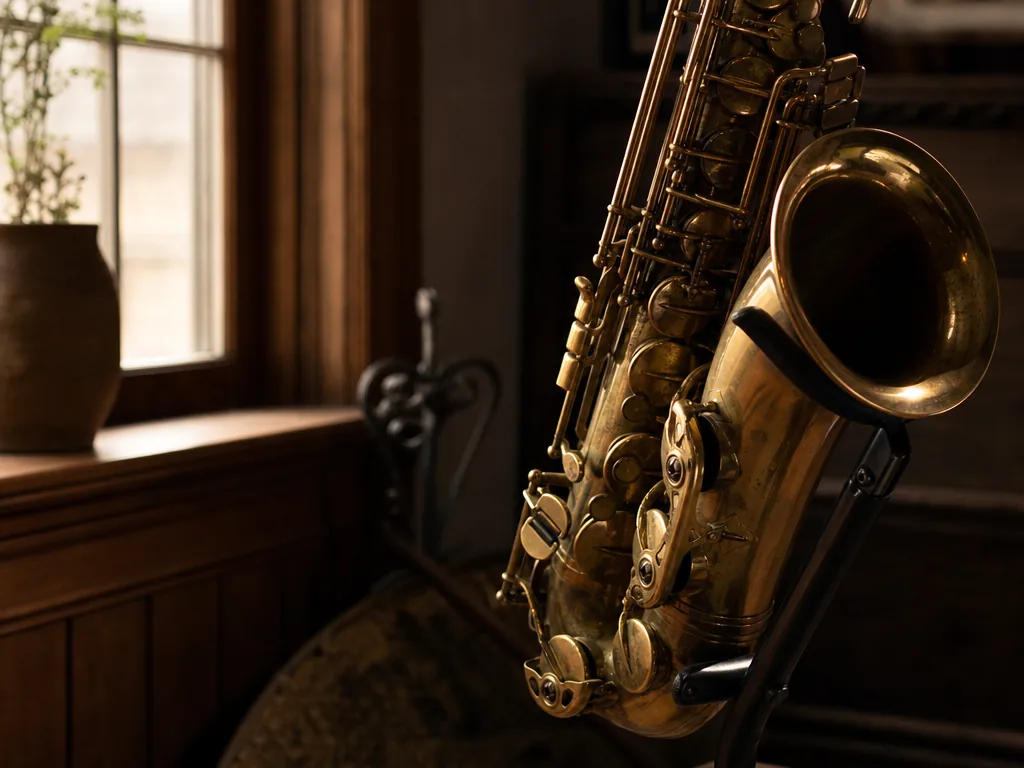
Notable Saxophone Players and Their Masterpieces
The saxophone has many outstanding players whose skill and creativity have played an important role in the instrument’s development and popularity. Below are some influential saxophonists and their masterpieces:
- John Coltrane — Masterpiece: A Love Supreme is one of Coltrane’s most influential albums and represents the peak of his innovation and improvisation in jazz. Coltrane’s playing had a profound influence on saxophone technique and expression.
- Charlie Parker — Masterpiece: Ko-Ko. Parker is regarded as one of the greatest saxophonists in the history of jazz. His improvisational technique and innovative style had a profound influence on modern jazz, and many of his works are still considered jazz classics.
- Kenny G — Masterpiece: Songbird. As a representative of pop and smooth jazz, Kenny G’s saxophone style had a major impact on the music scene of the 1990s. His works are widely loved and he has a large fan base worldwide.
- Stan Getz — Masterpiece: Getz/Gilberto. Getz was one of the most celebrated saxophonists of the 20th century, with a soft, elegant playing style, and his collaborative album Getz/Gilberto with the Brazilian musician João Gilberto became a classic of music history.
- Keith Jarrett — Masterpiece: The Köln Concert. Keith Jarrett is known for his diverse musical styles and improvisational ability; although he is better known as a pianist, he has also demonstrated the use of the saxophone in many of his works.
The Musical Value of the Saxophone
The musical value of the saxophone is reflected in its wide range of applications and its capacity for emotional expression:
Emotional expression
The saxophone’s tone is warm and soft and can express delicate emotions, while it can also produce strong, powerful sounds suited to impassioned moods. This gives the saxophone an irreplaceable role in many musical styles.
Wide range
The saxophone has a broad range and can play many notes from low to high, making it very flexible in musical expression and able to meet the demands of many musical styles.
Improvisation
The saxophone’s improvisational ability is one of its most distinctive strengths. Especially in jazz, the saxophone is often used for improvisation, giving it limitless creative potential in music.
Conclusion
As an instrument with a distinctive tone and demanding technique, the saxophone has had a profound influence on the history of music. It was invented by Adolphe Sax of Belgium and has been widely used in military bands, orchestras, jazz and popular music. Outstanding saxophonists such as John Coltrane, Charlie Parker and Kenny G have not only advanced saxophone technique through their masterpieces but also made a major contribution to the instrument’s popularity and development. Whether in jazz or other musical fields, the saxophone is loved by musicians and audiences alike for its emotionally rich and varied tone.
Frequently Asked Questions (FAQ)
Q: Is the saxophone a woodwind or a brass instrument?
It is officially classed as a woodwind, because its sound is produced by a vibrating reed rather than by buzzing the lips. Its brass body gives it the appearance and projection of a brass instrument, which is why the two families are often confused.
Q: What is a good age for a child to start learning the saxophone?
Many teachers suggest starting around age 8 to 10, once a child’s hands are large enough to reach the keys and the adult front teeth are in place. Younger beginners often start on the recorder or clarinet first and switch later.
Q: Which saxophone should a beginner choose?
The alto saxophone is the most common starting choice because of its smaller size, comfortable weight, and the wealth of beginner repertoire and teaching material available for it.
Q: Is the saxophone hard to learn?
It has a relatively quick learning curve for producing a first sound compared with many instruments, but mastering breath control, embouchure and the key system takes steady, guided practice.
Further Resources & Next Steps
- Official Resources——The Associated Board of the Royal Schools of Music (ABRSM) offers graded saxophone syllabuses and exams, a useful reference for structured learning.
- Further Reading——Richard Ingham’s The Cambridge Companion to the Saxophone provides a deeper history and repertoire guide.
- Parent Tips——Encourage short, regular practice sessions, and ask your child’s teacher about renting an alto saxophone before committing to a purchase.
Note: The information above is for reference only. Please consult professional education institutions for details.
This article was initially drafted and organised with AI. Editor / Professor Chan Kwok-wai; Managing Editor / Kong Yee-leung
Act Now: Find a Tutor / Register as a Tutor
For parents & students: looking for a home or online tutor for this subject? Click the button below to post a free tuition case (subject, level and preferred time) — TutorZone will match you with suitable tutors:
For tutors: do you teach this subject? Click the button below to register for free and receive more suitable cases — you pay only when a match is made: