 中文(繁體)
 中文(簡體)
 English



Hong Kong International Schools: Junior Secondary Chinese Language Curriculum Overview
TUTORZONE SUBJECT GUIDE · INTERNATIONAL JUNIOR HIGH SCHOOL
A practical guide to the junior secondary Chinese language curriculum in Hong Kong’s international schools — from the texts students read and the skills they build, to how they are assessed and how they progress toward IGCSE and IB Chinese.
Direct Answer:What is the junior secondary Chinese language curriculum in Hong Kong international schools?
A practical guide to junior secondary Chinese in HK international schools, covering texts, skills, assessment, and progression to IGCSE and IB Chin。
What Is Secondary Chinese Language?
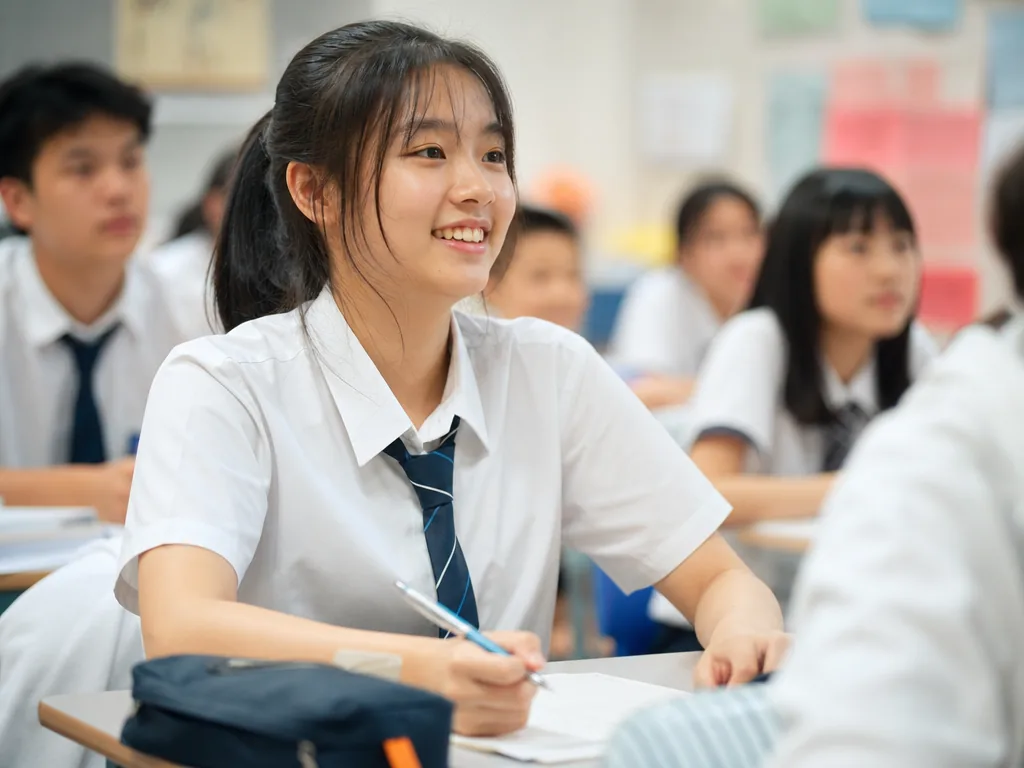
In Hong Kong’s international schools, the Secondary Chinese Language curriculum integrates local Chinese education traditions with global perspectives. The programme emphasizes language proficiency, cross-cultural understanding, and critical thinking, building a solid foundation for IGCSE and IB Chinese courses.
Curriculum Focus and Key Features
- Multicultural Literary Exposure — texts include classical Chinese literature, contemporary Chinese works, and overseas Chinese authors.
- Bilingual Learning Support — certain key vocabulary and abstract ideas are presented in both Chinese and English to enhance comprehension.
- Balanced Development of Application and Creativity — focus on writing, speaking, and digital media literacy.
- Inquiry-Based Learning — encourages students to ask questions, reflect critically, and explore various perspectives.
Curriculum Structure (Years 7–9)
| Year | Unit Focus | Learning Highlights |
|---|---|---|
| Y7 | Reading Comprehension & Expression | Narrative and descriptive texts, fables, character analysis, identifying main ideas |
| Y8 | Personal & Expository Writing | Real-life themed essays, scene/person descriptions, oral presentations, paragraph coherence |
| Y9 | Argumentative & Comparative Reading | Exploring social issues (e.g., environmentalism, justice), comparing viewpoints, media text analysis |
Sample Extended Texts
- Classical Chinese — The Analects, Peach Blossom Spring
- Modern Prose — Back View by Zhu Ziqing, Hear the Cold Rain by Yu Guangzhong
- Contemporary Fiction — excerpts from authors such as Lin Yi-Han, Li Ang, and Zhang Manjuan
- Hong Kong Literature — works by writers like Yesi and Wong Bik-wan are also included
Assessment Components
| Assessment Type | Weight | Description |
|---|---|---|
| Reading & Literary Analysis | 30% | Includes text analysis, character portrayal, thematic exploration, and style commentary |
| Writing Tasks (Narrative/Argumentative) | 30% | Prompt-based and free-topic writing, imitation writing, reflective journaling |
| Oral Presentation | 20% | Group discussions, storytelling, short critiques, multimedia reporting |
| Class Participation & Projects | 20% | Reading journals, interdisciplinary showcases (e.g., Chinese and Drama), eBook creation |
Effective Learning Strategies
Text Analysis Techniques
Three-Level Reading Strategy:
- Surface — plot, characters, setting
- Middle — themes, rhetoric, structure
- Deep — cultural meanings, values, metaphorical messages
Writing Skills Enhancement
Three-Part Composition Structure (Introduction – Development – Conclusion):
- Hooked Opening — use a quote or question to create suspense
- Body — detailed examples and rhetorical rhythm
- Conclusion — reconnect to theme or leave open-ended thoughts
Tip: build a “Golden Sentence Bank” with rhetorical devices, thematic sentence structures, and vivid expressions.
Speaking & Presentation Skills
- Participate monthly in group presentations or book clubs.
- Use the PREP Strategy for spoken responses: Point, Reason, Example, Point (restated).
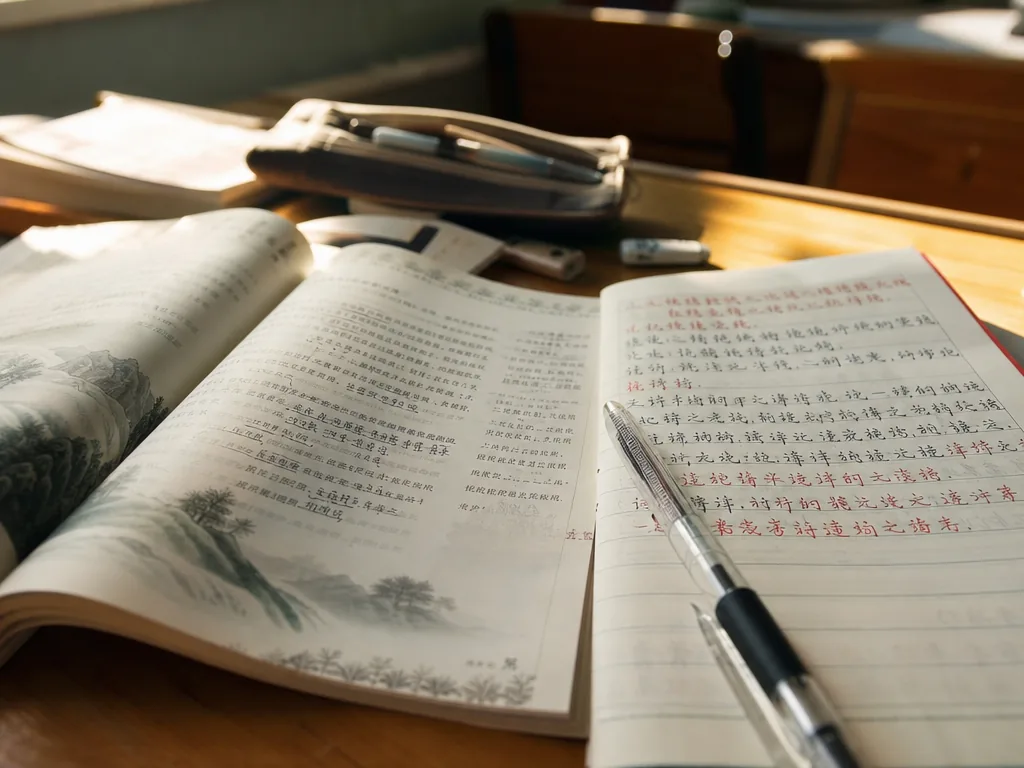
Common Challenges and Practical Solutions
| Challenge | Suggested Strategy |
|---|---|
| Inconsistent fluency or expression | 10 minutes of daily dictation plus memorizing model paragraphs to strengthen rhythm and word usage |
| Difficulty switching between Chinese and English contexts | Build a Chinese-English terminology bank for key concepts in rhetoric, emotion, and theme |
| Weak or vague writing content | Keep a “Life Observation Notebook” to convert daily life and social issues into writing material |
Further Study and Progression Pathways
Curriculum Progression
- IGCSE Chinese as First Language
- IB Chinese A: Language and Literature (HL/SL)
- IB Chinese B (for intermediate-level Chinese learners)
Enrichment Activities
- Chinese Reading Passport Challenge
- International Chinese Writing Competitions
- Chinese Debate Team or Recitation Festival Training Camps
Monthly Action Plan and Learning Tools
Monthly Study Goals
- Read 1 modern Chinese novel and annotate key quotes, themes, and reflections
- Write 1 opinion piece or diary-style composition within 30 minutes
- Discuss 1 social issue with family or peers in Chinese
Recommended Tools and Platforms
| Category | Tools / Platforms | Use Case |
|---|---|---|
| Reading Platforms | Read+ (Yuedu Binfen), ChineseBookCity eLibrary | Access to a wide range of Chinese texts and literature |
| Language Tools | Idiom Dictionary Apps, Sou Wen Jie Zi | Word explanations, cultural references, rhetorical terms |
| Online Practice | Chinese Classics Resource Hub | Classical reading, pronunciation drills, cultural learning |
| Textbooks | Modern Chinese Reading and Writing (Oxford) | Classroom-aligned or for independent learners |
Frequently Asked Questions (FAQ)
Q: How does international-school Chinese differ from local-school Chinese?
International-school programmes blend local Chinese traditions with global perspectives, balancing language proficiency with cross-cultural understanding and critical thinking, rather than following a single national syllabus.
Q: Which external examinations does this curriculum prepare students for?
It lays the groundwork for IGCSE Chinese as First Language, IB Chinese A: Language and Literature (HL/SL), and IB Chinese B for intermediate learners.
Q: How is student progress assessed?
Through a mix of reading and literary analysis (30%), writing tasks (30%), oral presentations (20%), and class participation and projects (20%).
Q: How can parents support learning at home?
Encourage a monthly novel, a 30-minute timed writing task, and regular family discussions of social issues in Chinese, alongside a Chinese-English terminology bank.
Further Resources & Next Steps
- Official Resources — the International Baccalaureate (IB) website for official curriculum details, and the IGCSE Chinese syllabus from Cambridge.
- Further Reading — The Analects, Peach Blossom Spring, and Modern Chinese Reading and Writing (Oxford).
- Parent Tips — set a short daily reading routine, keep a “Life Observation Notebook”, and build a Chinese-English terminology bank together.
Note: The information above is for reference only. Please consult professional education institutions for details.
This article was initially drafted and organised with AI. Editor / Professor Chan Kwok-wai; Managing Editor / Kong Yee-leung
Act Now: Find a Tutor / Register as a Tutor
For parents & students: looking for a home or online tutor for this subject? Click the button below to post a free tuition case (subject, level and preferred time) — TutorZone will match you with suitable tutors:
For tutors: do you teach this subject? Click the button below to register for free and receive more suitable cases — you pay only when a match is made: