
 中文(繁體)
 中文(簡體)
 English



Synthesizer: A Complete Guide to Its Origins, History and Greatest Players
TUTORZONE SUBJECT GUIDE · KEYBOARD INSTRUMENTS
From the theremin of the 1920s to the digital workstations of today, the synthesizer has reshaped how music is made. This guide traces its origins and history and introduces the musicians whose masterpieces defined electronic sound.
Direct Answer:What is the synthesizer and when did it begin?
The synthesizer is an electronic instrument that reshaped music, originating with the theremin of the 1920s and evolving to today’s digital worksta。
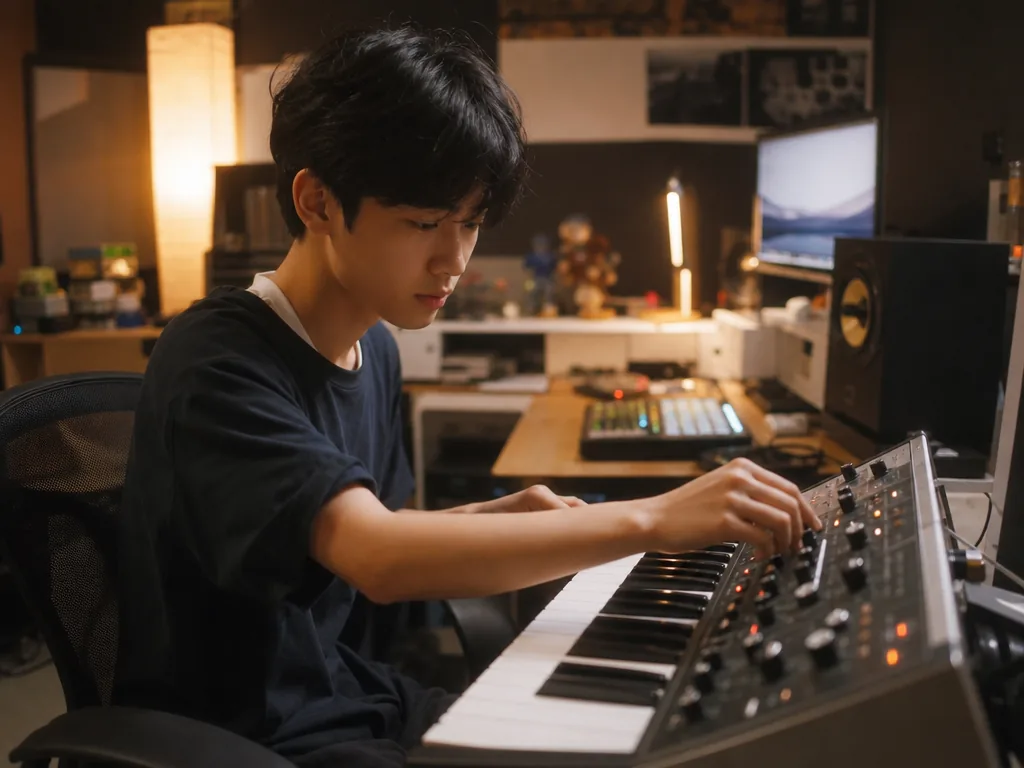
The Origins and Development of the Synthesizer
The Birth of the Synthesizer: From Analogue to Digital
The synthesizer is an electronic musical instrument capable of generating and processing sound, and is commonly used to produce various sound effects, chords and melodies in music. Its origins can be traced back to the electronic music revolution of the mid-20th century; as technology advanced, the synthesizer gradually evolved from professional equipment into a core tool of pop and all kinds of music.
Early Development (1920s–1950s)
- 1920s — American scientists Henry Cowell and Leon Theremin invented the earliest electronic music devices, such as the theremin, which is played without physical contact.
- 1930s–40s — with advances in acoustics and electronics, early prototype synthesizers such as the Volta began to appear.
1960s–1970s: From Analogue to Digital
- 1960s — Robert Moog developed the first commercially available synthesizer — the Moog synthesizer — which became the cornerstone of the modern synthesizer and helped popularise synthesised music. With its distinctive filters and oscillators, this analogue synthesizer blazed a trail for modern electronic music.
- 1970s — brands such as ARP and Korg released a series of powerful analogue synthesizers, which were widely used by musicians in pop, electronic music and film scores.
1980s: The Rise of the Digital Synthesizer
- The digital revolution — with the development of digital signal processing (DSP) technology, the Yamaha DX7 was launched in the mid-1980s. It was the first digital synthesizer to feature FM synthesis technology and quickly became popular across the music world, making synthesizer timbres more varied and creating rich sound effects for pop and dance music.
Outstanding Synthesizer Musicians and Their Masterpieces
Below are several musicians who have had a profound influence on synthesizer music, along with their representative works.
1. Robert Moog (1934–2005)
- Contribution — as the founder of the modern synthesizer, the launch of the Moog synthesizer revolutionised music history, bringing its timbres into pop, film scores and experimental music.
- Representative works:
- Switched-On Bach (1968) — performed by the celebrated musician Wendy Carlos (originally Walter Carlos), this was the world’s first widely popular synthesizer album of classical music.
- The use of the Moog synthesizer itself, which became a core tool in all kinds of music creation.
2. Wendy Carlos
- Contribution — played a major role in popularising synthesizer music, particularly through arrangements of classical works by Bach and Mozart.
- Representative works:
- Switched-On Bach — a classic of early synthesizer music that offered a fresh perspective to classical music lovers and electronic music creators alike.
- A Clockwork Orange film score — Carlos’s music for the film perfectly combined synthesizer music with film scoring.
Synthesizer Film Scores: Vangelis and Jean-Michel Jarre
3. Vangelis (1943–2022)
- Contribution — renowned for his emotionally rich synthesizer music, Vangelis’s style is highly cinematic, and he was one of the pioneers of synthesizer film scoring.
- Representative works:
- Blade Runner soundtrack (1982) — still regarded as a classic of synthesizer music, it created the “synthesizer sci-fi” style.
- Chariots of Fire soundtrack (1981) — its theme won the Academy Award for Best Original Score.
4. Jean-Michel Jarre (b. 1948)
- Contribution — considered a pioneer of electronic music, his music brought the sound of the synthesizer to the masses and combined electronic and experimental music to create a wholly new style.
- Representative works:
- Oxygène (1976) — a classic of electronic music that perfectly fused synthesizer sounds with ambient effects, becoming a landmark work of late-1970s electronic music.
- Équinoxe (1978) — continued the style of Oxygène and further expanded the expressive range of electronic music.
Kraftwerk and the Birth of Electronic Dance Music
5. Kraftwerk (1970s–present)
- Contribution — this German electronic group was a founder of electronic dance music; their music not only incorporated the synthesizer but also had an enormous influence on the later techno and synthpop styles.
- Representative works:
- Autobahn (1974) — an album themed on transport that marked the rise of electronic music and had a profound influence on later electronic dance and pop music.
- The Man-Machine (1978) — explored themes of artificial intelligence and the human–machine relationship, becoming a classic of synthesizer music.

Classic Tracks of Synthesizer Music
| Composer/Artist | Work | Style | Features |
|---|---|---|---|
| Robert Moog / Wendy Carlos | Switched-On Bach | classical electronic | performs Bach’s masterpieces on the synthesizer |
| Vangelis | Blade Runner | synthesizer film score | futuristic and richly atmospheric |
| Jean-Michel Jarre | Oxygène | ambient electronic | innovative synthesizer sound design |
| Kraftwerk | Autobahn | electronic dance | signature synthesizer timbres that broke new ground in electronic music |
Frequently Asked Questions (FAQ)
Q: Is a synthesizer the same as a keyboard?
A keyboard is a broad term for any instrument with piano-style keys, while a synthesizer specifically generates and processes electronic sound using oscillators, filters and other signal-processing tools. Most synthesizers use a keyboard as their controller, but they can also be played through sequencers, drum pads or a computer.
Q: Do I need to learn the piano before learning the synthesizer?
Piano skills are helpful but not essential. Many synthesizer players build their sound one hand at a time, and the instrument’s real strength lies in sound design — shaping timbres, envelopes and effects — which can be learned alongside basic keyboard technique.
Q: What is the difference between an analogue and a digital synthesizer?
Analogue synthesizers generate sound from continuous electrical signals and are prized for their warm, organic tone, as heard on early Moog, ARP and Korg instruments. Digital synthesizers such as the Yamaha DX7 use digital signal processing and FM synthesis to produce a wider, more precise range of timbres.
Q: What is a good first synthesizer for a beginner?
A compact, polyphonic digital or analogue-modelling synthesizer with built-in presets is a great place to start, as it lets beginners explore sound without immediately learning deep programming. Pairing it with a simple MIDI keyboard and DAW software opens up endless room to grow.
Further Resources & Next Steps
- Official Resources — Moog Music, Korg, ARP and Yamaha publish manuals, sound libraries and histories of their instruments, while university and conservatoire music-technology pages offer structured introductions.
- Further Reading — landmark recordings such as Switched-On Bach, Oxygène, Blade Runner, Chariots of Fire and Autobahn are the best textbooks for understanding the instrument’s sound.
- Parent Tips — encourage children to experiment freely with sounds before focusing on pieces; a software synth or a beginner hardware synth plus headphones makes a low-pressure way to start.
Note: The information above is for reference only. Please consult professional education institutions for details.
This article was initially drafted and organised with AI. Editor / Professor Chan Kwok-wai; Managing Editor / Kong Yee-leung
Act Now: Find a Tutor / Register as a Tutor
For parents & students: looking for a home or online tutor for this subject? Click the button below to post a free tuition case (subject, level and preferred time) — TutorZone will match you with suitable tutors:
For tutors: do you teach this subject? Click the button below to register for free and receive more suitable cases — you pay only when a match is made: