
 中文(繁體)
 中文(簡體)
 English



Timpani: Complete Overview, History and Learning Guide
TUTORZONE SUBJECT GUIDE · PERCUSSION
From ancient Middle Eastern drums to the beating heart of the modern orchestra, the timpani is a tuned percussion instrument with a long history and an essential place in Western music. This guide traces its origins and development, profiles its great players, and explores the masterpieces that made it famous.
Direct Answer:What is the timpani?
The timpani is a tuned percussion instrument originating from ancient Middle Eastern drums, essential in Western orchestral music.
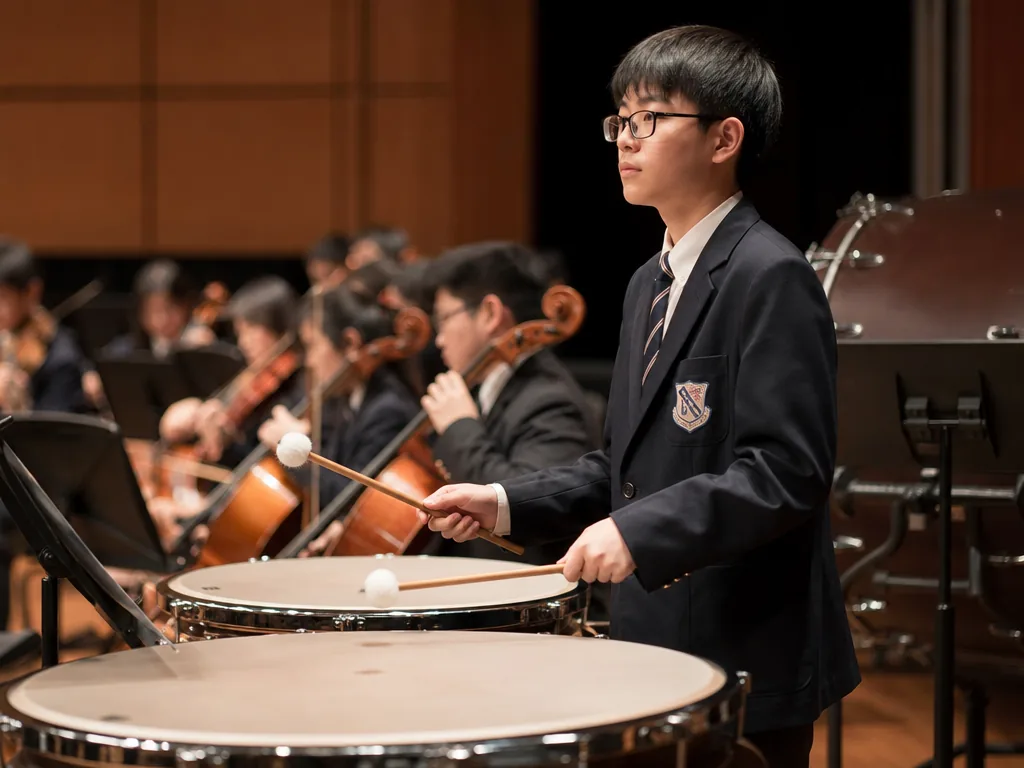
What Is the Timpani?
The timpani is a common percussion instrument widely used in the orchestra. It has a long history and holds an important place in Western music. The origins and development of the timpani are closely related to the various drums of antiquity.
Tuned Percussion
Unlike most drums, the timpani can adjust its pitch, allowing precise musical control.
Orchestral Foundation
It reinforces the rhythm and dynamics of the music in orchestral works.
Emotional Power
Its entry at key moments heightens atmosphere and emotional expression.
Origins of the Timpani
The history of the timpani can be traced back thousands of years, originating from the drums of the Middle East. The earliest timpani differed from the modern instrument in being untuned, without the ability to adjust pitch. Around the 15th century, with the development of European music, the timpani gradually evolved into an instrument with tuning capability. By the 16th century the timpani appeared in the court orchestras of Italy and Germany and was gradually integrated into musical performances of the time. These drums were probably first used to imitate the percussive sounds of military music, and in many theatrical performances the presence of the timpani added atmosphere to the music.
Development of the Timpani
From the late 16th to the 17th century, the structure of the timpani gradually developed into its modern form, including the tuning mechanism (used to adjust the drum’s pitch). This change allowed the timpani to produce more precise pitch control in music, making it an indispensable part of classical music.
Notable Timpani Players and Their Masterpieces
Karl Böhm
Karl Böhm was a celebrated conductor; although he was not a timpanist himself, he made a great contribution to the interpretation and conducting of the timpani. In many of the classic performances he conducted, the use of the timpani demonstrated its artistic value.
René Aubry
He is one of the best-known timpanists of the modern era and has won awards at several important international competitions. His playing technique is superb, and he is known for performing the timpani concertos of Mozart and Beethoven. His recordings have made a great contribution to the development of the timpani.
Joseph Gabriel Bauman
Bauman was a timpanist of the late 18th and early 19th centuries whose technique is considered to have had a profound influence on later timpanists. He was especially skilled at controlling the tone and rhythm of the timpani very finely in Classical-period works, making an outstanding contribution to the use of the timpani in classical music.
Masterpieces
The works in which the timpani is used most outstandingly are usually orchestral works, in which the timpani often reinforces the rhythm and dynamics of the music and enhances emotional expression at key moments. Below are some classic works closely associated with the timpani:
Beethoven: Symphony No. 9 (Ode to Joy)
In this work the use of the timpani cannot be ignored; its strong rhythm and the moments of its entry both enhance the atmosphere of the whole work.
Mozart: Symphony No. 41 in C major (Jupiter Symphony)
In this symphony the timpani plays a key role, reinforcing the rhythmic feel of the music, especially in the joyful and impassioned passages, where the timpani’s performance is impressive.
Richard Strauss: Ein Heldenleben (A Hero’s Life)
In this work the use of the timpani expresses the drama of battle and victory; it is not only the pillar of the rhythm but also carries strong emotional expression.
The role and performance of the timpani in these works are not only a technical challenge but also greatly enhance the expressiveness of the music.
Frequently Asked Questions (FAQ)
Q: Is the timpani the same as a kettledrum?
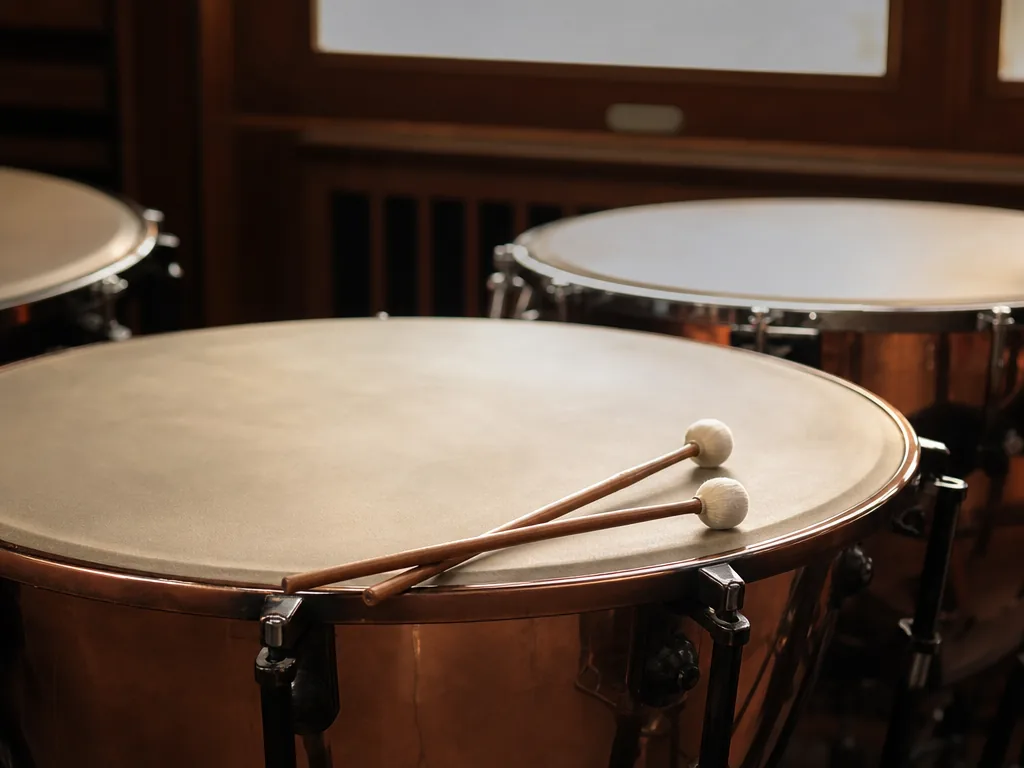
Yes — “timpani” is the Italian name for kettledrums. They are tuned percussion instruments made of a bowl-shaped body with a head (skin) stretched across the top, played with soft mallets.
Q: How does a timpanist change the pitch?
Modern timpani use a tuning mechanism — usually operated by foot pedals — that tightens or loosens the head to adjust the drum’s pitch quickly and precisely.
Q: When did the timpani become a tunable instrument?
The earliest timpani were untuned. Around the 15th century they evolved tuning capability, and from the late 16th to the 17th century their modern structure and tuning mechanism took shape.
Q: Which works are best for hearing the timpani at its finest?
Beethoven’s Symphony No. 9, Mozart’s “Jupiter” Symphony (No. 41), and Richard Strauss’s Ein Heldenleben are three excellent starting points that showcase the instrument’s rhythm and drama.
Further Resources & Next Steps
- Official Resources——Start with a graded percussion method and the ABRSM or Trinity percussion syllabuses for structured timpani progression.
- Further Reading——Explore orchestration textbooks (such as Berlioz’s Treatise on Instrumentation) and histories of the orchestra for deeper insight into the timpani’s role.
- Parent Tips——Begin with general percussion skills and rhythm training before adding timpani, and seek a teacher experienced in orchestral percussion.
Note: The information above is for reference only. Please consult professional education institutions for details.
This article was initially drafted and organised with AI. Editor / Professor Chan Kwok-wai; Managing Editor / Kong Yee-leung
Act Now: Find a Tutor / Register as a Tutor
For parents & students: looking for a home or online tutor for this subject? Click the button below to post a free tuition case (subject, level and preferred time) — TutorZone will match you with suitable tutors:
For tutors: do you teach this subject? Click the button below to register for free and receive more suitable cases — you pay only when a match is made: