
 中文(繁體)
 中文(簡體)
 English



Trombone: Complete Overview, History and Learning Guide
TUTORZONE SUBJECT GUIDE · WIND INSTRUMENTS
The trombone belongs, with the trumpet and tuba, to the brass family, but its greatest feature is the slide used to change pitch — unlike valved brass such as the trumpet. Its history can be traced back to the Middle Ages, and through centuries of development it became an indispensable part of the modern band and orchestra.
Direct Answer:What is the trombone?
The trombone is a brass instrument distinguished by its slide for changing pitch, with a history traced back to the Middle Ages.
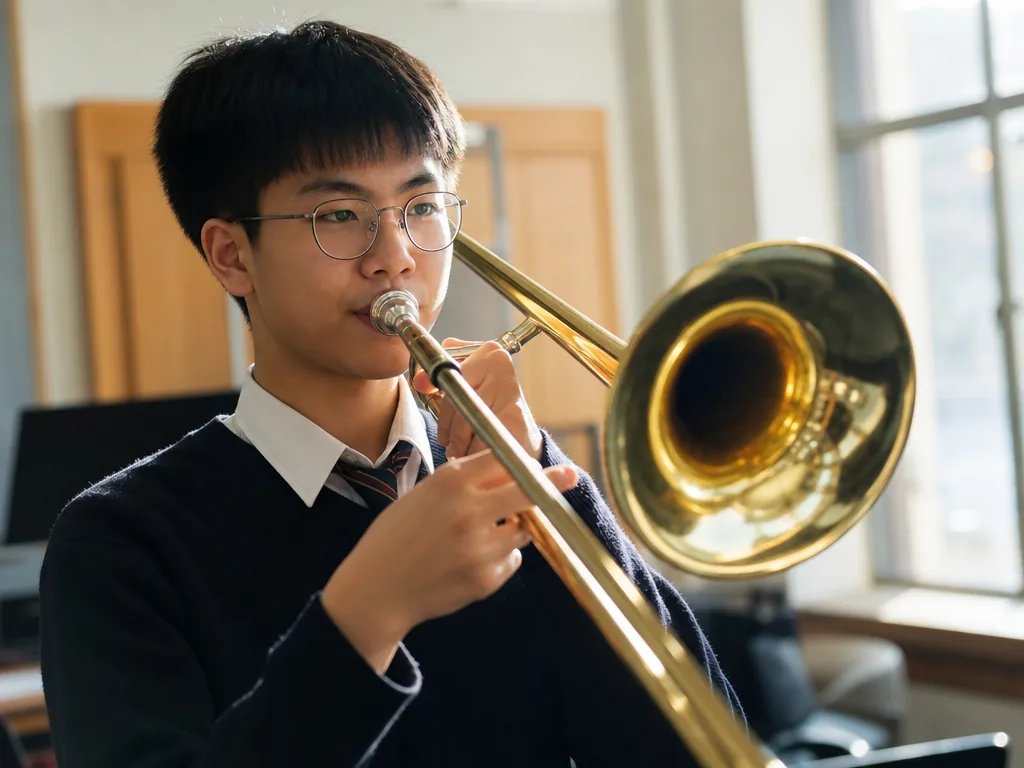
Origins of the Trombone
Early Historical Background
The origins of the trombone can be traced back to 15th-century Europe. At that time the trombone was not the slide trombone we know today but a simpler metal wind instrument called a “slide” or “hand slide”, whose design allowed the player to adjust pitch by sliding the tube by hand. The prototype of this design may have originated from an early instrument known as the “haarle”, an ancient wind instrument.
By the 16th century, with the development of Renaissance music, the trombone came to be used in European court music and religious ceremonies. The trombone of this period had no keys or pistons and relied entirely on the player sliding the tube to change pitch.
Development in the 17th and 18th Centuries
In the 17th century the design of the trombone began to improve, particularly in terms of range and tone. Baroque composers and conductors found that the trombone had an excellent tone and volume, and that it performed exceptionally well in the lower register, so it frequently appeared in large-scale sacred and orchestral works. By this time the range of the trombone had reached a relatively high level.
In the 18th century the trombone gradually entered the orchestra and became an important low brass instrument. Composers such as Joseph Haydn and Wolfgang Amadeus Mozart used the trombone in their works.
The 19th-Century and Modern Trombone
In the 19th century the technology of the trumpet and other brass instruments continued to innovate with the addition of piston systems, but the trombone retained its slide design. The slide trombone remains the only brass instrument that changes pitch by means of a slide, giving it unparalleled flexibility and tonal variation in performance.
In the 20th century the trombone gradually became an important instrument in jazz and big bands. The slide trombone was especially popular in jazz and became one of the classic sounds of the genre.
Structure and Characteristics of the Trombone
Slide Design
The most distinctive feature of the trombone is its slide system. The player changes pitch by sliding the trombone’s tube, and this is what makes the trombone unique. This sliding motion allows the trombone to create smooth connections between notes and makes its pitch changes smoother.
Metal Material and Tone
The trombone’s tube is usually made of copper, brass or other metals and has a distinctive tone. The trombone’s tone is deep and weighty, especially suited to the low register, but it can also produce a bright sound in the high register.
Range and Technique
The trombone covers a relatively large range, usually performing from the low register to the mid-high register. The demands on the player are very high, especially in slide operation and breath control; these techniques allow the trombone to perform a variety of complex phrases and rapid notes.
The Trombone in Music
- Military bands and ceremonial music — The trombone was first used in military bands and religious ceremonial music, because it can produce a powerful sound, making it very suitable for ceremonial music or music expressing strong emotion.
- Its role in the orchestra — In the orchestra the trombone is usually used to play low melodies and can provide powerful sonic support together with other brass instruments. Composers such as Ludwig van Beethoven, Richard Wagner and Gustav Mahler used the trombone to create music of dramatic and deep emotion.
- Jazz and big bands — The trombone plays an important role in jazz, especially in the big bands and fast-tempo jazz of the 20th century, where its slide technique and improvisational ability give it a distinctive charm.
- Film music — Owing to its deep, majestic tone, the trombone is often used in film scores, especially in works that need to express epic emotion or large-scale scenes.
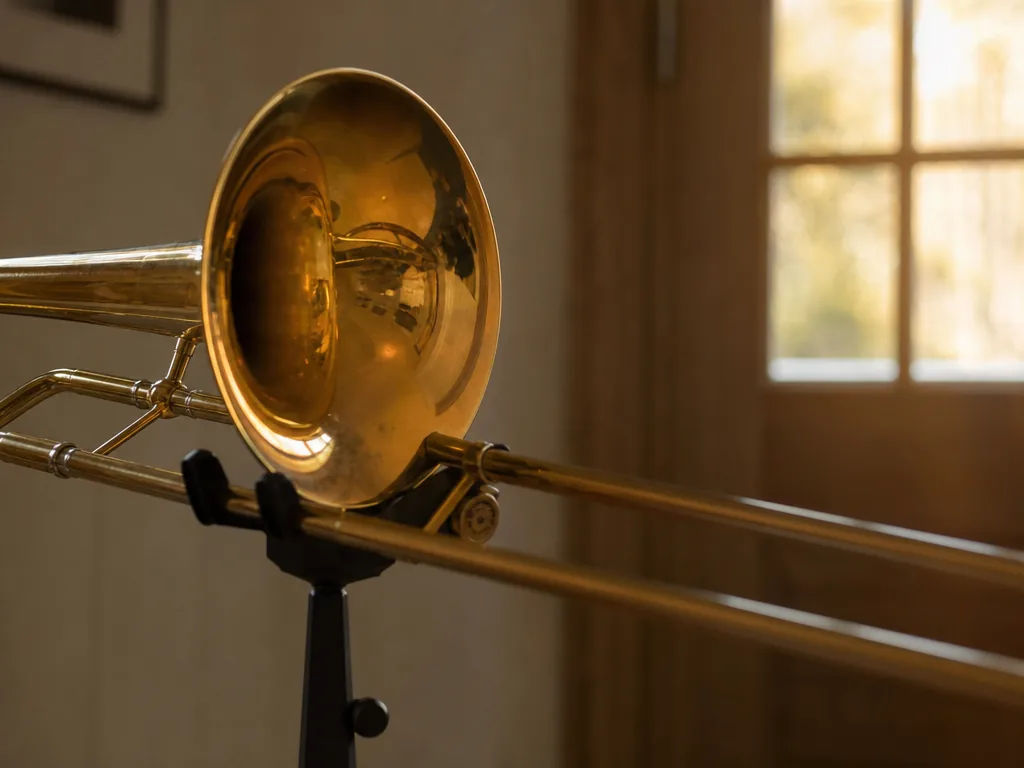
Notable Trombone Players and Their Masterpieces
The trombone has many outstanding players whose performance and creativity have had a profound influence on the instrument’s development. Below are some important trombonists and their representative works:
- J.J. Johnson — masterpiece The Eminent J.J. Johnson: Johnson was one of the most celebrated jazz trombonists of the 20th century. He combined slide-trombone technique with jazz improvisation, opening up a new realm for the trombone in jazz. This album is the representative work of his career, demonstrating his improvisational ability and unique style.
- Keith O’Quinn — masterpiece Sack Full of Dreams: O’Quinn is an outstanding trombonist in modern jazz, whose music combines modern jazz elements with traditional trombone technique. His works are usually innovative and carry strong emotional expression.
- Franz von Stuben — masterpiece Trombone Concerto in F Major: Von Stuben was a celebrated composer in classical music, and his Trombone Concerto demonstrates the trombone’s unique position in classical music, becoming a classic piece frequently performed by trombonists.
- Glenn Miller — masterpiece In the Mood: Glenn Miller was one of the most celebrated big-band leaders of the 20th century, and his music combined the elegance of the trombone with fast-paced jazz elements. In In the Mood in particular, the trombone playing made the piece a jazz classic.
- Henry Mancini — masterpiece The Pink Panther Theme: Mancini was a master of film music, and The Pink Panther Theme remains one of the most representative works in film music. The trombone melody of this piece is simple yet extremely catchy and has become a symbol of the film.
The Musical Value of the Trombone
The musical value of the trombone lies in its distinctive tone and flexible playing method. It can express emotions ranging from deep to impassioned and from soft to surging, giving it an extremely important position in military, orchestral, jazz and many other fields.
- Emotional expression — The trombone’s deep tone and smooth slide technique allow it to express strong emotion in music. Whether providing low-register support in the orchestra or improvising in jazz, the trombone offers rich emotional layers.
- Musical flexibility — The trombone’s slide design gives it great flexibility in musical expression. Players can precisely adjust pitch as needed, giving the trombone a unique tonal variation in performance.
- Improvisational ability — Especially in jazz, the trombone’s improvisational technique makes it an important tool for expressing musical creativity, allowing players to improvise freely according to the music during live performances.
Frequently Asked Questions (FAQ)
Q: Is the trombone difficult for beginners?
The trombone calls for good breath control and accurate slide positions, which take time to build, but its single moving slide makes it approachable for many beginners. Regular, guided practice usually produces steady progress within the first year.
Q: What is a good age to start learning the trombone?
Because playing requires a certain arm length and lung capacity, many teachers suggest starting around age 8 to 10, once a child can comfortably hold the instrument and reach the outer slide positions. Younger children may begin on a smaller or lighter student model.
Q: How is the trombone different from the trumpet?
The trumpet changes pitch using pistons or valves, whereas the trombone uses a hand slide to lengthen or shorten the tube. This gives the trombone its characteristic smooth glissando and a deeper, weightier tone.
Q: Can the trombone play both jazz and classical music?
Yes. The trombone is a mainstay of orchestras, military bands, jazz big bands and film scores, so learning it opens the door to a wide range of musical styles.
Further Resources & Next Steps
- Official Resources — The Associated Board of the Royal Schools of Music (ABRSM) brass syllabus offers graded trombone examinations and repertoire guidance.
- Further Reading — Study a classic method book such as Arban’s method for trombone, and listen to landmark recordings like The Eminent J.J. Johnson and In the Mood.
- Parent Tips — Choose a properly sized, lighter student trombone for small hands and encourage short, frequent breath-control and slide-practice sessions at home.
Note: The information above is for reference only. Please consult professional education institutions for details.
This article was initially drafted and organised with AI. Editor / Professor Chan Kwok-wai; Managing Editor / Kong Yee-leung
Act Now: Find a Tutor / Register as a Tutor
For parents & students: looking for a home or online tutor for this subject? Click the button below to post a free tuition case (subject, level and preferred time) — TutorZone will match you with suitable tutors:
For tutors: do you teach this subject? Click the button below to register for free and receive more suitable cases — you pay only when a match is made: