
 中文(繁體)
 中文(簡體)
 English



Trumpet: Complete Overview, History and Learning Guide
TUTORZONE SUBJECT GUIDE · WIND INSTRUMENTS
From the ceremonial horns of ancient Egypt to the dazzling solos of Louis Armstrong, the trumpet has one of the longest and richest histories of any instrument. This guide covers its origins, how it is built, how it is played, and why its bright, ringing tone remains essential to orchestras, military bands and jazz alike.
Direct Answer:What is the trumpet?
The trumpet is a brass wind instrument with a bright, ringing tone, with roots in ancient Egypt and Louis Armstrong solos.
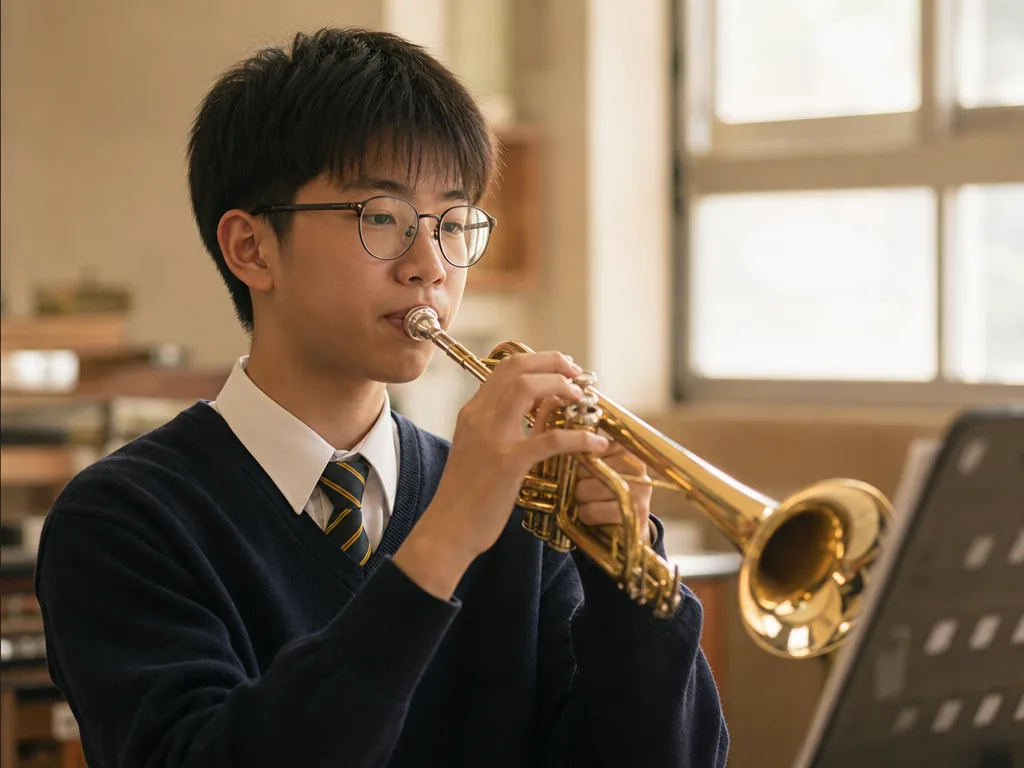
Origins of the Trumpet
Origins of the Ancient Trumpet
The history of the trumpet can be traced back to ancient Egypt and ancient Greece. The “trumpet” of that time was not as modern as today’s instrument but a simple metal wind instrument, usually used for ceremonies, warfare or signalling. For example, the ancient Egyptians used primitive brass instruments that were sometimes used as accompaniment to religious ceremonies or as military horns. These instruments were mostly straight tubes without valves, and their pitch depended on the player’s blowing method.
Development in the Medieval and Renaissance Periods
Over time, the trumpet underwent many technical changes, especially in the medieval and Renaissance periods. By the 16th century, European musicians began to improve the trumpet, adding more refined manufacturing techniques that made its tone brighter, and it began to appear in court music and military bands.
Innovation in the 17th and 18th Centuries
- Baroque advances——In the 17th century the design of the trumpet began to undergo important improvements. Especially in the Baroque period, musicians began writing dedicated works for the trumpet and added early valve systems, extending the trumpet’s range and allowing it to adapt to more complex musical works.
- Bach’s legacy——Composers such as Johann Sebastian Bach wrote a great deal of music for the trumpet, demonstrating the instrument’s importance in classical music.
The Formation of the 19th-Century and Modern Trumpet
In the 19th century, as the trumpet developed further, the basic structure of the modern trumpet gradually took shape. The trumpet’s volume and tone became more varied, and the piston (valve) system was introduced. The addition of these valves allowed the trumpet to play different pitches more flexibly and to blend better into the orchestra.
Structure and Characteristics of the Trumpet
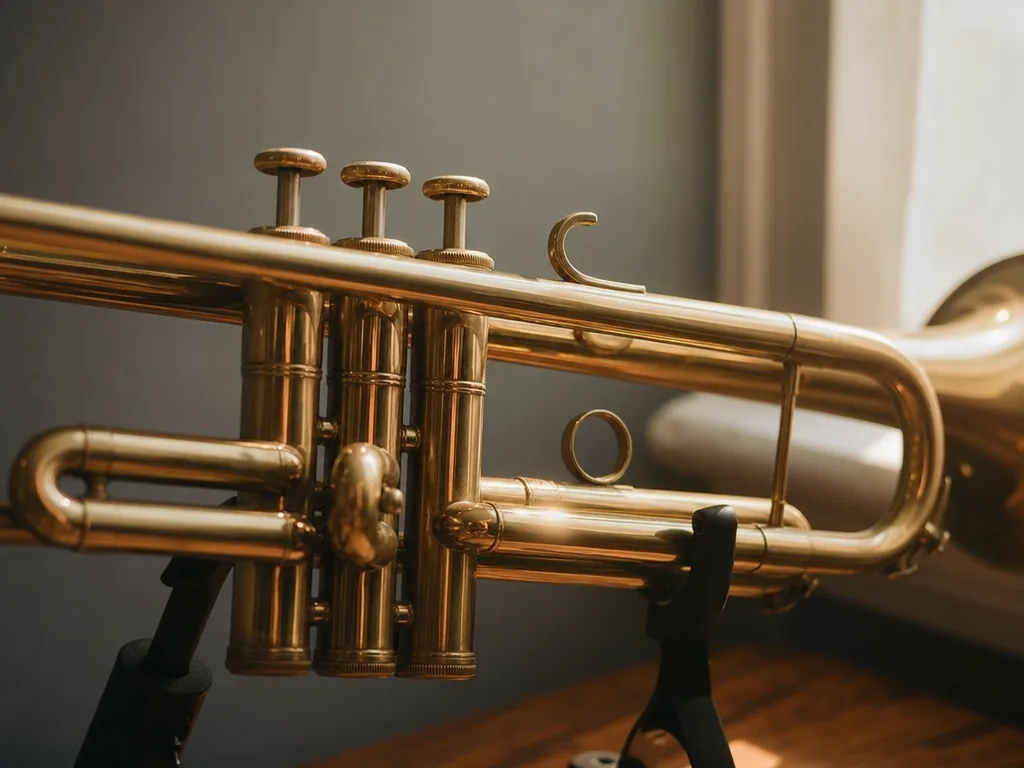
Piston system
By pressing the pistons, the player changes the length of the tubing and therefore the pitch, greatly increasing the trumpet’s playing range and allowing the player to switch between pitches more easily.
Material and shape
The trumpet is usually made of copper, brass or a metal alloy. Its shape is a long tube ending in a bell-shaped flare, a design that effectively enhances the resonance and brilliance of the sound.
Tone and range
The trumpet’s tone is bright and sharp and can cut through the sound of other instruments. Its range offers plenty of expressive space from the low register to the high register, where it can reach a very piercing tone.
Playing technique
Playing requires an extremely high level of technique: the player must precisely control breath, embouchure and finger agility. High-register technique, rapid tonguing and volume control are the difficult points of trumpet playing.
The Trumpet in Music
The trumpet is widely used in many musical styles, from military and orchestral music to jazz, where it plays an important role.
Military bands and ceremonial music
The trumpet’s bright tone gives it an extremely important role in military bands. In ancient and modern military ceremonies the trumpet has often been used to give command signals or to boost the morale of troops.
Its role in the orchestra
The trumpet is an indispensable instrument in the orchestra, and it became especially active in Romantic and modern music. Composers such as Richard Wagner and Gustav Mahler wrote many wonderful melodies for the trumpet in their symphonies.
Applications in jazz
The trumpet also holds a very important position in jazz, especially in 20th-century jazz, where its expression became one of the hallmarks of the style. The trumpet is used not only to play melodies but also for improvisation, injecting a strong personal style into jazz.
Popular music
In popular music the trumpet is also often used to add layers to the music. Especially in the big-band era and later funk and soul music, the trumpet’s power and energy added rich colour to the music.
Notable Trumpet Players and Their Masterpieces
As an instrument demanding great technique and with a distinctive tone, the trumpet has attracted many great performers and composers. Below are some celebrated trumpeters and their classic masterpieces.
Louis Armstrong
Masterpiece: What a Wonderful World. Armstrong was one of the greatest performers in the history of jazz. His playing style was unique, emotional and extremely influential. This song not only demonstrates his trumpet technique but also expresses his love of and gratitude for life.
Miles Davis
Masterpiece: Kind of Blue. Miles Davis was one of the most influential trumpeters in the history of jazz. His album Kind of Blue is regarded as a classic of jazz, influencing countless musicians and reshaping the landscape of the genre.
Dizzy Gillespie
Masterpiece: A Night in Tunisia. Dizzy Gillespie was a founding father of bebop and one of the most influential trumpeters in jazz history. His blazing technique, pioneering use of harmonic extensions and distinctive bent trumpet made him an icon; A Night in Tunisia remains one of the cornerstones of the jazz trumpet repertoire.
Clifford Brown
Masterpiece: Joy Spring. Brown was a legendary trumpeter of the 1940s and 1950s, known for his clear tone and superb technique. His work Joy Spring demonstrates his extraordinary improvisational ability and skill, and is one of the classics of trumpet playing.
Freddie Hubbard
Masterpiece: Red Clay. Freddie Hubbard was one of the most celebrated hard-bop trumpeters of the post-bop era, admired for his powerful, agile sound and virtuosic command of the instrument. Red Clay, with its infectious groove and brilliant trumpet lines, is a landmark of 1970s jazz and a staple of the trumpet repertoire.
Samuel Adler
Masterpiece: Trumpet Concerto. Adler is a modern composer whose Trumpet Concerto combines classical and modern elements. The work fully exploits the trumpet’s technique and expressiveness and has become an important chapter of contemporary trumpet music.
The Musical Value of the Trumpet
The trumpet’s musical value lies in its great contribution to musical expression. Its brilliant, penetrating tone gives it an irreplaceable position in military, orchestral, jazz and many other musical forms.
Whether in celebrations and ceremonies or in thrilling jazz improvisation, the trumpet can express strong emotion and profound musical language.
Expressiveness
The trumpet’s tone can be majestic and powerful or soft and delicate, allowing it to express different emotions in a variety of musical styles.
Technical difficulty
The trumpet demands a very high level of technique, and mastering its finger dexterity, range and articulation is what distinguishes accomplished players.
Frequently Asked Questions (FAQ)
Q: Is the trumpet hard for beginners to learn?
The trumpet demands precise breath control, embouchure (lip position) and finger coordination, so producing a clean note takes steady practice at first. With regular practice and a good teacher, most beginners can play simple melodies within their first few months.
Q: What is the difference between a trumpet and a cornet?
Both are brass instruments with a similar range and fingering, but the cornet has a more conical bore and a warmer, mellower tone, while the trumpet is brighter and more piercing, so it cuts through an orchestra or band more easily.
Q: At what age can a child start learning the trumpet?
Because the trumpet requires a certain level of lip and lung strength, most teachers recommend starting around age 8 to 10. Younger children, whose front teeth and embouchure are still developing, often find a cornet or a plastic practice trumpet a gentler starting point.
Q: How should I care for and maintain a trumpet?
Empty the water key after playing, wipe the instrument with a soft cloth, and oil the valves and grease the tuning slides regularly. Have the instrument professionally cleaned once or twice a year to keep the valves moving freely and the tone clear.
Further Resources & Next Steps
- Official Resources——Reputable examination boards such as the Associated Board of the Royal Schools of Music (ABRSM) offer graded trumpet syllabuses and repertoire guidance for students of every level.
- Further Reading——Arban’s Complete Conservatory Method for Trumpet remains the classic reference for building technique, tone, flexibility and range.
- Parent Tips——Encourage short, daily practice sessions and watch posture and breath support; a quality student trumpet and a patient, qualified teacher matter far more than an expensive instrument at first.
Note: The information above is for reference only. Please consult professional education institutions for details.
This article was initially drafted and organised with AI. Editor / Professor Chan Kwok-wai; Managing Editor / Kong Yee-leung
Act Now: Find a Tutor / Register as a Tutor
For parents & students: looking for a home or online tutor for this subject? Click the button below to post a free tuition case (subject, level and preferred time) — TutorZone will match you with suitable tutors:
For tutors: do you teach this subject? Click the button below to register for free and receive more suitable cases — you pay only when a match is made:
