
 中文(繁體)
 中文(簡體)
 English



Viola: A Complete Guide to Its Origins, History and Greatest Players
TUTORZONE SUBJECT GUIDE · STRING INSTRUMENTS
The viola is the warm, deep voice of the string family — larger and darker than a violin, yet smaller and brighter than a cello. This guide traces its Renaissance origins, profiles the players who made it a solo instrument, and maps the repertoire every budding violist should know.
Direct Answer:What is the viola?
The viola is the warm, deep voice of the string family, larger and darker than a violin yet smaller and brighter than a cello, with Renaissance ori。
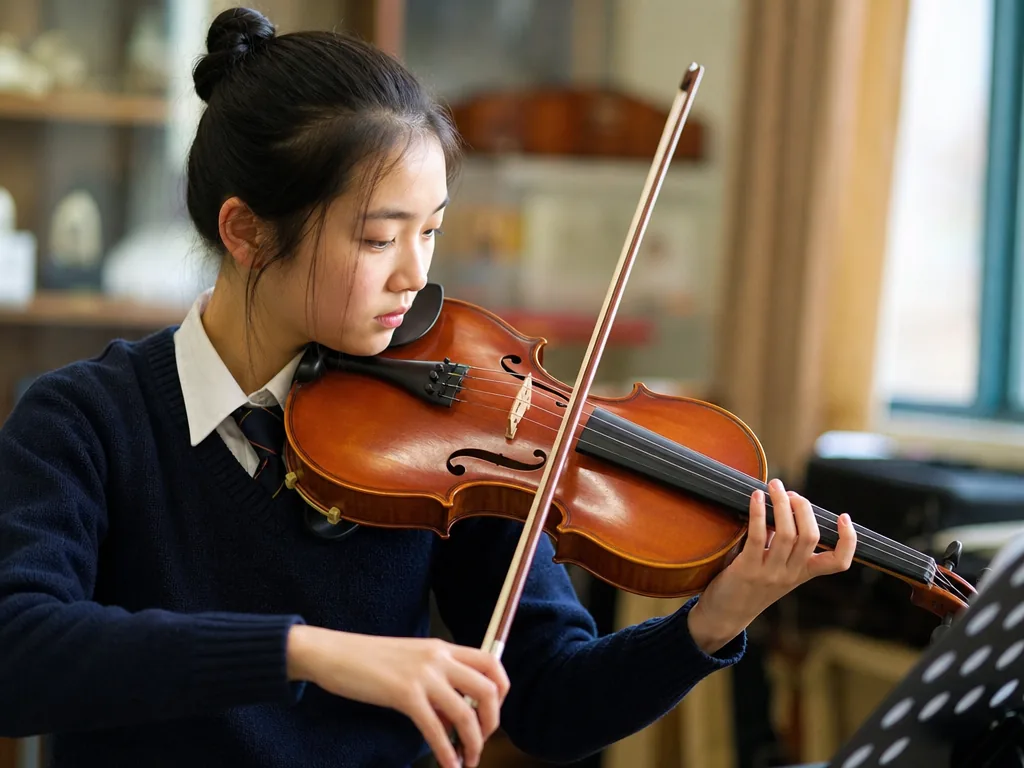
The Origins and History of the Viola
The viola is a bowed string instrument and a member of the violin family, with a range that lies between the violin and the cello. Its tone is warm and deep, and it is often used to add richness to orchestral sound; it is also increasingly used as a solo instrument.
Origins and Evolution
The origins of the viola can be traced back to 16th-century Italy, when Europe was in the midst of the Renaissance and music and the arts were flourishing. The English name “viola” derives from the Italian “viola da braccio”, meaning “viola played on the arm”, to distinguish it from the “viola da gamba” (held between the legs, the predecessor of the cello).
The viola evolved over several centuries, in three key stages:
16th Century
The viola began to take the alto voice in court and religious music.
18th Century
With the development of the orchestra, the viola gradually became a standard member of the symphony orchestra.
19th–20th Centuries
More solo works were written for the viola, raising its status and expressive power.
Outstanding Violists and Their Representative Works
Although the viola attracts less attention than the violin, several outstanding violists in history have brought this instrument to prominence.
Lionel Tertis (1876–1975)
A British viola pioneer, known as the “father of the modern viola”.
- Contributions——Promoted the viola as a solo instrument and commissioned composers to write new works.
- Representative works——Arnold Bax’s Viola Concerto (written for him); his own arrangements of many violin works, such as Elgar’s Salut d’Amour.
William Primrose (1904–1982)
A Scottish violist, renowned for his refined technique and elegant tone.
- Contributions——Expanded the viola repertoire and made numerous recordings.
- Representative works——Bartók’s Viola Concerto (written for him); his arrangement of excerpts from Berlioz’s Roméo et Juliette.
Yuri Bashmet (b. 1953)
A celebrated Russian violist and conductor, one of the most influential of our time.
- Style——Passionate and technically refined.
- Representative works——Schnittke’s Viola Concerto (written for him); his recording of Shostakovich’s Symphony No. 13 with Norman Leibowitz.
Nobuko Imai
A Japanese violist of international renown.
- Contributions——Actively promotes viola playing in Asia and is dedicated to education and outreach.
- Representative works——Schnittke’s Sonata for Viola and Piano; performs and promotes the viola works of Paul Hindemith.
Classic Viola Repertoire Recommendations
In addition to the works of individual violists, the following are landmarks in the viola repertoire:
| Composer | Work | Characteristics |
|---|---|---|
| Paul Hindemith | Viola Sonatas (series) | Rigorous structure, rich in emotion |
| Bartók | Viola Concerto | Left unfinished after the Second World War; later completed by Serly |
| Rebecca Clarke | Viola Sonata | A classic by a female composer, blending Impressionist and Romantic styles |
| Brahms | Viola Sonata Op. 120 (originally for clarinet) | Gentle and deep, often performed in viola arrangements |
Frequently Asked Questions (FAQ)
Q: What is the difference between a viola and a violin?
The viola is larger, tuned a fifth lower (C-G-D-A rather than the violin’s G-D-A-E), and produces a warmer, deeper tone. It is also notated in alto clef.
Q: Is the viola harder to learn than the violin?
Not necessarily — but its larger size and thicker strings require more bow pressure and a slightly different left-hand frame. Many students begin on the violin and switch, though the viola can also be started directly.
Q: What age is best to start learning the viola?
Because of its size, many teachers suggest starting around ages 7–10 (or with a smaller fractional instrument), although adults can learn successfully at any age.
Q: Do I need to read alto clef to play the viola?
Yes — the viola is one of the few instruments written in alto clef, so learning to read it is a core part of early viola study.
Further Resources & Next Steps
- Official Resources——The Associated Board of the Royal Schools of Music (ABRSM) publishes graded viola syllabuses and exams.
- Further Reading——Listen to recordings by William Primrose and Yuri Bashmet, and explore the viola sonatas of Hindemith and Rebecca Clarke.
- Parent Tips——Rent a correctly sized viola and arrange short, regular practice sessions so young players build tone without strain.
Note: The information above is for reference only. Please consult professional education institutions for details.
This article was initially drafted and organised with AI. Editor / Professor Chan Kwok-wai; Managing Editor / Kong Yee-leung
Act Now: Find a Tutor / Register as a Tutor
For parents & students: looking for a home or online tutor for this subject? Click the button below to post a free tuition case (subject, level and preferred time) — TutorZone will match you with suitable tutors:
For tutors: do you teach this subject? Click the button below to register for free and receive more suitable cases — you pay only when a match is made: