
 中文(繁體)
 中文(简体)
 English



DSE Food Science and Technology: Complete Course Guide
TUTORZONE SUBJECT GUIDE · DSE
DSE Food Science and Technology is a Hong Kong Diploma of Secondary Education elective that turns the kitchen and the laboratory into a single classroom — one part food chemistry, biology and physics, one part hands-on production, processing and preservation. This guide walks through the course structure, assessment format, study strategies and career pathways so you know exactly what to expect and how to prepare.
Direct answer: how is DSE Technology and Living (Food Science and Technology) assessed?
Verified against the HKEAA 2027 framework: Technology and Living — Food Science and Technology strand — Section A multiple-choice (15 marks), Section B design quest 30% (1½ hours); Short questions, data-response questions and an essay on eac 40% (2 hours); Prescribed task 10% + project / design folio 20% 30% (S5 and S6). Technology and Living does have SBA (30%): a prescribed task plus a project or design folio.
Subject Overview
DSE Food Science and Technology is an elective subject in the Hong Kong Diploma of Secondary Education (DSE) that focuses on the production processes, scientific principles and technical applications of food. It aims to develop students’ understanding of food science and enhance their practical ability in the food industry. The subject has the following core characteristics:
Science & Practice
Learn the basic scientific principles of food, including its chemistry, biology and physics, and apply these principles to food production, processing and preservation.
Innovation & Sustainability
Emphasise the development of innovative food technologies and explore how food can be produced and consumed in a sustainable way.
Health & Nutrition
Focus on the impact of food on health, studying the nutrients in food and the relationship between diet and health, and conducting related scientific research.
Assessment: public examination 70% (Paper 1 30%, 1½ hours; Paper 2 40%, 2 hours) + School-Based Assessment (SBA, 30%: prescribed task 10% + project / design folio 20%).
Course Structure
Fundamentals of Food Science
- Basic composition of food: learn the main components of different foods, such as carbohydrates, proteins, fats, vitamins and minerals, and understand their functions and nutritional value in food.
- Food chemistry and biology: master the chemical changes that take place during food processing (such as the chemical reactions in cooking) and the impact of micro-organisms on food safety.
Food Production and Processing
- Production techniques: understand various food production techniques (such as baking, fermentation and refrigeration) and learn how to select and control these techniques to ensure food quality and safety.
- Food preservation and storage: study food preservation techniques (such as heat treatment, refrigeration, freezing and vacuum packing) and their impact on food quality.
Nutrition and Health
- Food and health: learn about the effects of food on the human body, explore the functions of different nutrients, and understand the potential risks of toxins and allergens in food to health.
- Diet and nutrition: analyse the advantages and disadvantages of different dietary patterns and learn how to design a balanced diet.
Food Technology and Innovation
- Applications of food technology: understand the development of new food technologies, such as genetically modified foods, plant-based foods and smart food-processing techniques.
- Sustainable development and the food industry: explore how sustainability can be achieved in the food industry from source to consumption, promoting environmental protection, energy efficiency and waste reduction.
Assessment: official weighting (2027 HKDSE)
| Component | What it contains | Weighting | Duration |
|---|---|---|---|
| Paper 1 (compulsory part) | Section A multiple-choice (15 marks), Section B design questions (25 marks), Section C structured questions (30 marks) | 30% | 1½ hours |
| Paper 2 (elective part) | Short questions, data-response questions and an essay on each elective module; answer two of three modules | 40% | 2 hours |
| School-Based Assessment | Prescribed task 10% + project / design folio 20% | 30% | S5 and S6 |
SBA: Technology and Living does have SBA (30%): a prescribed task plus a project or design folio.
Source: HKEAA 2027 HKDSE assessment framework for Technology and Living — Food Science and Technology strand (see the resource list below). Always check the framework for the year you are sitting.
Effective Study Strategies
Fundamentals of Food Science
- Memorising and applying concepts: learn the basic components of food and their functions, understand the role of each nutrient in the human body, and apply this to specific case studies.
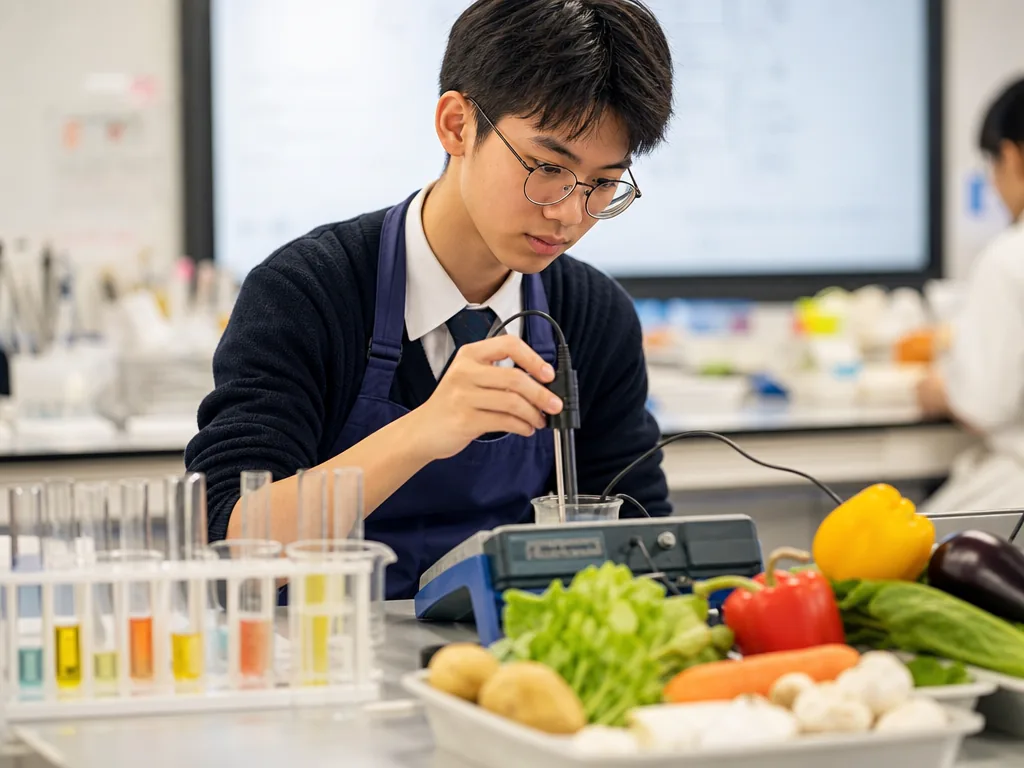
- Laboratory work: carry out basic food science experiments, such as measuring the pH, acidity and solubility of food, and understand their scientific significance.
Food Processing and Production Skills
- Practice and reflection: take part in experiments in food production and processing, and reflect on the impact of different techniques on the final product.
- Innovation and improvement: during production, think about how to innovate processing techniques and improve the taste, shelf life and nutritional value of food.
Nutrition and Health Analysis
- Meal planning: learn how to design a healthy diet, tailoring meal plans to the needs of different groups (such as athletes, the elderly and children).
- Data analysis: analyse the nutrients in food, understand their specific effects on human health, and learn to interpret food labels from a scientific perspective.

Common Difficulties & How to Overcome Them
Difficulty understanding food chemistry and biology concepts. Solution: do more experiments, combine theory with practice, and use diagrams or models to help understand chemical changes in food and microbial activity.
Problems with the details of food production and processing. Solution: carry out more hands-on practice, observe the effects of different techniques, and reflect and summarise after each session.
Insufficient application of health and nutrition knowledge. Solution: keep up with current health trends and popular diets, study nutrition in depth, and improve understanding through case analysis.
Further Study & Career Pathways
Related University Subjects
Food Science, Nutrition, Public Health, Food Engineering, Environmental Science and more.
Career Pathways
Food Scientist, Nutritionist, Food Quality Controller, Food Processing Technician, Public Health Specialist, environmental food consultant and more.
Exam Time Management
Time Allocation by Paper
- Paper 1: about 45 minutes per question (including 5 minutes’ planning time).
- Paper 2: 60 minutes for application and analysis questions + 60 minutes for experimental data analysis.
Action Tips
- Regularly take part in food science experiments and workshops to improve your practical skills.
- Strengthen your study of food nutrition and health, and understand the nutrients in different foods and their long-term effects on health.
- Take part in food innovation challenges or competitions to practise turning scientific knowledge into practical food designs and technologies.
Such study strategies and course structure help students build a solid foundation in food science and technology — and prepare them for their future academic and professional development.
Frequently Asked Questions
What is the weighting of DSE Technology and Living?
Paper 1 30% (1½ hours), Paper 2 40% (2 hours) and SBA 30%.
Does the Food Science and Technology strand have SBA?
Yes — 30% in total: the prescribed task 10% and the project or design folio 20%.
What does Paper 2 cover?
The elective modules: each sets short questions, data-response questions and an essay, and you answer questions from two of three modules.
Further Resources & Next Steps
- Official Resources——the Hong Kong Education Bureau (www.edb.gov.hk) for the latest subject requirements and assessment details.
- Further Reading——introductory texts and university prospectuses on Food Science, Nutrition and Public Health programmes.
- Parent Tips——encourage simple home experiments (measuring pH, observing fermentation, reading food labels) to build scientific intuition before exams.
Note: The information above is for reference only. Please consult professional education institutions for details.
This article was initially drafted and organised with AI. Editor / Professor Chan Kwok-wai; Managing Editor / Kong Yee-leung
Act Now: Find a Tutor / Register as a Tutor
For parents & students: looking for a home or online tutor for this subject? Click the button below to post a free tuition case (subject, level and preferred time) — TutorZone will match you with suitable tutors:
For tutors: do you teach this subject? Click the button below to register for free and receive more suitable cases — you pay only when a match is made: