
 中文(繁體)
 中文(简体)
 English




DSE Biology Overview
TUTORZONE SUBJECT GUIDE · DSE
A complete guide to the DSE Biology elective — from the core curriculum and assessment weighting to effective study strategies, common challenges, and the university and career pathways it unlocks.
Direct answer: how is DSE Biology assessed?
Verified against the HKEAA 2027 framework: Biology — Section A multiple-choice (18%) + Section B short/structured 60% (2 hours 30 minutes); Structured questions on the four electives; answer any two 20% (1 hour); Practical work assessed in S5 and S6 — practical skills 8% + 20% (—). Biology does have SBA (20%), assessed by your own teacher; private candidates skip it and are graded on the public examination alone.
Share this paper / article:
WhatsApp
Facebook
Telegram
Email
WeChat / Xiaohongshu: tap “Copy link” and paste.
What Is DSE Biology?
DSE Biology is an elective subject in the Hong Kong Diploma of Secondary Education (DSE) exam, focusing on the basic principles, concepts, and applications of biology. The aim is to help students understand life phenomena and enhance their scientific inquiry skills related to the biological world. This subject not only covers foundational biological knowledge but also emphasizes biotechnology, environmental protection, and bioethics.
Balance Between Scientific Principles and Application
Emphasizes understanding biological principles while also cultivating the ability to apply these principles in real-life situations and technological developments.
Exploration and Discovery
Encourages students to explore the mysteries of the biological world, develop critical thinking, and learn how to conduct experiments and research using scientific methods.
Environment and Human Health
Focuses on the application of biological knowledge in solving environmental issues and promoting human health, while also examining the impact of modern technology on biology.
Course Structure
The DSE Biology curriculum is organised into three broad strands: foundational biological knowledge, biology and the environment, and biotechnology and its applications.
Fundamental Biological Knowledge
- Cells and Genetics
- Understand the structure and function of cells.
- Learn the basic principles of genes, DNA, and how genetic inheritance works.
- Explore how genes influence an individual’s traits.
- Biological Systems and Organisms
- Explore the organs, systems, and their interactions within plants and animals.
- Study how organisms maintain their life processes.
- Metabolism and Energy Conversion
- Study cellular metabolic processes such as respiration and photosynthesis.
- Understand how these processes support life activities.
Biology and the Environment
- Ecology
- Learn about the interactions between organisms and their environment, including food chains, energy flow, species competition, and symbiosis.
- Human Activities and the Environment
- Analyze the impact of human activities on the environment, such as pollution, resource depletion, and biodiversity loss.
- Explore sustainable development solutions.
Biotechnology and Applications
- Basics of Biotechnology
- Understand key biotechnology concepts like genetic engineering, cloning techniques, and vaccine development.
- Learn about their applications in medicine, agriculture, and other fields.
- Bioethical Issues
- Discuss ethical issues surrounding biotechnology, such as the moral and legal considerations in genetic editing technologies like CRISPR.

Assessment: official weighting (2027 HKDSE)
| Component | What it contains | Weighting | Duration |
|---|---|---|---|
| Paper 1 (compulsory part) | Section A multiple-choice (18%) + Section B short/structured/essay (42%), all compulsory | 60% | 2 hours 30 minutes |
| Paper 2 (elective part) | Structured questions on the four electives; answer any two | 20% | 1 hour |
| School-Based Assessment | Practical work assessed in S5 and S6 — practical skills 8% + reporting of investigative work 12% | 20% | — |
SBA: Biology does have SBA (20%), assessed by your own teacher; private candidates skip it and are graded on the public examination alone.
Source: HKEAA 2027 HKDSE assessment framework for Biology (see the resource list below). Always check the framework for the year you are sitting.
Effective Learning Strategies
Mastering Basic Knowledge
- Conceptual Memory — Learn fundamental biological concepts using diagrams or models to aid memory, such as the structure of cells and DNA. Develop a clear conceptual framework and understand the interrelationships between concepts.
- Data Analysis — Learn how to analyze biological data, such as experimental data, genetic maps, or ecological data, and how to derive conclusions from this data.
Improving Experimental Skills
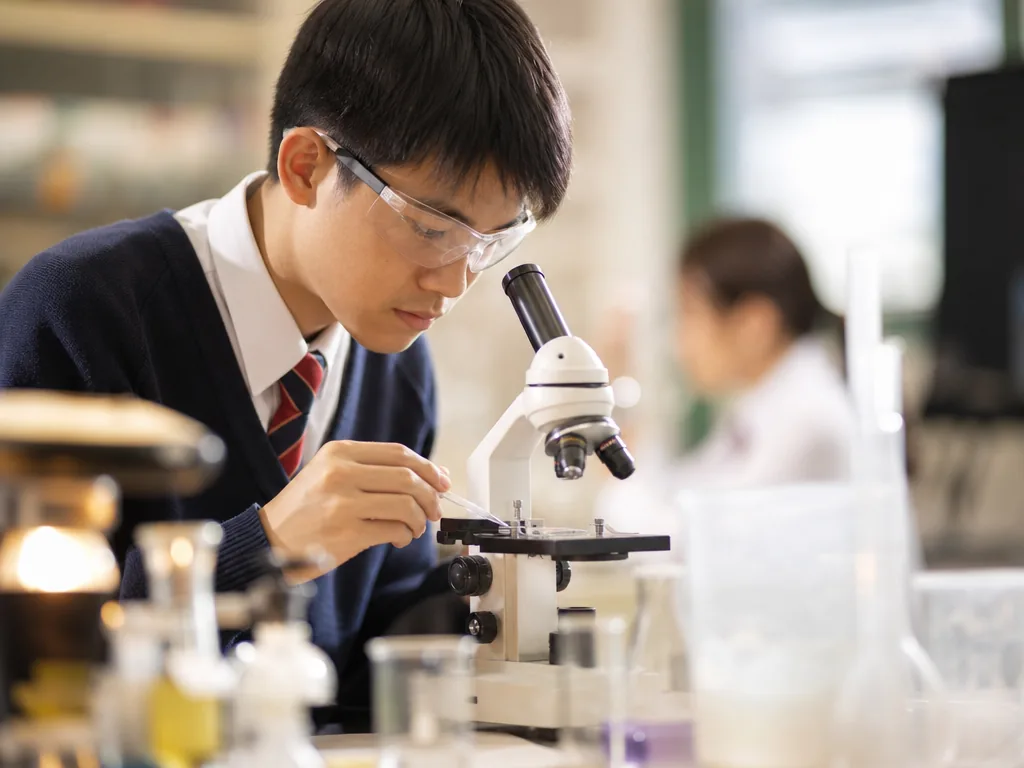
- Experiment Design — Learn how to design biological experiments, master basic experimental techniques like microscope observation, liquid handling, and specimen preparation.
- Result Analysis — Learn how to analyze experimental results using scientific methods, draw conclusions, and perform statistical analysis on the data.
Application and Problem Solving
- Case Studies — Apply biological knowledge to real-world case studies (e.g., environmental pollution, ecological conservation) to improve practical application skills.
- Interdisciplinary Learning — Integrate knowledge from other subjects (e.g., chemistry, physics) to solve complex biological problems, such as the relationship between biology and chemical reactions or the application of physics in biological contexts.
Common Challenges and Solutions
Difficulty in Understanding Abstract Biological Concepts
Solution — Use multimedia resources (e.g., animations, models) to help understand abstract concepts. Conduct experiments or field trips to connect theory with practice.
Analysis and Interpretation of Experimental Data
Solution — Practice data analysis regularly, learn how to extract key information from data, and link it with biological principles.
Comprehensive Analysis of Environmental and Ethical Issues
Solution — Engage in discussions and group work to deeply understand the relationship between environmental issues and biological knowledge. Develop the ability to think critically from multiple perspectives on ethical issues.
University and Career Pathways
University Pathways
Biology is related to various university disciplines, including:
- Biology
- Medicine
- Environmental Science
- Agricultural Science
- Pharmacy
- Public Health
Career Paths
Studying biology opens up a wide range of career opportunities in fields such as:
- Biologist
- Medical Researcher
- Environmental Protection Specialist
- Doctor
- Pharmacist
- Genetic Engineer
Exam Time Management and Final Advice
Time Distribution for Papers
- Paper 1 — Approx. 45 minutes per question (including 5 minutes of thinking time).
- Paper 2 — 60 minutes for applied questions + 60 minutes for data analysis.
Actionable Advice
- Regular Laboratory Practice——Combine theoretical knowledge with hands-on experiments to improve practical skills.
- Learn to Read Scientific Literature——Keep up with the latest developments in biology by reading scientific papers and articles.
- Strengthen Interdisciplinary Learning——Integrate knowledge from other disciplines, such as mathematics and physics, to address complex biological questions.
By following this structured learning strategy and course framework, students can excel in DSE Biology, which will provide a solid foundation for future academic and career development.
Frequently Asked Questions
What is the weighting of DSE Biology?
Paper 1 60% (2h30), Paper 2 20% (1h) and SBA 20%. The two papers together carry 80%.
How many electives must I answer in Paper 2?
Paper 2 sets questions on four elective topics and you answer questions from any two of them.
Is there SBA in Biology?
Yes — 20%, split between practical skills (8%) and reporting of investigative work (12%). Private candidates need not complete it.
Further Resources & Next Steps
- Official Resources——Consult the Hong Kong Examinations and Assessment Authority (HKEAA) and the Education Bureau website for the official syllabus, assessment details, and past papers.
- Further Reading——A standard reference such as Campbell Biology offers deeper coverage of the core concepts for ambitious students.
- Parent Tips——Encourage low-cost, hands-on experiments and nature observation at home so students connect textbook theory with the living world around them.
Note: The information above is for reference only. Please consult professional education institutions for details.
This article was initially drafted and organised with AI. Editor / Professor Chan Kwok-wai; Managing Editor / Kong Yee-leung
Act Now: Find a Tutor / Register as a Tutor
For parents & students: looking for a home or online tutor for this subject? Click the button below to post a free tuition case (subject, level and preferred time) — TutorZone will match you with suitable tutors:
For tutors: do you teach this subject? Click the button below to register for free and receive more suitable cases — you pay only when a match is made:
