 Chinese (Traditional)
 Chinese (Simplified)
 English



What Is Middle School Philosophy in the IB MYP Curriculum?
TUTORZONE SUBJECT GUIDE · INTERNATIONAL JUNIOR HIGH SCHOOL
Middle School Philosophy in the IB MYP is a thought-provoking subject for students aged 11 to 16 that cultivates critical thinking, ethical reasoning, and logical argumentation. Here is what it covers, how it is taught, and why it matters for your child.
Direct Answer:What is Middle School Philosophy in the IB MYP curriculum?
Middle School Philosophy in the IB MYP is a subject for ages 11-16 that cultivates critical thinking, ethical reasoning, and logical argumentation.
What Is Middle School Philosophy in the IB MYP?
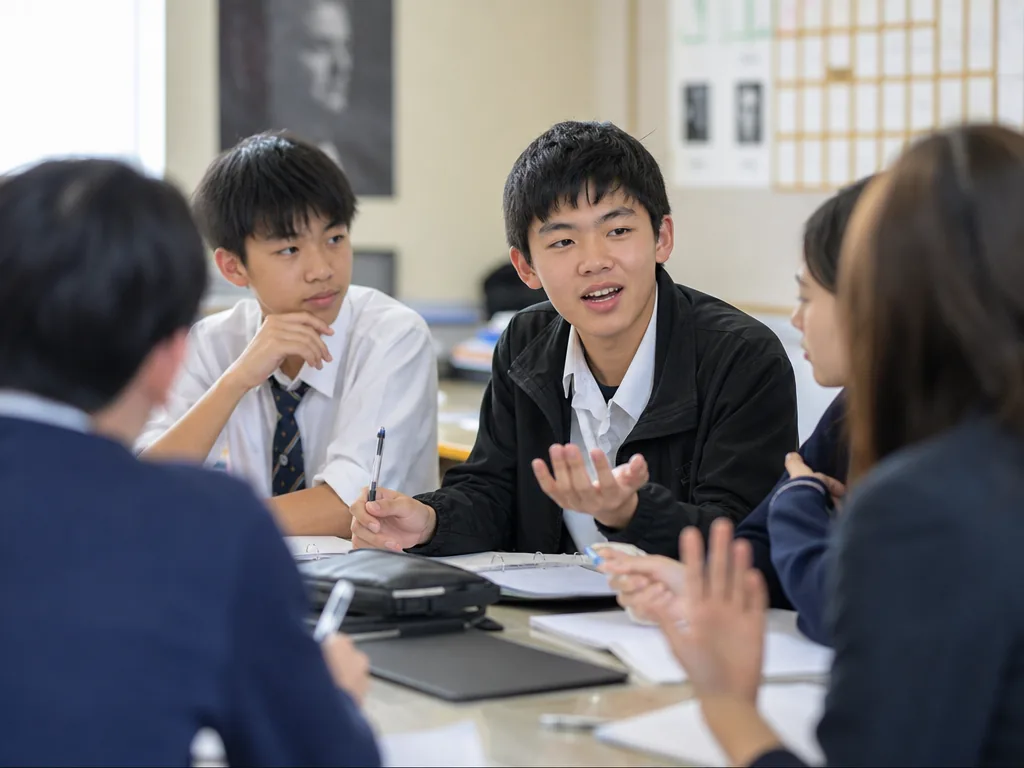
Middle School Philosophy in the International Baccalaureate Middle Years Programme (IB MYP) is a thought-provoking subject designed for students aged 11 to 16. Within the MYP framework, philosophy is often taught as part of the Individuals and Societies subject group. While the structure may vary across international schools, the core purpose remains the same: to cultivate critical thinking, ethical reasoning, and logical argumentation through the exploration of fundamental human questions about existence, knowledge, morality, and society.
Far from being abstract or inaccessible, philosophy at this level uses age-appropriate and real-life issues to teach students how to think—not what to think. Students are encouraged to question assumptions, evaluate ideas, and build well-reasoned arguments, laying a strong foundation for academic and personal growth.
Core Learning Areas in Middle School Philosophy
1. Critical Thinking and Logical Reasoning
Students learn to:
- Identify strong vs. weak arguments — telling a well-built case apart from a shaky one.
- Recognize common logical fallacies — spotting flawed reasoning when it appears.
- Construct and defend their viewpoints with clarity and logic — building and standing behind reasoned positions.
These skills help students become more thoughtful and independent thinkers across all subjects.
2. Ethics and Moral Reasoning
Key questions explored include:
- What is right or wrong?
- What makes an action good or bad?
Through engaging moral dilemmas—such as environmental responsibility, social justice, or the ethics of technology—students learn to think deeply about consequences and fairness.
3. Theory of Knowledge (Epistemology)
Students explore questions such as:
- How do we know something is true?
- What is the difference between belief and knowledge?
This trains students to become more skeptical, curious, and evidence-based in their understanding of the world—especially in today’s information-rich society.
4. Existence and Identity
Philosophy prompts students to consider:
- Who am I?
- What does it mean to be human?
- Do we have free will?
These questions foster personal reflection and help students understand their roles and responsibilities in the broader world.
5. Political and Social Philosophy
Students are introduced to:
- Social contract theory
- Concepts of freedom, equality, and justice
- The relationship between individual rights and social systems
These topics help students become more informed, engaged, and responsible global citizens.
Why Is Middle School Philosophy Important?
- Encourages Deep Thinking — students go beyond surface-level answers and learn to explore the core of complex issues, a skill crucial for academic success and real-world decision-making.
- Enhances Argumentation and Communication — philosophy helps students organize their thoughts, articulate them clearly, and listen respectfully to opposing views.
- Fosters Empathy and Moral Awareness — by grappling with ethical dilemmas, students develop a stronger sense of responsibility and compassion toward others.
- Builds a Foundation for Future IB and University Studies — philosophical thinking supports success in IBDP Philosophy (HL/SL), Global Politics, Law, Psychology, and International Relations, disciplines that require nuanced reasoning and ethical insight.
- Equips Students for a Complex World — in an age of AI, media overload, and fast-paced change, philosophy offers the tools to analyze, evaluate, and act with clarity and conscience.
Philosophy teaches students how to think—not what to think.
Sample Topics in IB MYP Philosophy
| Theme | Guiding Questions |
|---|---|
| Knowledge and Truth | What is truth? How do we distinguish facts from opinions? |
| Freedom and Responsibility | Do humans have free will? What are the limits of personal responsibility? |
| Justice and Equality | What does it mean to be fair? How should societies promote equality? |
| Ethical Dilemmas | Is it right to sacrifice one life to save five? (e.g., The Trolley Problem) |
| Aesthetics and Art | What is the value of art? Is beauty subjective or objective? |
Final Thoughts: Why Philosophy Matters in the MYP
Philosophy in middle school isn’t just about abstract ideas—it’s about teaching students to think more clearly, act more ethically, and live more reflectively. It empowers young minds to ask big questions and explore the complexity of the world around them. Whether your child plans to pursue IB Philosophy or not, these skills will benefit them for a lifetime.
Frequently Asked Questions (FAQ)
Q: Is philosophy too difficult for middle school students?
No. Middle school philosophy uses age-appropriate examples and real-life issues, so students learn to think through problems they can relate to rather than reading dense academic texts.
Q: Is philosophy a standalone subject in the IB MYP?
Not usually. In most schools, philosophy is taught as part of the Individuals and Societies subject group, though the exact structure can vary between international schools.
Q: Does middle school philosophy help with future studies?
Yes. It builds the reasoning and ethical insight needed for IBDP Philosophy (HL/SL), Global Politics, Law, Psychology, and International Relations, and supports success in those subjects at university level.
Q: Does my child need any prior knowledge of philosophy?
No prior knowledge is required. The subject starts from fundamental questions and encourages every student to think, ask, and reason from their own experience.
Further Resources & Next Steps
- Official Resources — the IB’s Individuals and Societies subject guide and the official IB MYP curriculum materials for the Middle Years Programme.
- Further Reading — introductory philosophy books for young readers, such as illustrated guides to ethics, logic, and the big questions of existence and knowledge.
- Parent Tips — encourage discussion at home: ask open-ended questions, debate everyday dilemmas together, and praise reasoning rather than “correct” answers.
Note: The information above is for reference only. Please consult professional education institutions for details.
This article was initially drafted and organised with AI. Editor / Professor Chan Kwok-wai; Managing Editor / Kong Yee-leung
Act Now: Find a Tutor / Register as a Tutor
For parents & students: looking for a home or online tutor for this subject? Click the button below to post a free tuition case (subject, level and preferred time) — TutorZone will match you with suitable tutors:
For tutors: do you teach this subject? Click the button below to register for free and receive more suitable cases — you pay only when a match is made: