
 中文(繁體)
 中文(简体)
 English



GCE Chemistry: Complete Guide to Course Content, Structure & Exam Format
TUTORZONE SUBJECT GUIDE · GCE
GCE Chemistry is a foundational and comprehensive science subject, spanning atomic structure, bonding, thermodynamics, kinetics and organic chemistry. This guide breaks down the complete course content, the AS/A Level structure, the exam format and the career paths the subject opens up.
Direct Answer:What topics does GCE Chemistry cover?
GCE Chemistry covers atomic structure, bonding, thermodynamics, kinetics and organic chemistry.
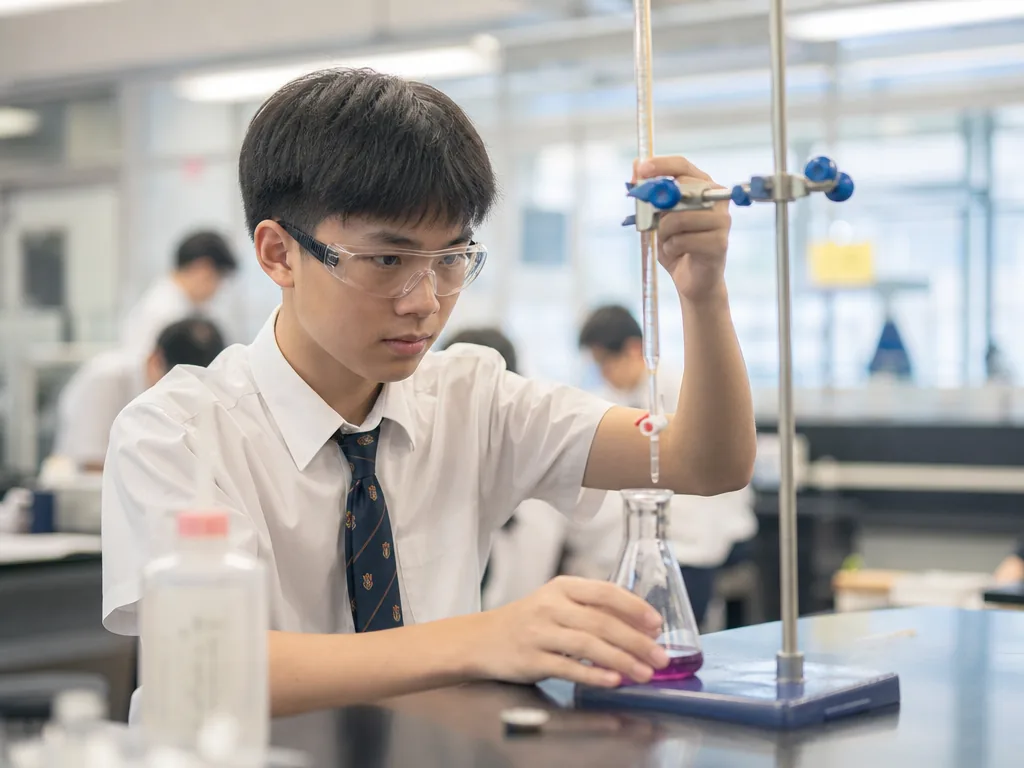
Course Content: The Eight Core Areas
The GCE Chemistry curriculum spans several fields and emphasises students’ understanding of chemical reactions, the structure of matter and its properties. The main areas of study include the following:
Atomic Structure & the Periodic Table
Students study the structure of the atom, including the arrangement of protons, neutrons and electrons, and how to explain the periodic behaviour of elements. Understand the organisation of the periodic table, and learn how to predict the chemical properties and reactions of elements from their atomic number and electron configuration.
Chemical Bonding & Molecular Structure
Study the formation and properties of different types of chemical bond (such as ionic, covalent and metallic bonds). Understand the relationship between the structure and properties of molecules, such as molecular shape, polarity and solubility.
Chemical Reactions & Thermodynamics
Students study different types of chemical reaction, such as acid–base reactions, redox reactions and precipitation reactions. Understand the thermodynamic principles of reactions, including concepts such as enthalpy change, entropy change and Gibbs free energy.
Kinetics & Reaction Rates
Study the concept of reaction rate, and understand how to control the speed of a reaction by changing reaction conditions (such as temperature, concentration and catalysts). Students also learn about reaction mechanisms and rate equations, and how to design experiments to measure reaction rates.
Acid–Base Chemistry & pH
Students study the basic theories of acids and bases, such as the Brønsted–Lowry and Lewis acid–base theories. Understand the concept of pH, and learn how to calculate and measure the pH of acid and alkali solutions, as well as the basic principles of acid–base titration.
Organic Chemistry
Study the structure, naming and reaction mechanisms of organic compounds, and gain an in-depth understanding of the chemical properties of various classes of organic compounds (such as hydrocarbons, alcohols, acids and amines). Students explore the basic types of organic reaction, such as addition, substitution and elimination reactions.
Stoichiometry & Solutions
Learn how to calculate the quantities of substances needed in a reaction from the molar ratios of reactants and products. Understand methods for calculating solution concentration, such as molar concentration (mol/L) and mass fraction.
Electrochemistry
Students study the working principles of electrochemical devices such as cells and electrolytic cells, and understand how redox reactions are converted into electrical energy, or how electrical energy is used to drive chemical reactions. Understand standard electrode potentials, the working principles of cells and their applications (for example, lithium batteries and fuel cells).
Course Structure: AS Level and A Level
The GCE Chemistry course is usually divided into two stages: AS Level and A Level.
AS Level
This is the foundational stage of GCE Chemistry, in which students study the core knowledge of chemistry, including atomic structure, chemical reactions and basic organic chemistry. The emphasis at this stage is on mastering fundamental concepts and laboratory skills.
A Level
This is the advanced stage, in which students explore more advanced chemical topics, including kinetics, thermodynamics, detailed organic chemistry and electrochemistry. At the same time, students carry out more experimental work and data analysis, enhancing their scientific research and experimental-design abilities.
Exam Format: Written Papers and Internal Assessment
The GCE Chemistry examination format usually includes two parts: written examinations and internal assessment.
Written Examinations
- Multiple-choice questions — Students answer a series of multiple-choice questions that mainly test their understanding of chemical concepts and principles.
- Short-answer questions — Students answer a number of questions concisely; these mainly test their grasp of specific concepts.
- Extended-response questions — Students write detailed answers, analysing a particular chemical reaction or phenomenon and demonstrating their theoretical knowledge and problem-solving ability.
Internal Assessment (Coursework)
- Laboratory reports — Students carry out various chemistry experiments and write detailed laboratory reports demonstrating their ability in experimental design, data analysis and interpretation of results.
- Data analysis — Students process data from experiments or literature and draw conclusions from the data.
Applications: Where GCE Chemistry Leads
GCE Chemistry has broad applications for students’ future academic and career development, and is especially crucial for those intending to enter the following fields:
- Medicine and health sciences — GCE Chemistry provides students with knowledge of biochemistry, pharmacology and basic medical concepts, and is essential for those planning to enter medicine, dentistry or pharmacy.
- Chemistry and the life sciences — Chemistry is the foundation for understanding the phenomena of life. Students can go on to research or work in fields such as biotechnology, environmental science, pharmaceuticals and chemical engineering.
- Environmental science and sustainable development — Chemistry plays an important role in the study of environmental issues; through chemistry, students can take part in research on environmental protection, pollution control and renewable energy.
- Engineering and materials science — Chemistry is closely linked to materials science; students can go on to study topics related to materials synthesis, energy conversion and manufacturing processes.
- Education and scientific research — For students aspiring to become chemistry teachers or to pursue scientific research, GCE Chemistry provides solid foundational knowledge and laboratory skills.
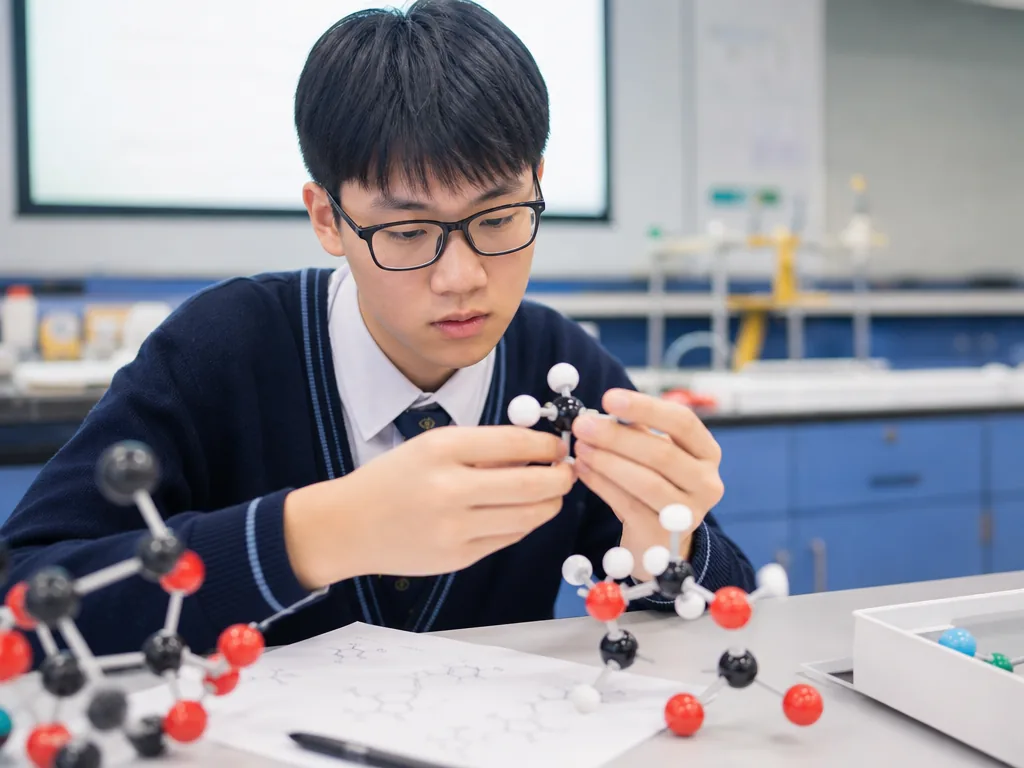
Why GCE Chemistry Matters
GCE Chemistry is a foundational and comprehensive subject. Its content involves not only basic chemical reactions and principles but also more advanced chemical analysis, laboratory skills and their real-world applications.
Studying GCE Chemistry not only helps students understand how the world around them works — it develops their scientific thinking, problem-solving ability and laboratory techniques.
These skills have far-reaching implications for students’ future academic, research and career development. For students intending to enter medicine, chemistry, engineering or environmental science, GCE Chemistry is an essential subject.
Frequently Asked Questions (FAQ)
Q: Is GCE Chemistry more difficult than other GCE sciences?
GCE Chemistry is often regarded as demanding because it combines abstract concepts (atomic and bonding theory) with mathematical skills (stoichiometry and thermodynamics) and hands-on laboratory work. With steady practice and regular past-paper work, most students manage it well.
Q: What grades do I need in GCE Chemistry for medicine?
Requirements vary by university, but medical and dental schools typically expect strong grades in Chemistry alongside other science subjects. Always check the specific entry requirements of the universities you are targeting.
Q: Can I take A Level Chemistry without sitting AS Level first?
This depends on the exam board and the route your school offers. Some students complete the full A Level in a single sitting, while others take AS Level first. Your school or tutor can advise on the best path for you.
Q: How much practical and laboratory work is involved?
Practical work is a core part of GCE Chemistry. You will carry out experiments, record data and write laboratory reports, and your practical skills are assessed through the internal assessment (coursework) component in addition to the written papers.
Further Resources & Next Steps
- Official Resources — Check your exam board’s latest specification, syllabus and past papers (such as Cambridge International, Pearson Edexcel or OxfordAQA) for the exact topics and question styles you will face.
- Further Reading — A dedicated GCE/International A Level Chemistry textbook or revision guide is a reliable companion for structured revision of each topic.
- Parent Tips — Encourage your child to practise with past papers under timed conditions and to use interactive molecular-modelling tools to build intuition for organic chemistry and bonding.
Note: The information above is for reference only. Please consult professional education institutions for details.
This article was initially drafted and organised with AI. Editor / Professor Chan Kwok-wai; Managing Editor / Kong Yee-leung
Act Now: Find a Tutor / Register as a Tutor
For parents & students: looking for a home or online tutor for this subject? Click the button below to post a free tuition case (subject, level and preferred time) — TutorZone will match you with suitable tutors:
For tutors: do you teach this subject? Click the button below to register for free and receive more suitable cases — you pay only when a match is made:
