
 中文(繁體)
 中文(简体)
 English



Guzheng (Chinese Zither): Complete Overview, History and Learning Guide
TUTORZONE SUBJECT GUIDE · PLUCKED STRING INSTRUMENTS
The guzheng is an ancient Chinese plucked string instrument with more than two thousand years of history, prized for its bright, melodious tone and strong ethnic character. This guide traces its origins and modernisation, profiles celebrated masters and their representative works, and lists the classic pieces every student should know.
Direct Answer:What is the guzheng?
The guzheng is an ancient Chinese plucked string instrument with 2,000+ years of history and a bright, melodious tone.
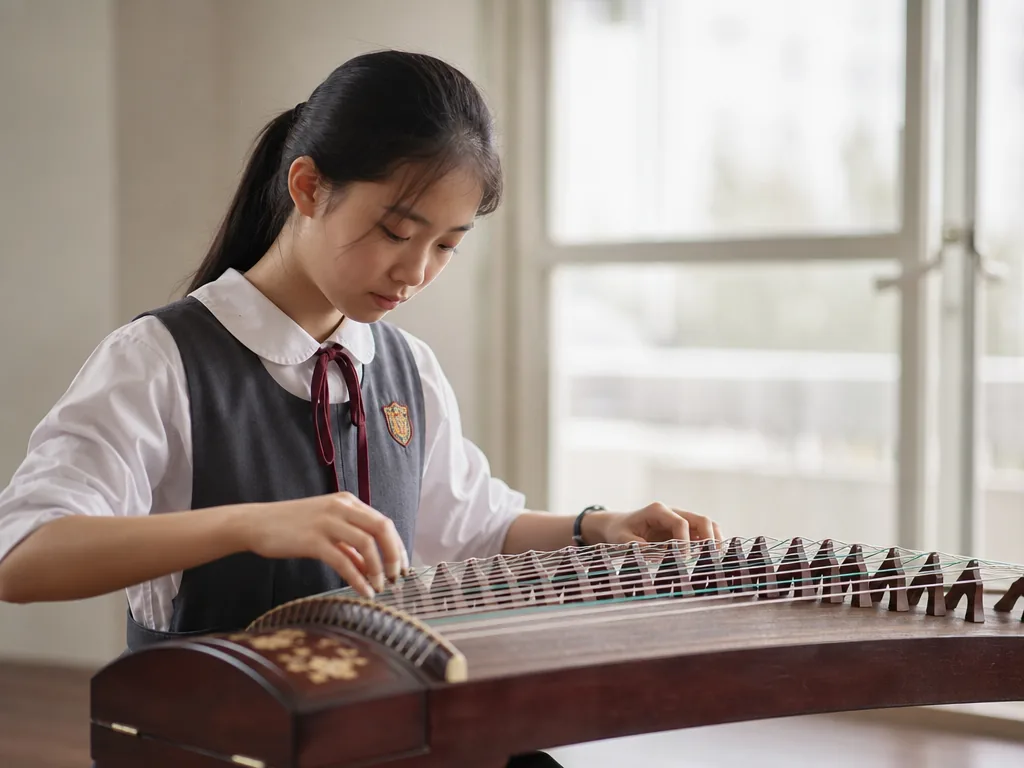
The Guzheng: An Ancient Chinese Plucked String Instrument
The guzheng is one of the most representative traditional Chinese string instruments, with a history of more than two thousand years. The guzheng is a rectangular wooden box and usually has 21 strings (though variants with other numbers of strings exist). Its tone is bright and melodious with a strong ethnic character, and it is one of the important components of Chinese music. It holds a place in Chinese traditional music, folk music and modern music.
21 Strings
The modern guzheng is a rectangular wooden box usually strung with 21 strings, though variants with other string counts exist.
Two Millennia of Heritage
With roots reaching back to the Spring and Autumn and Warring States periods, the guzheng carries more than two thousand years of Chinese musical tradition.
A Bright, Melodious Voice
Its tone is bright and melodious with a strong ethnic character, at home in traditional, folk and modern music alike.
Origins of the Guzheng
Ancient Origins
The history of the guzheng can be traced back to the Spring and Autumn and Warring States periods (770–221 BC); its predecessor was an ancient string instrument of the “zheng” or “si” type. Early zheng had five or ten strings, and their playing technique and musical expression were relatively simple.
Development in the Han Dynasty
By the Han dynasty (206 BC–220 AD), the form of the zheng gradually became standardised and developed into the guzheng with 21 strings. During this period the guzheng gradually entered the daily lives of the court and the scholar-officials and played an important role in musical performances across the country.
The Tang and Song Dynasties
During the Tang and Song dynasties, guzheng playing technique developed further and the instrument was widely used in folk music and opera music. In this period, guzheng music included both the elegant style of the court and popular folk music.
Evolution and Modernisation of the Guzheng
The Ming and Qing Dynasties
During the Ming and Qing dynasties the guzheng reached its technical peak and entered folk song-and-dance and opera performances. Guzheng music of this period began to emphasise the unity of “vivid vitality” and “musical expression”.
The 20th Century to the Present
In the modern era, the guzheng has gradually gained more attention around the world. With the spread of music education, guzheng playing technique and musical expression have become more diversified and have incorporated elements of Western music. Contemporary guzheng players, in addition to traditional repertoire, have created a large number of modern works, bringing the guzheng into a wider musical field.
Guzheng playing technique and musical expression have become more diversified and have incorporated elements of Western music.
Notable Guzheng Masters and Their Representative Works
The guzheng not only has a long history but has also attracted many outstanding musicians to study and perform it in depth. Below are several celebrated guzheng masters and their representative works.
Shao PuChina
Shao Pu is one of the most influential guzheng players of the contemporary era and an important promoter of guzheng art. He has blended the guzheng’s traditional playing technique with modern musical styles, creating a new school of performance. Shao Pu’s musical style is profound and unique, and his playing demonstrates the limitless possibilities of the guzheng.
- High Mountains and Flowing Water (Gao Shan Liu Shui)——One of the classics of Chinese guzheng music; Shao Pu’s interpretation gives the piece a deep philosophical quality and expresses the grandeur of nature and the remoteness of the human heart.
- Plum Blossom Melody (Meihua San Nong)——This piece expresses the resilience and aloofness of the plum blossom; Shao Pu’s technique is extremely fine, bringing out the plum blossom’s nobility to the fullest.
Lin MeizhuChina
Lin Meizhu is one of the outstanding figures in contemporary Chinese guzheng; she not only excels at traditional guzheng performance but is also dedicated to its innovation and modernisation. Her playing style is soft and highly expressive, and she is deeply loved by music fans.
- Wild Geese Descending on the Sandbank (Ping Sha Luo Yan)——A guzheng piece expressing a tranquil, distant scene; Lin Meizhu’s interpretation brings out the piece’s serenity and beauty to the fullest.
- White Snow in Early Spring (Yang Chun Bai Xue)——This guzheng solo depicts the gentle beauty of spring; Lin Meizhu’s performance is delicate and moving, fully expressing the vitality of spring.
Pang JieChina
Pang Jie is a guzheng master of the younger generation, blending the guzheng’s traditional musical style with modern elements and dedicated to the guzheng’s internationalisation. Her musical expression is rich; she can interpret tradition and also create modern works.
- Wild Geese Flying South (Yan Nan Fei)——This work expresses the scene of autumn; Pang Jie’s technique is superb, and every note is full of emotion.
- Sand of Silk-Washing Stream (Huan Xi Sha)——A guzheng work combining classical and modern elements; in her performance Pang Jie incorporates the charm of Chinese poetry, giving the music a strong modern feel.
Tang YunChina
Tang Yun is one of the pioneers of contemporary guzheng art; her playing technique is highly skilled, and she excels at combining guzheng music with other musical forms. Her musical style is full of emotion and demonstrates her deep understanding of guzheng music.
- Ambush from Ten Sides (Shi Mian Mai Fu)——This piece depicts the magnificent scenes of an ancient battlefield; Tang Yun’s interpretation brings out the piece’s passion and grandeur to the fullest.
- Singing the Night Among Fishing Boats (Yu Zhou Chang Wan)——This work expresses the tranquillity of the evening glow; Tang Yun’s performance is soft and deeply emotional, and intoxicating.
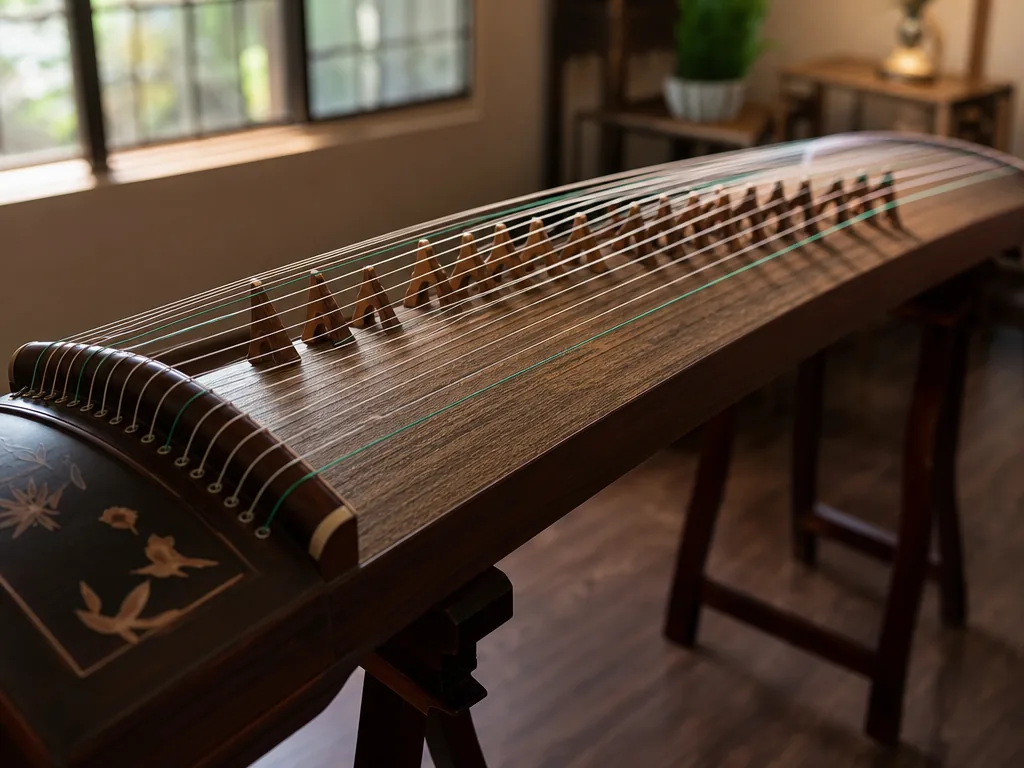
Recommended Classic Guzheng Works
| Composer/Musician | Work | Musical style | Characteristics |
|---|---|---|---|
| Shao Pu | High Mountains and Flowing Water | Classical | Profound and philosophical, expressing the grandeur of nature |
| Lin Meizhu | Wild Geese Descending on the Sandbank | Classical | Distant and tranquil, showing the harmony and beauty of nature |
| Pang Jie | Wild Geese Flying South | Classical | Emotionally rich, depicting the beauty of autumn |
| Tang Yun | Ambush from Ten Sides | Classical | Passionate and magnificent, showing the intensity and grandeur of the battlefield |
Frequently Asked Questions (FAQ)
Q: How many strings does a guzheng have?
The modern standard guzheng has 21 strings, although historical and regional variants have been built with other numbers — from five or ten strings on early instruments to larger contemporary models. Most lessons and sheet music today assume the 21-string instrument.
Q: At what age can a child start learning the guzheng?
Many teachers suggest starting around six to eight years old, when a child’s fingers are strong and dexterous enough to wear fingerpicks and press the strings. Younger children can begin with simplified exercises on a smaller instrument, and adults can learn at any age.
Q: How is the guzheng different from the guqin?
The guzheng is larger and usually has 21 strings over movable bridges, producing a bright, resonant tone, and is typically played with fingerpicks. The guqin has seven strings, no bridges, and a quieter, more introspective voice, and is historically associated with scholar-gentlemen. Both are plucked zithers, but they differ greatly in sound and repertoire.
Q: How long does it take to learn to play the guzheng?
With regular practice, beginners can usually play simple melodies within several months to a year, while building solid technique and tackling the classic repertoire typically takes several years of consistent lessons. Progress depends on practice frequency and the quality of teaching.
Further Resources & Next Steps
- Official Resources——Hong Kong’s Leisure and Cultural Services Department (LCSD) Music Office runs Chinese instrument courses and youth ensembles; the Hong Kong Academy for Performing Arts also offers Chinese music programmes.
- Further Reading——The New Grove Dictionary of Music and Musicians, entry on the zheng (guzheng), for scholarly background on the instrument’s history and repertoire.
- Parent Tips——Encourage short, daily practice sessions of 15–30 minutes rather than long, infrequent ones; regular listening to classic guzheng recordings helps build a child’s ear and motivation.
Note: The information above is for reference only. Please consult professional education institutions for details.
This article was initially drafted and organised with AI. Editor / Professor Chan Kwok-wai; Managing Editor / Kong Yee-leung
Act Now: Find a Tutor / Register as a Tutor
For parents & students: looking for a home or online tutor for this subject? Click the button below to post a free tuition case (subject, level and preferred time) — TutorZone will match you with suitable tutors:
For tutors: do you teach this subject? Click the button below to register for free and receive more suitable cases — you pay only when a match is made: