
 中文(繁體)
 中文(简体)
 English



IB History SL – Complete Guide: Course Structure, Assessment and Study Strategies
TUTORZONE SUBJECT GUIDE · IB
IB History SL is a core humanities subject built on critical thinking, source analysis and cross-cultural perspective. This guide walks through the 2025 course structure, assessment and marking, and the study strategies that earn top marks — from OPCVL source criticism to a Level 7 essay.
Direct Answer:What is IB History SL?
It is a core IB humanities subject focused on critical thinking, source analysis, and cross-cultural perspective, with OPCVL source criticism and L。
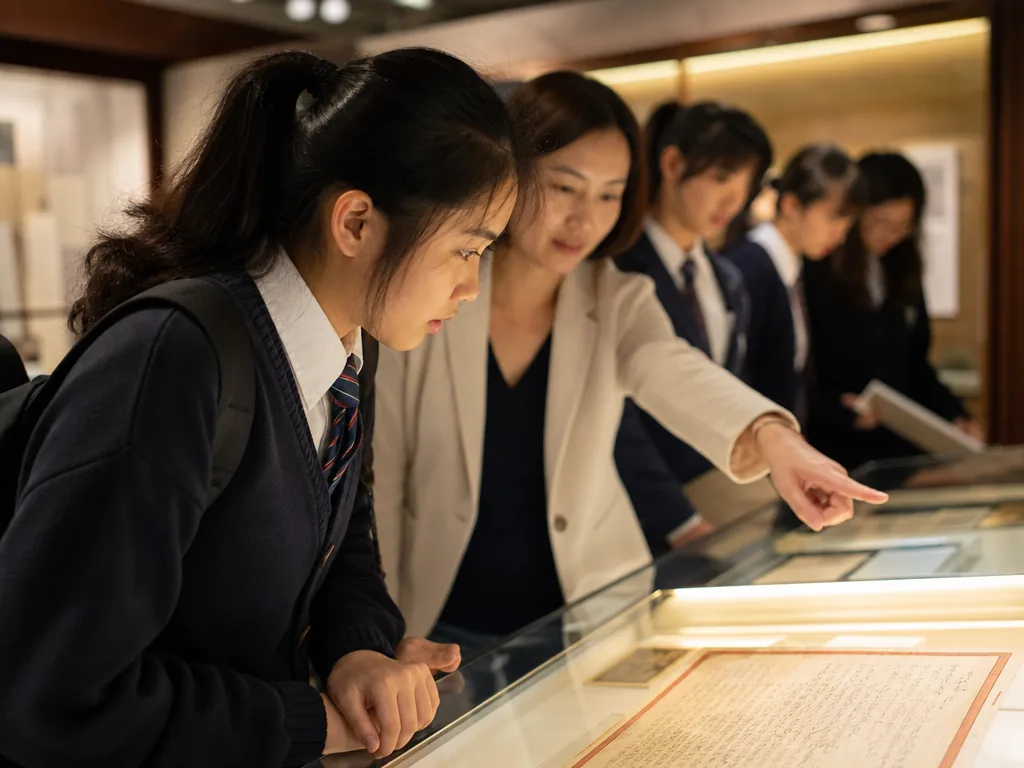
What Is IB History SL?
IB History SL (Standard Level) is a core subject in the IB humanities, emphasising critical thinking and cross-cultural understanding. Its defining features include:
- Global perspective — compare the development of different civilisations.
- Source analysis — develop the ability to interpret primary documents.
- Multiple interpretations — identify bias and position in historical narratives.
- Skills-oriented — emphasise argumentative structure rather than memorising facts.
Differences between SL and HL
Depth of study
SL studies 2 world history topics, while HL requires an additional regional study.
Teaching hours
150 hours for SL versus 240 hours for HL.
Assessment difficulty
SL has a lower essay word count — 1,500 words versus 2,200 at HL.
Course Structure (2025 Syllabus)
The core modules, their compulsory SL content and the skills each one develops are summarised below.
| Core module | Compulsory SL content | Key skills developed |
|---|---|---|
| Society and economy | The impact of the Industrial Revolution | Causal analysis |
| Politics and power | Comparing totalitarian regimes | Ideological critique |
| Culture and identity | Exploring colonial legacies | Cross-cultural perspective |
| Optional theme | 20th-century wars (example) | Multi-factor evaluation |
SL focus areas
- Topic 1 — 20th-century world conflicts (such as the Cold War).
- Topic 2 — the formation of modern states (such as Singapore’s independence).
Assessment and Marking
External assessment (75%)
| Paper | Question type | Skill requirement | Marking focus |
|---|---|---|---|
| Paper 1 | Source analysis | Source criticism (OPCVL method) | Able to identify authorial intent and limitations |
| Paper 2 | Essay questions (choose 2 of 6) | Applying a comparative framework | Close integration of argument and evidence |
Internal assessment (25%)
The historical investigation (1,500 words) is a self-chosen topic — for example, “multiple interpretations of the Pearl Harbor incident”. A strong investigation must include:
- comparison of at least 3 academic viewpoints;
- cross-checking primary sources against secondary literature;
- a clear counter-argument.
SL Study Focus: The OPCVL Model
The SL syllabus concentrates on three knowledge dimensions, each with its own core requirement and a typical exam question.
| Knowledge dimension | Core requirement | Typical exam question |
|---|---|---|
| Causal analysis | Distinguish direct/root causes | “Evaluate the impact of the Treaty of Versailles on the rise of Nazism” |
| Comparative study | Build an effective comparison framework | “Compare the resistance strategies of Gandhi and Mandela” |
| Historical method | Apply the OPCVL model | Analyse a 1938 cartoon about the Munich Agreement |
The OPCVL model — the backbone of source criticism — stands for:
- Origin
- Purpose
- Content
- Value
- Limitation

Effective Study Strategies
Source analysis techniques
The three-step reading method:
- Surface message — what is stated directly.
- Implied intent — the author’s position.
- Historical context — the conditions of production.
Essay structure
The PEEL paragraph method: Point, Evidence (dates/data/quotes), Explanation (linking to the argument), Link (back to the question).
In IB History, a claim without a source is an opinion — examiners reward the essay that treats evidence as the engine of the argument.
Time management
The 10-minute speed-reading training:
- 5 minutes — extract keywords from the source;
- 3 minutes — build an analysis framework;
- 2 minutes — check for omissions.
Essential Tools and Resources
| Type | Recommended resource | Use case |
|---|---|---|
| Source collection | Fordham University Modern History Sourcebook | Finding primary documents |
| Academic platform | JSTOR / Google Scholar | Searching secondary literature |
| Visualisation tool | Timeline JS | Presenting relationships between events |
| Critical thinking | Historiography by Ernst Breisach | Introduction to historical theory |
Common Challenges and Solutions
Identifying source bias
The position-detection checklist:
- the group the author belongs to;
- the audience’s expected reaction;
- competing narratives at the time.
Insufficient argumentative depth
Use counterfactual reasoning — suppose Germany had won the First World War, then analyse the reasonableness of the Versailles system.
Confusing timelines
Draw a two-layer timeline:
- upper layer — political events;
- lower layer — socioeconomic change.
Subject Links: TOK and the Extended Essay
TOK links
Epistemological questions to explore:
- “How do historians overcome the incompleteness of evidence?”
- “Who has the right to define ‘civilisation’?”
Extended Essay topic advice
- Avoid overly broad topics — for example, “the causes of the Second World War”.
- Prefer focused topics — for example, “media representations of the Hiroshima bombing”.
Marking Criteria and Practical Techniques
Features of a high-scoring essay
- Uses historians’ technical terms — such as the “revisionist school”.
- Labels sources (Chicago format).
- Balanced narrative — acknowledges counter-evidence.
To avoid:
- presentism — projecting contemporary values;
- purely descriptive writing;
- not addressing counter-examples.
Memory aids
- Acronym — MAIN (the causes of the First World War: Militarism, Alliances, Imperialism, Nationalism).
- Mind map — the Cold War, linking ideology, proxy wars and the space race.
Pre-exam sprint
Priority revision:
- key term definitions from the syllabus;
- 5 comparison case studies;
- 3 historiographical methodologies.
Writing checklist
- Each paragraph has a clear topic sentence.
- Each claim is supported by sources.
- The conclusion includes historical significance.
University and Career Links
University advantages
IB History SL is highly recognised by humanities and social science courses. It is especially helpful when applying to:
- international relations;
- pre-law;
- cultural studies.
Career paths
- Education — IB teacher / curriculum development.
- Public affairs — policy analyst.
- Cultural institutions — museum curator.
Study Plan, Examiner Expectations and Action Plan
A sample study plan
| Stage | Core task | Milestone |
|---|---|---|
| Term 1 | Master the OPCVL method | Able to complete an L5 source evaluation independently |
| Term 2 | Build a comparative framework | Write two comparative essays |
| Term 3 | Complete the historical investigation | Pass a Turnitin originality check |
| 8 weeks before exams | Past-paper practice | Complete Paper 1 within one hour |
Examiner expectations: a Level 7 answer
Take a 2023 exam question — “Evaluate the role of economic factors in the Cuban Missile Crisis”. A high-scoring answer would:
- cite Khrushchev’s memoirs to illustrate sugar-trade pressure;
- compare the actual effect of Kennedy’s economic sanctions;
- introduce the revisionist school — such as William Appleman Williams;
- conclude that economic factors were a necessary but not sufficient condition.
Action plan
- Browse BBC History Magazine regularly.
- Join Model UN conferences to build an international perspective.
- Build a “source–argument” pairing database.
Top resources:
- IB official History assessment criteria;
- Harvard University open course on Cold War studies;
- British Museum online collections.
Frequently Asked Questions (FAQ)
Q: How is IB History SL different from HL?
SL covers 2 world history topics in 150 teaching hours with a 1,500-word essay, while HL adds a regional study, runs for 240 hours and requires a 2,200-word essay.
Q: What is the OPCVL method?
OPCVL is the standard framework for source criticism in IB History — Origin, Purpose, Content, Value and Limitation — used in Paper 1 to evaluate a document’s reliability and usefulness.
Q: How is the final grade calculated?
External assessment is worth 75% (Paper 1 source analysis and Paper 2 essays) and the internal assessment — a 1,500-word historical investigation — is worth 25%.
Q: What topics does the SL syllabus focus on?
The SL focus areas are 20th-century world conflicts (such as the Cold War) and the formation of modern states (such as Singapore’s independence), alongside the core themes of society and economy, politics and power, and culture and identity.
Further Resources & Next Steps
- Official Resources——The International Baccalaureate official History assessment criteria and the IB website (www.ibo.org).
- Further Reading——Fordham University’s Modern History Sourcebook for primary documents, and Historiography by Ernst Breisach for historical theory.
- Parent Tips——Encourage a reading habit with BBC History Magazine and museum collections (for example the British Museum’s online collections) to build the background knowledge that essays draw on.
Note: The information above is for reference only. Please consult professional education institutions for details.
This article was initially drafted and organised with AI. Editor / Professor Chan Kwok-wai; Managing Editor / Kong Yee-leung
Act Now: Find a Tutor / Register as a Tutor
For parents & students: looking for a home or online tutor for this subject? Click the button below to post a free tuition case (subject, level and preferred time) — TutorZone will match you with suitable tutors:
For tutors: do you teach this subject? Click the button below to register for free and receive more suitable cases — you pay only when a match is made: