 中文(繁體)
 中文(簡體)
 English



What is IGCSE Chemistry?
TUTORZONE SUBJECT GUIDE · IGCSE
IGCSE Chemistry is an international secondary school chemistry course offered by Cambridge Assessment International Education (CAIE), designed for students aged 14 to 16. It develops a fundamental understanding of the structure, properties and changes of matter, cultivates scientific inquiry and practical laboratory skills, and provides a solid foundation for A-Level, IB and university-level science.
Direct Answer:What is IGCSE Chemistry?
An international secondary chemistry course from CAIE for 14–16 year olds, covering structure, properties and changes of matter.
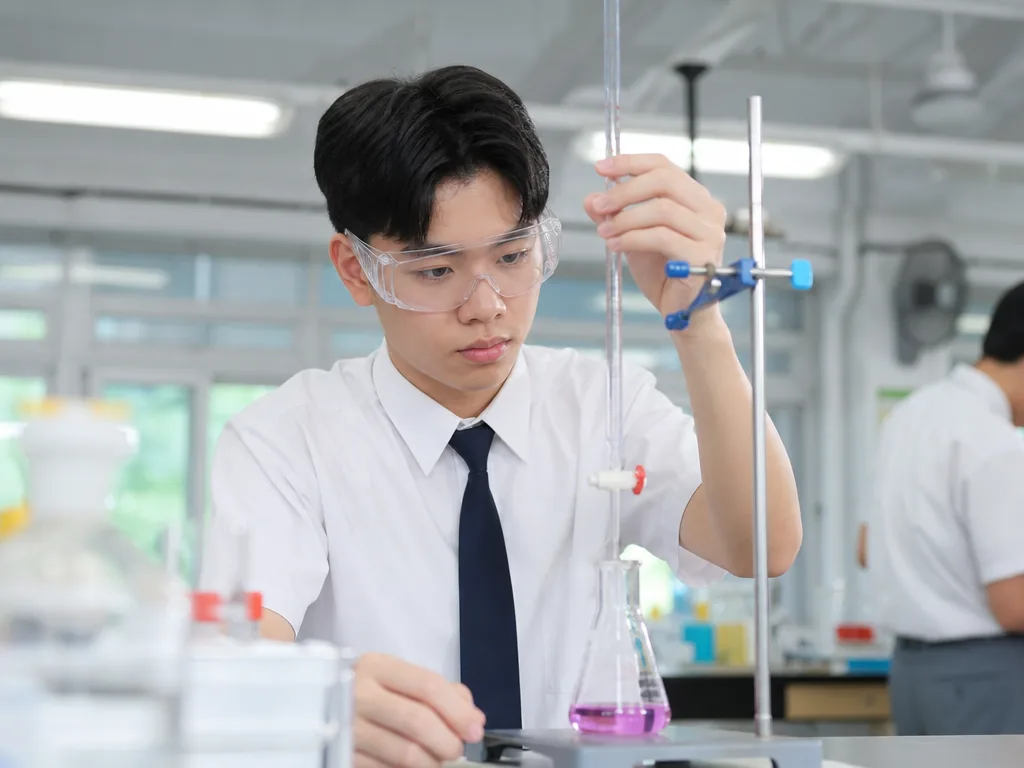
Core Topics of the IGCSE Chemistry Curriculum
1. Structure of Matter and the Periodic Table
- Atomic structure and electron configuration
- Periodic table and its trends
- Molecular structure and chemical bonding (covalent, ionic, etc.)
2. Principles of Chemical Reactions
- Writing and balancing chemical equations
- Acid-base reactions and the concept of neutralisation
- Redox reactions and their applications
- Reaction rates and the concept of chemical equilibrium
3. Fundamentals of Organic Chemistry
- Hydrocarbons and isomerism
- Identification of organic functional groups
- Basic types of organic reactions
4. Practical Skills
- Experimental design and lab techniques
- Measurement errors and data processing
- Laboratory safety guidelines
IGCSE Chemistry Exam Structure
| Paper | Format | Duration | Marks |
|---|---|---|---|
| Paper 1 | Multiple Choice | 45 minutes | 40 marks |
| Paper 2 | Structured Questions | 1 hour 15 minutes | 80 marks |
| Paper 3 | Practical Test (optional) | 1 hour 15 minutes | 40 marks |
| Paper 4 | Alternative to Practical (optional) | 1 hour | 40 marks |
The exams assess both theoretical knowledge and practical skills. Grades range from A* to G, and students may select papers based on their academic goals.
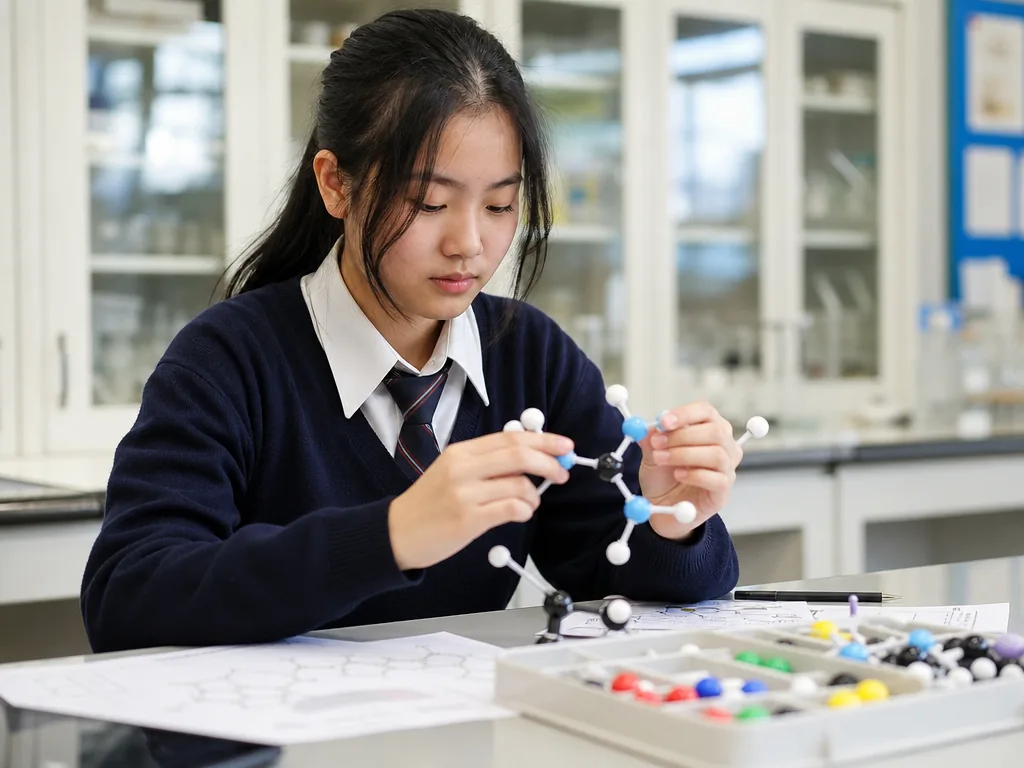
Academic and Career Value of IGCSE Chemistry
Foundation for Advanced Study
Serves as an essential foundation for advanced science courses such as A-Level and IB Chemistry.
Globally Recognised
Recognised by universities in the UK, US, Australia, Canada, and many other countries.
Career-Ready
Ideal for students aiming to pursue careers in medicine, pharmacy, engineering, environmental science, biotechnology, and related fields.
Effective Study Tips
- Systematically revise core topics — organise your notes by theme, focusing on reactions and lab techniques.
- Practise past papers and mock exams regularly — familiarise yourself with question types and time management.
- Strengthen practical skills — understand experimental principles, operations, and data analysis.
- Use high-quality learning resources — official textbooks, Physics & Maths Tutor, CGP Revision Guide, etc.
Who Should Study IGCSE Chemistry?
- Students interested in scientific fields like medicine, engineering, and biological sciences.
- Those who want a strong foundation for A-Level or IB science subjects.
- Learners who enjoy hands-on experiments and exploring natural science principles.
Frequently Asked Questions (FAQ)
Q: Which papers do I need to sit for IGCSE Chemistry?
Paper 1 (Multiple Choice) and Paper 2 (Structured Questions) are the core written papers. For the practical component, you choose either Paper 3 (Practical Test) or Paper 4 (Alternative to Practical) — both carry 40 marks.
Q: How are IGCSE Chemistry results graded?
Grades range from A* to G. The exams assess both theoretical knowledge and practical skills, and you can select papers according to your academic goals.
Q: Does IGCSE Chemistry prepare me for A-Level or IB?
Yes. It builds a strong foundation in atomic structure, chemical bonding, reactions and practical skills, which is exactly what A-Level and IB Chemistry build on.
Q: Do I need strong maths for IGCSE Chemistry?
Basic arithmetic and data-handling skills are enough — balancing equations, interpreting measurements and processing data are part of the syllabus itself.
Further Resources & Next Steps
- Official Resources — Cambridge Assessment International Education (CAIE) publishes the official IGCSE Chemistry (0620) syllabus and past papers at cambridgeinternational.org.
- Further Reading — Physics & Maths Tutor, the CGP Revision Guide and the official course textbook are widely used study aids.
- Parent Tips — Encourage regular past-paper practice and a quiet, organised study space; a steady revision routine beats last-minute cramming.
Note: The information above is for reference only. Please consult professional education institutions for details.
This article was initially drafted and organised with AI. Editor / Professor Chan Kwok-wai; Managing Editor / Kong Yee-leung
Act Now: Find a Tutor / Register as a Tutor
For parents & students: looking for a home or online tutor for this subject? Click the button below to post a free tuition case (subject, level and preferred time) — TutorZone will match you with suitable tutors:
For tutors: do you teach this subject? Click the button below to register for free and receive more suitable cases — you pay only when a match is made:
Related: see our IGCSE Physics Syllabus 2026 – Complete Guide.