 中文(繁體)
 中文(簡體)
 English



IGCSE Physics Complete Guide|Syllabus Overview, Exam Structure & Study Tips
TUTORZONE SUBJECT GUIDE · IGCSE
IGCSE Physics builds a strong foundation in mechanics, waves, electricity, and atomic physics — and opens the door to A-Level, IB Physics, and STEM degrees. This complete guide covers the syllabus, the exam structure, and the study habits that earn top grades.
Direct Answer:What does IGCSE Physics cover?
IGCSE Physics builds foundations in mechanics, waves, electricity and atomic physics, preparing for A-Level, IB Physics and STEM.
What Is IGCSE Physics?
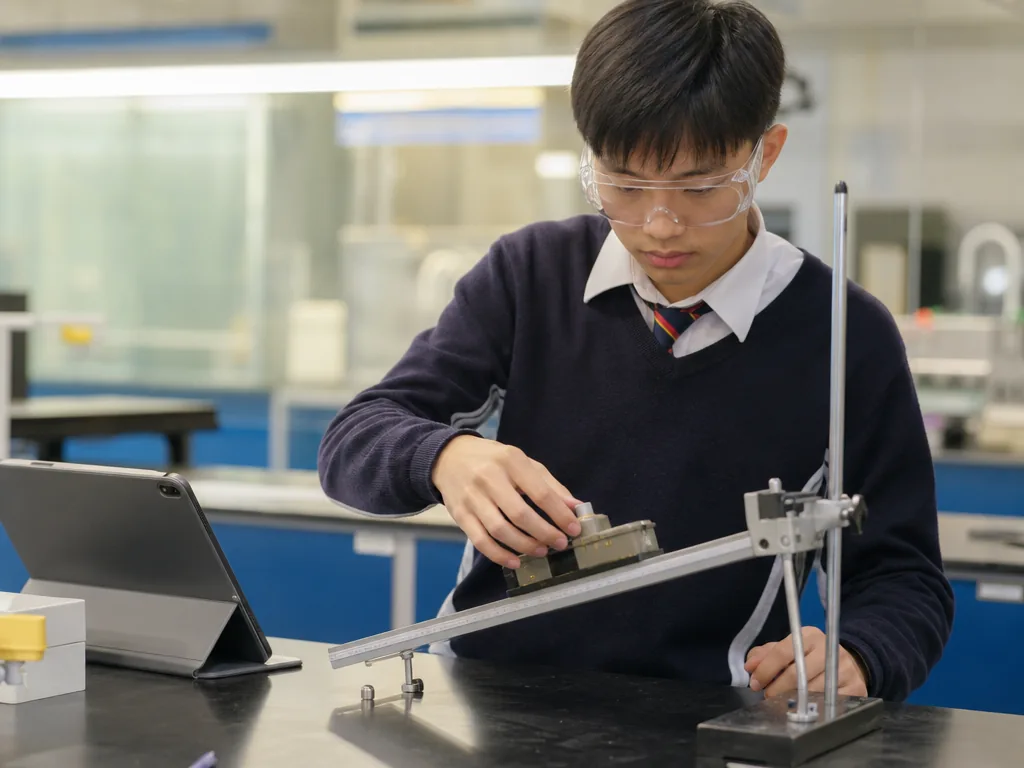
IGCSE Physics (International General Certificate of Secondary Education – Physics) is one of the core science subjects offered by Cambridge Assessment International Education (CAIE), designed for students aged 14 to 16. The course aims to build a solid foundation in understanding natural phenomena, covering essential topics such as mechanics, waves, electricity, and atomic physics. It prepares students for A-Level, IB Physics, and future STEM-related university majors.
It prepares students for A-Level, IB Physics, and future STEM-related university majors.
Course Content (Based on Cambridge IGCSE)
The IGCSE Physics syllabus is divided into major topic areas:
Forces and Motion
- Speed, velocity, and acceleration
- Newton’s laws of motion
- Gravity and friction
Energy and Work
- Energy conversions and conservation
- Power and efficiency
- Heat transfer (conduction, convection, radiation)
Electricity and Magnetism
- Current, voltage, and resistance
- Series and parallel circuits
- Magnetism and electromagnetic induction
Waves and Sound
- Wave properties (wavelength, frequency)
- Sound waves and ultrasound applications
- Reflection, refraction, and lenses
Thermal Physics and Particle Theory
- Kinetic theory of matter
- Pressure and temperature relationships
- Heat capacity and specific heat
Atomic Physics
- Radioactive decay
- Nuclear energy and radiation
- Particles and energy transformations
Exam Format & Paper Structure
Students can choose to take either the Core or Extended level:
Core Level
- Paper 1: Multiple-choice (45 mins)
- Paper 3: Structured questions (1 hr 15 mins)
- Paper 5 / 6: Practical Test or Alternative to Practical
Extended Level
- Paper 2: Multiple-choice (45 mins)
- Paper 4: Structured questions (1 hr 15 mins)
- Paper 5 / 6: Practical Test or Alternative to Practical
Assessment objectives:
Knowledge and understanding
Recall, understand, and apply the facts and concepts of the syllabus.
Application and interpretation
Handle information, apply knowledge, and interpret data.
Experimental skills and scientific inquiry
Plan experiments, use apparatus, and evaluate results.
Why Study IGCSE Physics?
Globally Recognised
Recognized by top universities and institutions in 150+ countries including the UK, US, Canada, and Hong Kong.
Essential Foundation
Essential foundation for pursuing A-Level Physics, IB Physics, or science-related disciplines.
Skills That Last
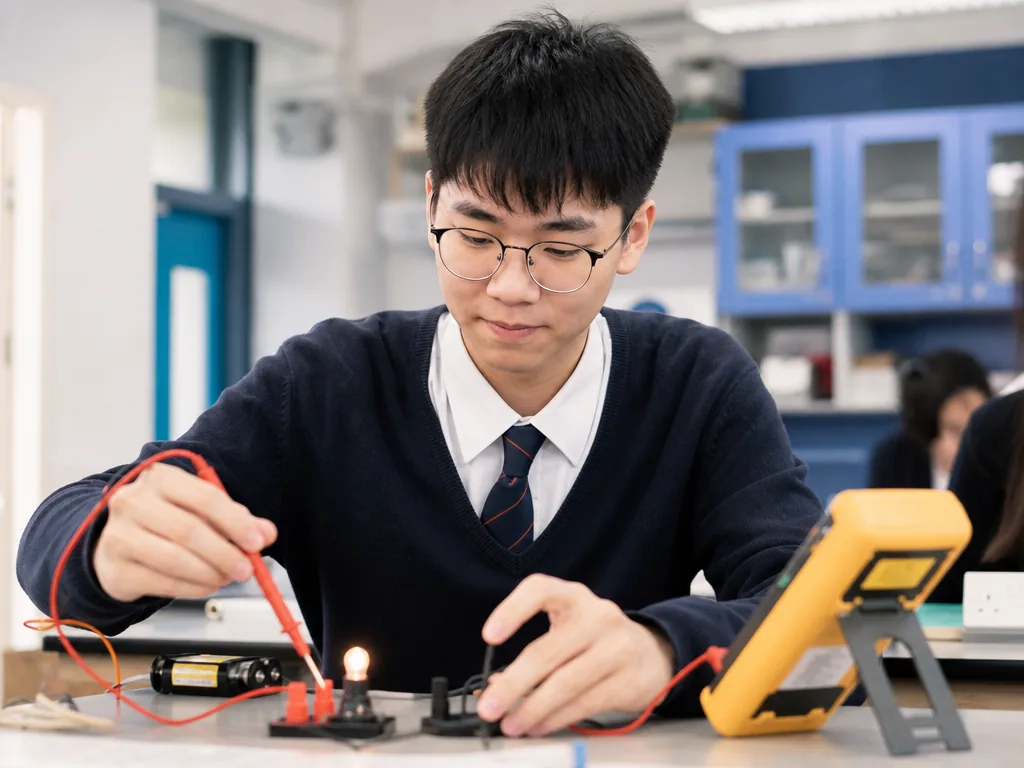
Develops strong reasoning, critical thinking, and lab skills.
Study Tips & Preparation Strategies
- Past papers——Practice them weekly by topic to understand question patterns.
- Key formulas——Memorize and understand key formulas, especially for calculations.
- Error logbook——Keep an error logbook to track common mistakes and misconceptions.
- Experimental design——Master experimental design and data interpretation for Paper 5 or 6.
- Varied study tools——Use a combination of visual aids, flashcards, and video tutorials.
Who Should Take IGCSE Physics?
- Students interested in pursuing careers in engineering, medicine, architecture, aviation, or data science
- Those planning to take A-Level or IB Physics
- Learners who enjoy practical science and solving real-world problems
Recommended Resources
- Cambridge IGCSE Physics——the official textbook.
- Physics & Maths Tutor——free past papers.
- CGP IGCSE Physics Revision Guide——a concise revision companion.
- YouTube Channels——like Physics Online or Science with Hazel.
Expert Advice: How to Score an A or A* in IGCSE Physics
Avoid rote learning — aim for conceptual clarity, especially for explanation-based questions.
- Calculation topics——Focus on mastering calculation-based topics like forces, electricity, and waves.
- Experimental design——Strengthen experimental design and understand how to handle apparatus and interpret data.
- Timed practice——Practice under timed conditions to improve accuracy and speed.
Frequently Asked Questions (FAQ)
Q: What is the difference between Core and Extended IGCSE Physics?
Core covers the fundamental syllabus content, while Extended adds the more advanced topics. Extended is the recommended route for students aiming for top grades or planning to continue to A-Level or IB Physics.
Q: How is the practical component assessed?
Through either a Practical Test (Paper 5) or an Alternative to Practical written paper (Paper 6), both of which assess experimental skills and data handling.
Q: Is IGCSE Physics enough preparation for A-Level Physics?
Yes. The course builds a strong foundation in mechanics, waves, electricity, and atomic physics, and is widely regarded as solid preparation for A-Level Physics and IB Physics.
Q: How should students prepare for the exam?
Consistent weekly practice with past papers, formula revision, and an error logbook is far more effective than last-minute cramming.
Further Resources & Next Steps
- Official Resources——Cambridge Assessment International Education (CAIE) publishes the official syllabus, specimen papers, and past papers for IGCSE Physics.
- Further Reading——Cambridge IGCSE Physics (official textbook) and the CGP IGCSE Physics Revision Guide are trusted study companions.
- Parent Tips——Encourage short, regular practice sessions with past papers and a dedicated error logbook rather than long, infrequent cramming.
Note: The information above is for reference only. Please consult professional education institutions for details.
This article was initially drafted and organised with AI. Editor / Professor Chan Kwok-wai; Managing Editor / Kong Yee-leung
IGCSE Physics Syllabus (Cambridge 0625): Topics at a Glance
The Cambridge IGCSE Physics syllabus (code 0625) is built around five core topic areas, with an Extended tier that goes deeper into each one:
- Forces and Motion – speed, velocity, acceleration, Newton’s laws, momentum
- Electricity and Magnetism – circuits, current, voltage, resistance, electromagnetism
- Waves and Sound – properties of waves, reflection, refraction, sound
- Energy and Work – energy transfers, work, power, efficiency
- Thermal and Atomic Physics – heat transfer, states of matter, radioactivity
Core and Extended candidates both sit multiple-choice and theory papers; Extended candidates also take a practical paper. See our IGCSE Chemistry guide for the companion subject.
Direct Answer:What topics are in the IGCSE Physics syllabus?
The Cambridge IGCSE Physics syllabus (0625) covers forces and motion, electricity and magnetism, waves and sound, energy and work, and thermal and atomic physics. The Extended tier adds deeper problem-solving in every topic area.
Direct Answer:Is IGCSE Physics 0625 hard?
IGCSE Physics is demanding mainly because of the volume of concepts and the practical paper. Most students find regular past-paper practice and mastering definitions and units the fastest route to a high grade.
Act Now: Find a Tutor / Register as a Tutor
For parents & students: looking for a home or online tutor for this subject? Click the button below to post a free tuition case (subject, level and preferred time) — TutorZone will match you with suitable tutors:
For tutors: do you teach this subject? Click the button below to register for free and receive more suitable cases — you pay only when a match is made: