
 中文(繁體)
 中文(简体)
 English




HK Tutoring Search Trends 2026: What 3,409 Real Queries Reveal Parents Search For
TUTORZONE DATA REPORT · HONG KONG TUTORING MARKET
What do Hong Kong parents actually search for? We analysed every search impression TutorZone earned on Google in a six-month period—46,320 impressions across 3,409 unique queries (22 March to 15 September 2026)—and found patterns that run against intuition: international curricula generate the most demand, but DSE “minor” electives convert best; the peak for tutoring searches is before the school year starts, not before exams; and parents search almost entirely by district. Figures, method and limitations below.
Direct Answer: which types of tutoring do Hong Kong parents search for most?
Across 3,409 real queries collected by TutorZone between March and September 2026, the largest demand pool is international curricula (IGCSE, IB, AP, A-Level) at 26.8% of impressions, followed by DSE (16.3%), primary school (13.8%) and music/instruments (10.1%). But impressions are not the same as enquiries: DSE minor electives (English Literature, Health Management and Social Care, Ethics and Religious Studies) account for only 16.3% of impressions yet drive 55% of all clicks—the group most likely to respond once found.

Share this paper / article:
WhatsApp
Facebook
Telegram
Email
WeChat / Xiaohongshu: tap “Copy link” and paste.
Where this data comes from
This is not a survey or an estimate. These are the actual search results performance records of one Hong Kong tutoring platform’s own website, exported from TutorZone’s Google Search Console (via Rank Math Analytics) for the period 22 March to 15 September 2026. The sample covers:
Sample size
28,548 query × page records, drawn from 3,409 unique queries and 592 pages that were shown at least once.
Impressions & clicks
46,320 impressions and 269 clicks in total. Average position across the period: roughly 37th to 44th.
Period
About six months. March and September are partial months, so month-on-month comparisons use April to August.
Limitations, stated up front. First, this is a single platform’s data: it describes how one local tutoring platform is discovered, not the size of the entire Hong Kong tutoring market. Second, it covers Google only—not Bing, Xiaohongshu or Instagram. Third, an “impression” only means the site appeared somewhere in the results; it does not mean a parent saw it. Fourth, average position is a mean across queries, so a few very high-volume, low-ranking queries can drag it down.
The monthly trend below is the backbone of everything that follows:
| Month | Impressions | Clicks | Unique queries | Avg. position |
|---|---|---|---|---|
| March 2026 (from 22nd) | 1,137 | 20 | 411 | 36.9 |
| April 2026 | 4,502 | 56 | 924 | 36.7 |
| May 2026 | 6,299 | 40 | 1,046 | 44.1 |
| June 2026 | 8,580 | 48 | 1,090 | 40.5 |
| July 2026 | 9,881 | 42 | 1,295 | 37.8 |
| August 2026 | 10,550 | 38 | 1,680 | 42.3 |
| September 2026 (to 15th) | 5,371 | 25 | 1,127 | 38.7 |
Finding 1: impressions up 134% in six months, peaking in August
Impressions rose from 4,502 in April to 10,550 in August—a 134% increase—while the number of unique queries per month grew from 924 to 1,680. The shape of the curve is unambiguous: demand peaks in August, before the school year begins, not during the April–May exam season.
August alone produced 10,550 impressions—2.3 times April’s figure. Hong Kong tutoring demand peaks before the school year starts, when parents plan ahead rather than scramble before an exam.
The second number matters just as much: average position stayed between 37th and 44th all period—around the fourth page of results. In other words, the demand growth is real, but there is still a wide gap between being shown and being clicked: 46,320 impressions produced 269 clicks, a click-through rate of roughly 0.6%. That is a ranking problem, not a demand problem.
Finding 2: international curricula are the biggest demand pool (26.8%)
Grouping 2,998 queries by theme, the largest single block is international curricula: IGCSE, IB, AP and GCE/A-Level queries together account for 11,804 impressions—26.8% of the total, more than any other category.
| Subject cluster | Impressions | Queries | Avg. position |
|---|---|---|---|
| International curricula (IGCSE / IB / AP / A-Level) | 11,804 | 782 | 41–64 |
| DSE (including minor electives) | 7,160 | 473 | 15.7 (electives) |
| Primary (English, Chinese, Maths, grammar, reading) | 6,086 | 172 | 46.5 |
| Music & instruments | 4,448 | 188 | 47.5 |
| District tutoring (searching by area) | 3,010 | 114 | 30–55 |
Rankings for this demand, however, are weak: IB Maths clusters drew 2,650 impressions from 112 queries at an average position of 64.0; IGCSE clusters drew 4,494 impressions from 173 queries at 41.9. The highest-volume individual queries were:
- igcse english course—1,170 impressions, average position 49.8
- ib math aa—1,048 impressions, average position 76.9
- igcse chemistry—527 impressions, average position 54.0
- gce maths—369 impressions, average position 29.9
- ap macroeconomics—311 impressions, average position 71.8
Note the language: almost all of these queries are typed in English (igcse, ib math, gce), which points to how international-school and DSS families search—differently from local DSE parents. The practical implication for any tutoring service: English keywords with Chinese explanations, not Chinese content alone, are what reach this audience.
Finding 3: DSE minor electives give the highest return
This is the most interesting result in the report. Queries for DSE minor electives (English Literature, Health Management and Social Care, Ethics and Religious Studies, Design and Applied Technology) totalled 2,921 impressions from just 73 queries—yet produced 96 clicks at an average position of 15.7, the best-performing group on the site.
| Query | Impressions | Clicks | Avg. position |
|---|---|---|---|
| 英國文學 dse (DSE English Literature) | 314 | 34 | 3.5 |
| 單簧管考級 (clarinet grade exam) | 197 | 27 | 1.6 |
| dse 英國文學 (variant) | 111 | 9 | 3.8 |
| 健康管理與社會關懷 dse (HMSC) | 409 | 8 | 7.4 |
| 英國文學 dse (second variant) | 94 | 8 | 3.9 |
| english literature dse | 225 | 5 | 7.8 |
| hkdse economics | 47 | 5 | 10.0 |
A single page—/dse-英國文學科/—earned 937 impressions and 67 clicks in the period, among the highest-clicked pages on the site. The reason is not mysterious: these subjects are offered by few schools, taught by few tutors, and covered by almost no Chinese-language material online. When a parent finds content, there is little else to click.
If you are a parent: tutor matching for minor electives takes longer. Start looking four to six weeks earlier than for mainstream subjects such as English or Maths; leaving it to the two months before exams usually means choosing from a much weaker pool.
Finding 4: primary English grammar is the single biggest pain point
Primary-school queries drew 6,086 impressions, and the primary English cluster alone (grammar, reading comprehension, phonics) accounts for 4,561 impressions from 72 queries—the largest subject cluster in the whole dataset, at an average position of 46.5.
What stands out are the words parents use. They are not searching for “English tutoring”; they are searching for:
- 小學英文 / 小學英語 / 小學英文課程 (primary English, primary English course)
- 小學英文文法 / 小學英文 grammar / 小學生英文文法 (primary English grammar, in several phrasings)
- 閱讀理解 技巧 (reading comprehension techniques)
- phonics 拼音 (phonics)
Those phrases express something more specific than “I need a teacher”—they express “I don’t know how to teach this”. A single page, /香港小學英文文法/, earned 2,880 impressions in the period, the highest-impression page on the site, precisely because it answers that pain point. For parents, the implication is that the highest-value investment at primary level is not more past papers but explaining grammar concepts and reading techniques clearly—which is exactly what one-to-one home tutoring is best at.
Finding 5: parents search by district—24 areas appear in the data
Among queries containing the word 補習 (tutoring), 24 Hong Kong districts appeared. The highest-impression districts were:
| District | Impressions | Clicks | Avg. position |
|---|---|---|---|
| 太古 Tai Koo | 329 | 0 | 54.5 |
| 柴灣 Chai Wan | 303 | 0 | 30.2 |
| 黃大仙 Wong Tai Sin | 245 | 0 | 36.5 |
| 小西灣 Siu Sai Wan | 171 | 0 | 23.8 |
| 西灣河 Sai Wan Ho | 103 | 0 | — |
| 九龍灣 Kowloon Bay | 58 | 0 | — |
| 土瓜灣 To Kwa Wan | 51 | 0 | — |
| 上環 Sheung Wan | 46 | 1 | — |
| 火炭 Fo Tan | 39 | 0 | — |
| 坑口 Hang Hau | 34 | 0 | — |
| 銅鑼灣 Causeway Bay | 28 | 0 | — |
| 馬鞍山 Ma On Shan | 27 | 0 | — |
Two observations. First, district queries carry the strongest intent—”Tai Koo tutoring” is far more specific than “tutoring”; the parent wants someone who can travel to them with a short commute. Second, these queries rank mostly on pages three to five, with almost zero clicks: demand is clear, supply-side content is not. Travel time is a genuine decision factor for Hong Kong families, which is why we maintain cross-district transport guides for all 18 districts.
Finding 6: instrument grade exams—highest intent, lowest competition
The music/instrument cluster drew 3,217 impressions from 97 queries and 31 clicks, at an average position of 47.5. Individual queries, however, behaved very differently:
- 小提琴 (violin)—1,051 impressions (average position 55.5)
- 音樂理論 (music theory)—503 impressions (46.6)
- 單簧管 (clarinet)—402 impressions (60.7); 單簧管考級 (clarinet grade exam)—197 impressions, 27 clicks, average position 1.6
- 大提琴 (cello) 291, 低音大提琴 (double bass) 274, 電吉他 (electric guitar) 161, 拉丁舞 (Latin dance) 241
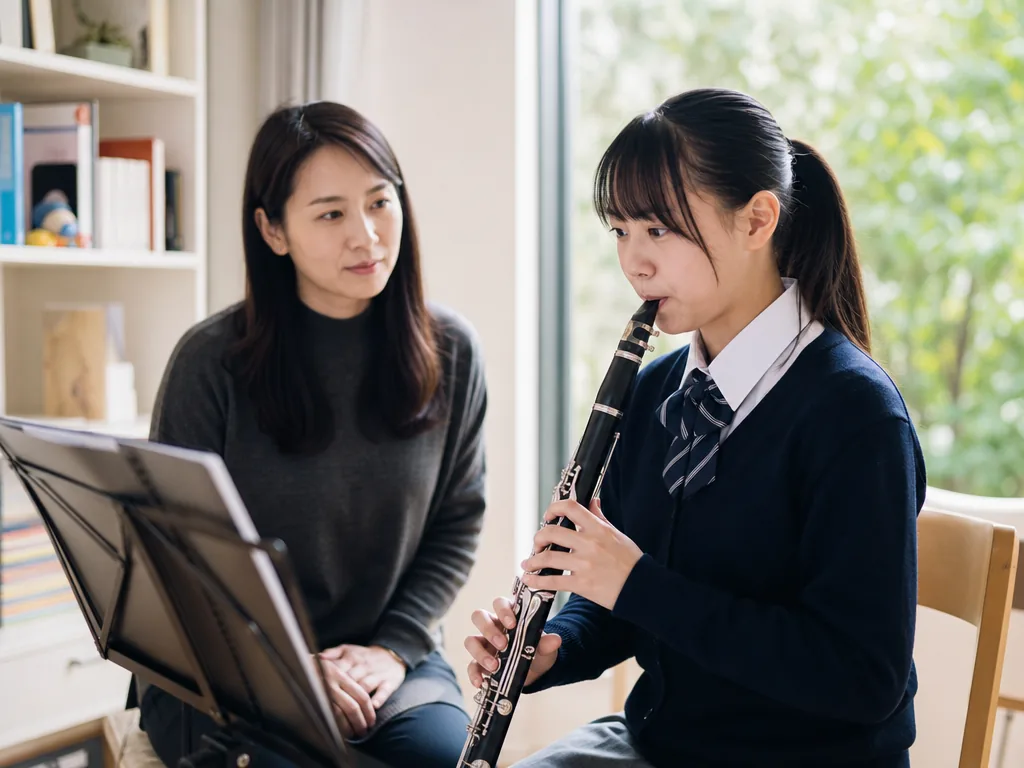
“Clarinet grade exam” converted at close to 14% (197 impressions to 27 clicks), among the highest on the site. Instrument searches come from parents with a very specific goal—a tutor who can take their child through an exam. Just as importantly, these queries rank on pages four to six, which means few competitors and thin content supply.
Finding 7: high impressions, weak rankings—the clearest opportunity list
Putting impression volume next to average position produces a straightforward list: topics with real demand that nobody is covering well.
| Query | Impressions | Avg. position |
|---|---|---|
| igcse english course | 1,170 | 49.8 |
| 小提琴 (violin) | 1,051 | 55.5 |
| ib math aa | 1,048 | 76.9 |
| igcse chemistry | 527 | 54.0 |
| 小學英文 (primary English) | 526 | 51.7 |
| 音樂理論 (music theory) | 503 | 46.6 |
| 會計 / 會計 accounting (accounting) | 495 / 491 | 63.9 / 65.1 |
| 單簧管 (clarinet) | 402 | 60.7 |
| ib math | 330 | 81.2 |
For parents, the pattern is useful in itself: if you cannot find decent material for a subject, tutors for it are usually hard to find too—so start earlier. For tutors, the message is more direct: IB Maths, IGCSE sciences, instrument grade exams and accounting (BAFS) show steady demand with relatively few competitors, whereas the most popular mainstream subjects are also the most crowded.
Frequently asked questions
Q: How reliable is this data?
Every figure comes from TutorZone’s own Google Search Console account—query-by-query, page-by-page records, not estimates or survey responses. It is, however, a single-platform sample: it describes how one local tutoring platform is found, not the total size of the Hong Kong tutoring market, and it excludes Bing and social platforms. Please read it within those limits.
Q: Why do international curricula generate the most search demand?
IGCSE, IB, AP and GCE queries account for 26.8% of all impressions, and almost all are typed in English. A reasonable explanation is the higher tutoring penetration among international-school and DSS families, combined with English-first search habits. It also explains why Chinese-only content struggles to reach this audience—material needs to work in both languages.
Q: Why do “minor” DSE electives convert so well?
Subjects such as English Literature, Health Management and Social Care and Ethics and Religious Studies are offered by few schools, taught by few tutors, and barely covered in Chinese online—so once content is found, it gets clicked (these queries average position 15.7, well ahead of the site’s overall 37–44). The trade-off is scarcity of tutors: allow four to six weeks for matching.
Q: Which month is busiest for tutoring demand?
In this dataset, August (before the school year starts): impressions rose from 4,502 in April to 10,550 in August. April, the exam period, is the second noticeable rise. If you want a wider choice of tutors, start searching two to four weeks before term begins, when timetables are easier to align.
Further resources and next steps
- Official source—the Hong Kong Examinations and Assessment Authority (HKEAA) publishes the syllabuses and assessment frameworks for every DSE subject, including minor electives such as English Literature and Health Management and Social Care (HKEAA HKDSE).
- Further reading—to compare commute times across districts, see our cross-district transport guides for all 18 districts; to understand fee levels first, see TutorZone’s fee reference.
- Parent tip—put “two to four weeks before term starts” in your calendar. August search volume is 2.3 times April’s, which also makes it the tightest month for tutor availability; planning early usually means better timetables and more choice.
- Other languages—Traditional Chinese: 2026 香港補習搜尋趨勢報告; Simplified Chinese: 2026 香港补习搜索趋势报告.
Note: the above is for reference only. The data is a single-source record of search performance; please consult a professional education provider for specific advice.
本文初稿為AI編寫及整理。編輯/陳國威教授,
Act Now: Find a Tutor / Register as a Tutor
Students & parents: whether you are looking for IB Maths, IGCSE sciences, primary English, a minor elective or an instrument grade-exam tutor, tap the button below to post your request free of charge (subject, level and preferred time)—TutorZone will match you with a suitable tutor:
Tutors: do you teach IB/IGCSE, instrument grade exams or a minor elective? These areas show steady demand and relatively few competitors. Register free below and receive matching requests—you only pay when a match succeeds:
責任編輯/江以良
Direct Answer: what period and sample size does this TutorZone search report cover?
The report covers 22 March to 15 September 2026 (about six months) and is based on 28,548 query × page records from TutorZone’s Google Search Console, covering 3,409 unique search queries and 592 pages shown in results, with 46,320 impressions and 269 clicks. It is a single-platform sample and cannot be read as the total size of the Hong Kong tutoring market.
Direct Answer: what are the three biggest Hong Kong tutoring search trends in 2026?
First, demand concentrates in international curricula: IGCSE, IB, AP and A-Level queries make up 26.8% of impressions and are predominantly typed in English. Second, DSE minor electives (English Literature, Health Management and Social Care and others) account for only 16.3% of impressions but drive 55% of all clicks—the highest return on content. Third, demand is strongly seasonal: August (before term) reached 10,550 impressions, 2.3 times April’s figure, and parents overwhelmingly search “district + tutoring”, with very explicit local intent.
