
 中文(繁體)
 中文(简体)
 English




IB ESS Past Papers & Drilling (Paper 2): Footprints, Carbon Budget and Energy Transition
TUTORZONE ORIGINAL DRILLING MOCK · IB ESS PAPER 2 SHORT ANSWER AND STRUCTURED ESSAYS
Written to the official IB ESS subject brief (first assessment 2026): Paper 2 has short-answer and data questions in Section A, all compulsory, and structured essays with a limited choice in Section B; 2 hours and 50% at SL, 2.5 hours and 50% at HL. This mock adds invented data, footprint and carbon budget calculations and a model essay.
What is in IB ESS Paper 2?
Direct answer: Paper 2 has short-answer and data-based questions in Section A, all compulsory, and structured essays with a limited choice in Section B; it is 2 hours and 50% at SL and 2.5 hours and 50% at HL. The internal assessment is 25% at SL and 20% at HL.
Assessment at a glance (2027)
| Component | Content | Weighting | Duration |
|---|---|---|---|
| Paper 1 (case study data analysis) | all questions compulsory: analyse and evaluate the case-study data; 1 hour and 25% at SL, 2 hours and 30% at HL | SL 25% / HL 30% | SL 1 h / HL 2 h |
| Paper 2 (short answer and structured essays) | Section A short-answer and data questions, all compulsory; Section B structured essays with a limited choice; 2 hours at SL and 2.5 at HL, 50% at both | 50% (SL/HL) | SL 2 h / HL 2.5 h |
Paper 2 technique: for a 40-mark SL drilling set, spend about 50 minutes on Section A and 55 on the essay, keeping 15 minutes to check. Show formula and units: ecological deficit = footprint minus biocapacity, overshoot = deficit / biocapacity x 100, budget years = budget / annual emissions, doubling time = 70 / growth rate in per cent, and water for crops = runoff x efficiency. In the essay state a position, give three data-based arguments and a conclusion, and name two obstacles.
How this paper was built
This is a TutorZone original drilling mock: the questions follow the IB ESS Paper 2 format (compulsory short-answer and data questions in Section A, structured essays with a limited choice in Section B) and the answers are our own, not IB past papers or markschemes.
The data were invented for drilling and are not official statistics; the brief does not publish part marks, so the split here is a drilling arrangement. Every numeric answer was recomputed programmatically.
Pacing
| Section | Marks | Suggested time | What to do first |
|---|---|---|---|
| Paper 1 (case study data analysis) | SL 25% / HL 30% | about 1.5 min per mark at SL | copy the data, then calculate and evaluate |
| Paper 2 (short answer and structured essays) | 50% (SL/HL) | about 50 min on Section A | clear Section A first, keep half the time for essays |
How are the ecological deficit, carbon budget and doubling time calculated?
Direct answer: ecological deficit = 1.8 – 1.6 = 0.2 global hectares per person; the carbon budget lasts 500 / 40 = 12.5 years; doubling time = 70 / 0.9 = about 77.8 years; runoff = 900 – 520 = 380 mm and water for crops = 380 x 65% = 247.0 mm.
Paper 2 Section A: short-answer and data questions (compulsory, 20 marks)
Four parts worth 20 marks: ecological deficit 4, carbon budget 4, population 6 and water 6. Allow 50 minutes.
Question 1 (20 marks)
Paper 2 Section A: short-answer and data questions (compulsory, 20 marks)
Source: a country’s ecological footprint is 1.8 global hectares per person against a biocapacity of 1.6; global carbon emissions run at 40 billion tonnes of carbon a year against a remaining carbon budget of 500 billion tonnes; the population is 8.1 billion growing at 0.9% a year; rainfall is 900 mm with 520 mm of evapotranspiration and irrigation efficiency of 65%; renewables supply 38% of electricity against a 65% target.
(a) Calculate the ecological deficit in global hectares and the overshoot as a percentage. (4 marks)
(b) Calculate how many years the carbon budget lasts at present emission rates. (4 marks)
(c) Calculate the doubling time of the population and its size in 30 years using P = P0(1 + r)^n. (6 marks)
(d) Calculate annual runoff and the water available to crops, and suggest one way to raise irrigation efficiency. (6 marks)
Paper 2 Section B: structured essay (20 marks)
One worked structured essay is shown (the official Section B offers a limited choice); allow 55 minutes.
Question 1 (20 marks)
Paper 2 Section B: structured essay (limited choice, 20 marks)
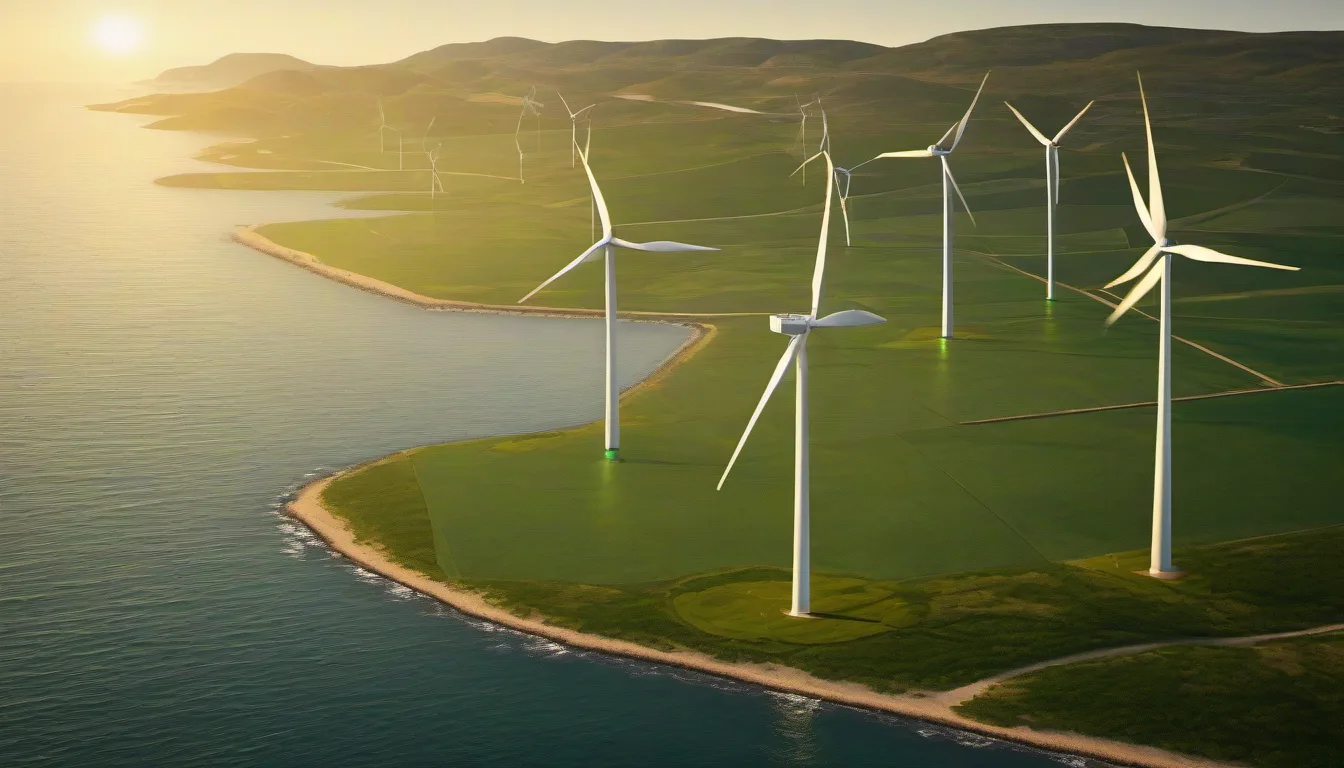
Essay title: evaluate strategies for raising the renewable share of electricity from 38% to 65%, discussing technical, economic and social factors, and identify two obstacles that could prevent the target being met.
Extension drills: diversity index and energy shares (2 questions, not part of the 40 marks)
Two extension items cover biodiversity and energy calculations; allow 10 minutes.
Question 1 (5 marks)
Extension Question 1: biodiversity index (5 marks, not part of the 40 marks)
A sample plot has a Simpson diversity index of 0.72. Calculate 1/D and explain what a higher value means.
Question 2 (5 marks)
Extension Question 2: energy and emissions (5 marks, not part of the 40 marks)
Renewables supply 38% of a country’s electricity and the target is 65%. Calculate the increase needed in percentage points and as a proportion of the present share.
What should the energy transition essay cover?
Direct answer: raising the share from 38% to 65% means 27 percentage points, a proportional increase of about 71.1%; the essay should discuss technical factors (intermittency, storage, grid), economic factors (upfront cost, subsidy design) and social factors (siting, community acceptance), naming two obstacles such as lagging grid investment and policy uncertainty.
Section A model answers
Question 1
(a) Ecological deficit = 1.8 – 1.6 = 0.2 global hectares per person; overshoot = (1.8 – 1.6) / 1.6 x 100 = 12.5%. (4 marks)
(b) The budget lasts 500 / 40 = 12.5 years. On unchanged emissions it runs out well before mid-century, so cutting emissions and removing carbon are both needed. (4 marks)
(c) Doubling time = 70 / 0.9 = about 77.8 years; the population in 30 years is 81 x 1.009^30 = about 10.6 billion. (6 marks)
(d) Runoff = 900 – 520 = 380 mm; water available to crops = 380 x 65% = 247.0 mm. A measure: drip irrigation with soil-moisture sensors watering on demand, alongside reducing seepage and evaporation losses from channels. (6 marks)
Section B model essay
Question 1
Line of argument: the target is technically achievable, but intermittency, cost distribution and social acceptance all have to be solved at the same time, and closing a 15-point gap is not straightforward.
Technical: wind and solar output varies with weather, so storage (batteries, pumped hydro), demand-side management and grid reinforcement are needed; weak grid flexibility and back-up capacity are the main bottlenecks.
Economic: renewables have low marginal but high upfront costs, so a carbon price, feed-in tariff or contract for difference is needed for stable returns; poorly designed subsidies shift costs onto bills and provoke opposition.
Social: siting wind and solar farms raises landscape, noise and land-use conflicts, and community engagement with benefit sharing such as local jobs and revenue can raise acceptance; workers in affected industries also need support.
Two obstacles: (1) grid and storage investment lags, so new capacity cannot all connect; (2) policy and subsidy rules change with governments, leaving long-term returns uncertain.
Conclusion: meeting the target needs carbon pricing, grid investment and community consent together; a capacity target alone tends to fall short. (20 marks)
Extension answers
Question 1
1/D = 1 / 0.72 = about 1.39. A higher value means greater diversity: individuals are spread more evenly across species and the community is more resilient to pests and environmental change.
Question 2
Increase needed = 65 – 38 = 27 percentage points; as a proportion of the present share it is 27 / 38 x 100 = about 71.1%, so capacity must grow by roughly seven-tenths, with grid and storage built alongside.
How should the time be allocated?
Direct answer: for SL, 2 hours: about 50 minutes on Section A (10-15 minutes per part), 55 minutes on the essay and 15 minutes to check; at HL scale the same proportions over 2.5 hours.
Where these marks are usually lost
| Mistake | What it looks like | What it costs | Instead |
|---|---|---|---|
| Overshoot over the footprint | Using 1.8 as the denominator | Overshoot uses biocapacity, 1.6 | 12.5% |
| Carbon budget as a percentage | Writing 12.5% | The answer is in years | 12.5 years |
| Doubling time with the decimal rate | Using 70 / 0.009 | The rule of 70 takes the rate as a percentage, 0.9 | about 77.8 years |
| Efficiency applied to rainfall | Using 900 x 65% | Apply it to the 380 mm of runoff | 247.0 mm |
| Essay limited to technology | Ignoring cost and acceptance | Cover technical, economic and social factors | three dimensions plus two obstacles |
How to use this paper
First drill: Section A and the essay in 2 hours (SL) or 2.5 (HL).
Mark it: check formulas and units, and confirm the essay names two obstacles.
Second drill: redo three to seven days later and add HL lens points on law, economics and ethics.
What should I do after drilling this paper?
Direct answer: log answers with formula errors or a missing social dimension, redo the paper in three to seven days, then return to Paper 1 case-study practice and start the internal assessment report.
FAQ
Is this an IB past paper?
No. This is not an IB past paper: the questions, data and answers are TutorZone originals, not a markscheme.
What is in IB ESS Paper 2?
Section A has short-answer and data-based questions, all compulsory, and Section B requires structured essays with a limited choice; 2 hours and 50% at SL, 2.5 hours and 50% at HL.
How long should the essay be?
Around 350 to 500 words for a structured essay in English; what matters is that arguments carry data, cover ecological, economic and social dimensions and finish with the obstacles.
What is the internal assessment worth?
25% at SL and 20% at HL, with a recommended 10 hours of investigation and a report of up to 3,000 words.
Official references
| Resource | What to check |
|---|---|
| IB ESS subject brief (first assessment 2026) | Confirm the structure, times and weightings of Paper 2 |
| IB official ESS curriculum page | Check the eight topics and the HL lenses |
| https://www.tutorzone.com.hk/en-ib-ess-paper-1-mock-2027/ | IB ESS Paper 1 case-study drilling mock |
Related: practice area · IB ESS Paper 1 case-study drilling mock
Next step: find a tutor / register as a tutor
After drilling, the hard part is telling a conceptual error from a writing error. Tell us the year group, the school and your available times, and TutorZone will match you with a tutor who knows the HKEAA assessment requirements.
Demand for tutors in this subject is steady, and those who can explain the marking scheme and where marks are won are especially sought after. Register free; you pay only when a match succeeds.
