
 中文(繁體)
 中文(簡體)
 English



IGCSE Biology Syllabus 2026 (Cambridge 0610) – Complete Guide
TUTORZONE SUBJECT GUIDE · igcse biology syllabus
IGCSE Biology (Cambridge 0610) takes students from the molecules inside cells to the interdependence of whole ecosystems — and it is the natural gateway to A-Level and IB Biology, medicine, and the life sciences. This complete guide covers the 2026 syllabus, the exam structure, and the study habits that earn top grades.
Direct Answer:What does IGCSE Biology cover?
IGCSE Biology (0610) covers the characteristics and classification of living organisms, cells and biological molecules, plant and human nutrition, transport, respiration, coordination and response, reproduction, inheritance and variation, ecology, and biotechnology — preparing students for A-Level and IB Biology.
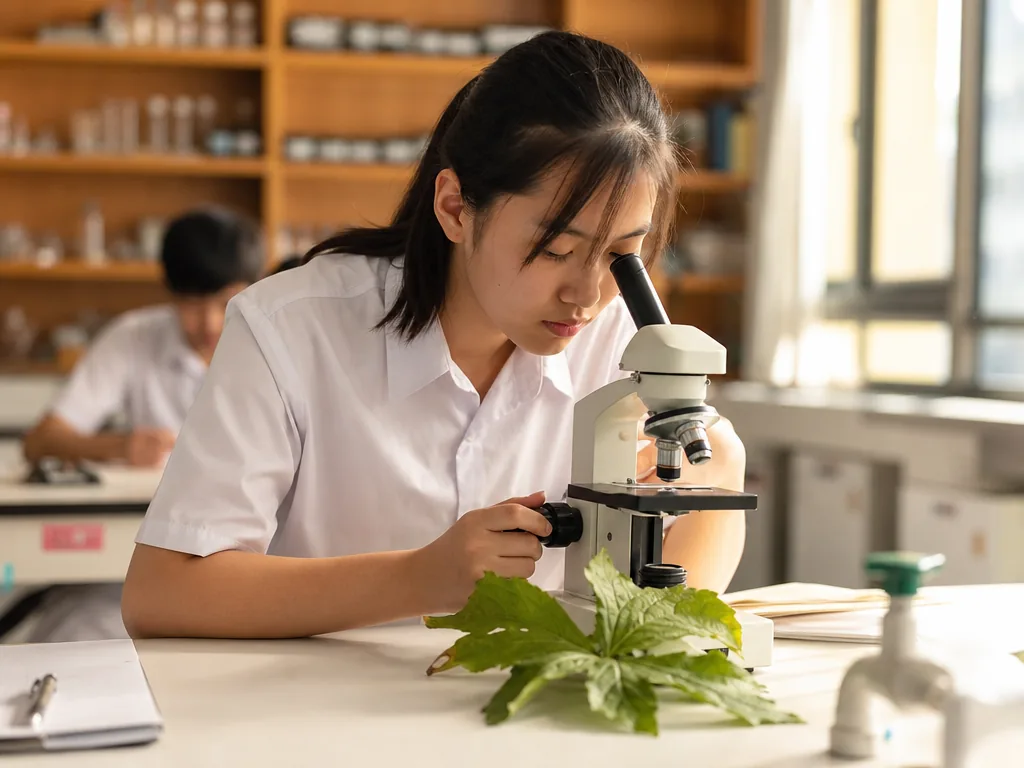
igcse biology syllabus: What Is IGCSE Biology?
IGCSE Biology (International General Certificate of Secondary Education – Biology, code 0610) is a core science subject offered by Cambridge Assessment International Education (CAIE), designed for students aged 14 to 16. The course builds a genuine understanding of living organisms — from the molecules inside cells to the interdependence of whole ecosystems — while developing the practical and analytical skills that universities value.
It prepares students for A-Level Biology, IB Biology, and careers in medicine, dentistry, veterinary science, pharmacy, and the wider life sciences.
Syllabus Topics (Cambridge 0610, 2026)
The IGCSE Biology syllabus for first examination in 2026, 2027 and 2028 is organised around 21 topics. They are grouped here into six themes:
1. Cells and Molecules
- Characteristics and classification of living organisms
- Organisation of the organism — cell structure, tissues and organ systems
- Movement into and out of cells — diffusion, osmosis, active transport
- Biological molecules — carbohydrates, proteins, lipids, water
- Enzymes — how they work and what affects their activity
2. Plant and Human Nutrition
- Plant nutrition — photosynthesis, mineral requirements, leaf structure
- Human nutrition — digestion, absorption, balanced diet
3. Transport and Body Systems
- Transport in plants — xylem, phloem, transpiration
- Transport in animals — the circulatory system, blood, immunity
- Diseases and immunity — pathogens, defences, vaccines
- Gas exchange in humans and respiration
- Excretion in humans — kidneys and the urinary system
4. Coordination, Drugs and Reproduction
- Coordination and response — nervous system, hormones, plant responses
- Drugs — medicinal drugs, antibiotics, and substance abuse
- Reproduction — plant reproduction and the human reproductive system
5. Inheritance and Evolution
- Inheritance — chromosomes, genes, alleles, genetic diagrams
- Variation and selection — natural selection and evolution
6. Ecology and Biotechnology
- Organisms and their environment — food chains, nutrient cycles, populations
- Biotechnology and genetic modification — fermentation, genetic engineering
- Human influences on ecosystems — pollution, conservation, sustainability
Exam Format & Paper Structure
Students sit either the Core or the Extended tier. Extended covers everything in Core plus the Supplement content, and is the recommended route for students aiming for the highest grades or planning to continue to A-Level or IB Biology.
Core Level
- Paper 1: Multiple choice (Core, 45 minutes)
- Paper 3: Theory — structured questions (1 hour 15 minutes)
- Paper 5 / 6: Practical test or Alternative to Practical
Extended Level
- Paper 2: Multiple choice (Extended, 45 minutes)
- Paper 4: Theory — structured questions (1 hour 15 minutes)
- Paper 5 / 6: Practical test or Alternative to Practical
| Paper | Tier | Type | Duration | Weighting |
|---|---|---|---|---|
| Paper 1 | Core | Multiple choice (40 questions) | 45 min | 30% |
| Paper 2 | Extended | Multiple choice (40 questions) | 45 min | 30% |
| Paper 3 | Core | Theory — short answer and structured | 1 hr 15 min | 50% |
| Paper 4 | Extended | Theory — short answer and structured | 1 hr 15 min | 50% |
| Paper 5 | Both | Practical test | 1 hr 15 min | 20% |
| Paper 6 | Both | Alternative to Practical (written) | 1 hr | 20% |
Assessment objectives:
Knowledge and understanding
Recall, understand, and apply the facts and concepts of the syllabus.
Handling information and problem-solving
Interpret data, draw conclusions, and apply knowledge to unfamiliar situations.
Experimental skills and investigations
Plan experiments, use apparatus safely, and evaluate results.
Why Study IGCSE Biology?
Globally Recognised
Recognised by top universities and institutions in 150+ countries, including the UK, US, Canada, and Hong Kong.
Gateway to Medicine and Life Sciences
Essential foundation for A-Level Biology, IB Biology, medicine, dentistry, pharmacy, and biomedical research.
Skills That Last
Builds observation, data interpretation, and practical lab skills that transfer to any scientific career.
Study Tips & Preparation Strategies
- Past papers——Practice them weekly by topic to understand question patterns and command words.
- Diagrams and processes——Draw every key process yourself: photosynthesis, the heart, the nephron, the carbon cycle. Biology rewards visual memory.
- Flashcards for definitions——Exam answers are marked for precise definitions of terms like osmosis, diffusion, and active transport.
- Practical skills——For Paper 5 or 6, practise describing experiments, identifying variables, and handling results tables.
- Error logbook——Keep a logbook of common mistakes and misconceptions to review before the exam.
Who Should Take IGCSE Biology?
- Students interested in careers in medicine, dentistry, veterinary science, pharmacy, physiotherapy, or environmental science
- Those planning to take A-Level or IB Biology, Chemistry, or Psychology
- Learners who enjoy practical science and understanding how living systems work
Recommended Resources
- Cambridge IGCSE Biology——the official textbook by Mary Jones and Geoff Jones.
- Physics & Maths Tutor——free IGCSE Biology past papers by topic.
- CGP IGCSE Biology Revision Guide——a concise revision companion.
- YouTube channels——like Cognito or Science with Hazel for clear topic walkthroughs.
- Sibling guides——explore our IGCSE Physics Syllabus 2026 guide and What is IGCSE Chemistry? for the complete science picture.
Expert Advice: How to Score an A* or 9
Top-scoring students do not memorise answers — they learn to use the right command words and apply concepts to unfamiliar situations.
- Process diagrams——Master the diagrams that recur every year: the heart and circulation, the kidney, photosynthesis, and the nitrogen cycle.
- Command words——Know the difference between describe, explain, suggest, and state; examiners award marks for exactly what the command asks.
- Timed practice——Practise under timed conditions to build speed and accuracy in the multiple-choice and theory papers.
Frequently Asked Questions (FAQ)
Q: What is the difference between Core and Extended IGCSE Biology?
Core covers the fundamental syllabus content, while Extended adds the more advanced Supplement content. Extended is the recommended route for students aiming for top grades or planning to continue to A-Level or IB Biology.
Q: How is the practical component assessed?
Through either a Practical Test (Paper 5) or an Alternative to Practical written paper (Paper 6), both of which assess experimental skills, data handling, and investigation design.
Q: Is IGCSE Biology enough preparation for A-Level Biology?
Yes. The course builds a strong foundation in cell biology, physiology, genetics, and ecology, and is widely regarded as solid preparation for A-Level Biology, IB Biology, and university science courses.
Q: How should students prepare for the exam?
Consistent weekly practice with past papers, drawing process diagrams, and maintaining an error logbook is far more effective than last-minute cramming.
Further Resources & Next Steps
- Official Resources——Cambridge Assessment International Education (CAIE) publishes the official 2026–2028 syllabus, specimen papers, and past papers for IGCSE Biology 0610.
- Further Reading——Cambridge IGCSE Biology (official textbook) and the CGP IGCSE Biology Revision Guide are trusted study companions.
- Parent Tips——Encourage short, regular practice sessions and let your child explain topics back to you; teaching a concept is the fastest way to master it.
Note: The information above is for reference only. Please consult professional education institutions for details.
This article was initially drafted and organised with AI. Editor / Professor Chan Kwok-wai; Managing Editor / Kong Yee-leung
Direct Answer:What topics are in the IGCSE Biology syllabus?
The IGCSE Biology syllabus (0610) spans 21 topics across six themes: cells and molecules; plant and human nutrition; transport and body systems; coordination, drugs and reproduction; inheritance and evolution; and ecology and biotechnology.
Direct Answer:Is IGCSE Biology hard?
IGCSE Biology requires more memorisation of terminology than physics or chemistry, but students who study the definitions, draw process diagrams, and practise past papers by topic consistently find the exam very achievable.
Act Now: Find a Tutor / Register as a Tutor
For parents & students: looking for a home or online tutor for this subject? Click the button below to post a free tuition case (subject, level and preferred time) — TutorZone will match you with suitable tutors:
For tutors: do you teach this subject? Click the button below to register for free and receive more suitable cases — you pay only when a match is made: