 中文(繁體)
 中文(簡體)
 English



IGCSE Chemistry Syllabus 2026 (Cambridge 0620) – Complete Guide
TUTORZONE SUBJECT GUIDE · IGCSE
IGCSE Chemistry (Cambridge 0620) moves from the particles inside an atom to the reactions that power industry, medicine and everyday life — and it is the natural gateway to A-Level and IB Chemistry. This complete guide covers the 2026 syllabus, the exam structure, and the study habits that earn top grades.
Direct Answer:What does IGCSE Chemistry cover?
IGCSE Chemistry (0620) covers twelve topics: states of matter; atoms, elements and compounds; stoichiometry; electrochemistry; chemical energetics; chemical reactions; acids, bases and salts; the Periodic Table; metals; chemistry of the environment; organic chemistry; and experimental techniques and chemical analysis — preparing students for A-Level and IB Chemistry.
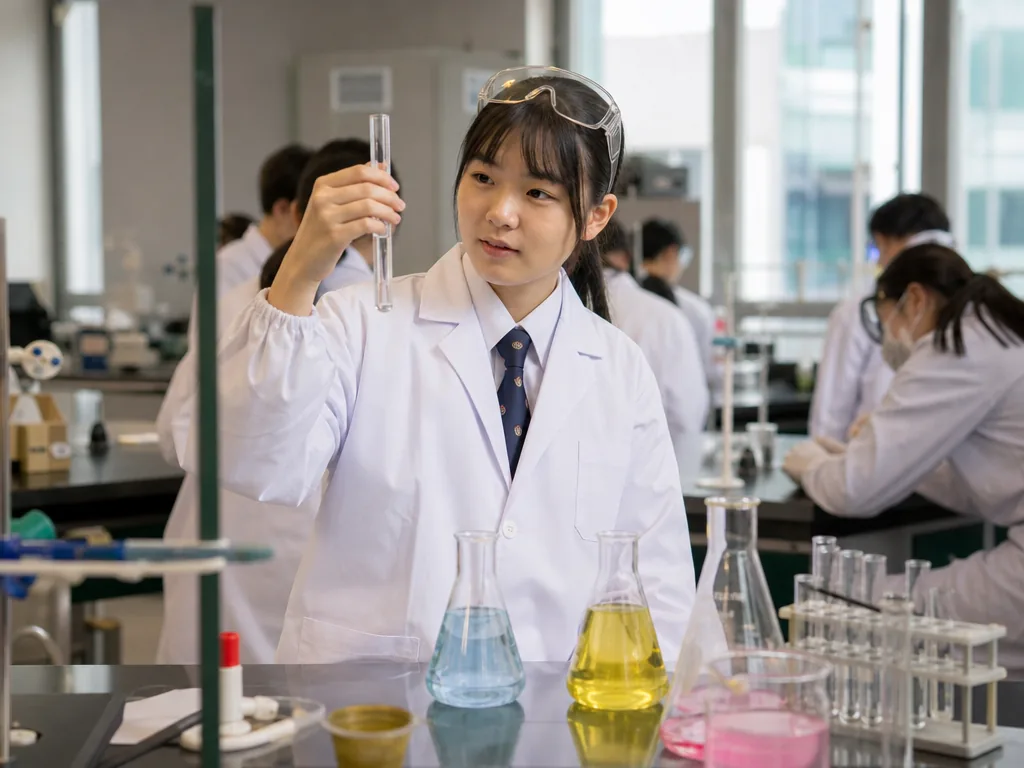
What Is IGCSE Chemistry?
IGCSE Chemistry (International General Certificate of Secondary Education – Chemistry, code 0620) is a core science subject offered by Cambridge Assessment International Education (CAIE), designed for students aged 14 to 16. It is one of the most widely taken IGCSE subjects in the world — Cambridge IGCSE is taught by over 5,000 schools in 150 countries. The course builds a genuine understanding of the substances around us — from the particles inside an atom to the reactions that power industry and medicine — while developing the practical and analytical skills that universities value.
It prepares students for A-Level Chemistry, IB Chemistry, and careers in medicine, pharmacy, dentistry, chemical engineering and the wider sciences.
An identical 9–1 version of the qualification, code 0971, covers the same content and papers; only the grade scale differs (9–1 instead of A*–G).
Syllabus Topics (Cambridge 0620, 2026)
The IGCSE Chemistry syllabus for first examination in 2026, 2027 and 2028 is organised around 12 topics. They are grouped here into four themes:
1. Matter, Atoms and the Periodic Table
- States of matter — kinetic particle theory, changes of state, diffusion, heating and cooling curves
- Atoms, elements and compounds — atomic structure, isotopes, electronic configuration, ionic, covalent and metallic bonding
- The Periodic Table — period trends, Group I, Group VII, noble gases and transition elements
2. Reactions, Energy and Electrochemistry
- Chemical reactions — rates of reaction, reversible reactions and equilibrium, redox (electron transfer)
- Chemical energetics — exothermic and endothermic reactions, energy level diagrams, bond energy calculations
- Electrochemistry — electrolysis, half-equations, predicting products, electroplating
- Acids, bases and salts — pH, neutralisation, preparation of salts, strong and weak acids
3. Quantitative and Organic Chemistry
- Stoichiometry — balancing equations, the mole concept, reacting masses, gas volumes and solution calculations
- Organic chemistry — alkanes, alkenes, alcohols, carboxylic acids, polymers and reaction pathways
4. Metals, the Environment and Practical Analysis
- Metals — the reactivity series, extraction of metals, corrosion and rust prevention, alloys
- Chemistry of the environment — water purification, air pollution, fertilisers, the greenhouse effect
- Experimental techniques and chemical analysis — chromatography, acid–base titration, and qualitative tests for ions and gases
Exam Format & Paper Structure
Students sit either the Core or the Extended tier. Core candidates are eligible for grades C to G, while Extended — which covers Core plus the Supplement content — opens up grades A* to G and is the recommended route for students aiming for the highest grades or planning to continue to A-Level or IB Chemistry.
Core Level
- Paper 1: Multiple choice (Core, 45 minutes)
- Paper 3: Theory — structured questions (1 hour 15 minutes)
- Paper 5 / 6: Practical test or Alternative to Practical
Extended Level
- Paper 2: Multiple choice (Extended, 45 minutes)
- Paper 4: Theory — structured questions (1 hour 15 minutes)
- Paper 5 / 6: Practical test or Alternative to Practical
| Paper | Tier | Type | Duration | Weighting |
|---|---|---|---|---|
| Paper 1 | Core | Multiple choice (40 questions) | 45 min | 30% |
| Paper 2 | Extended | Multiple choice (40 questions) | 45 min | 30% |
| Paper 3 | Core | Theory — short answer and structured | 1 hr 15 min | 50% |
| Paper 4 | Extended | Theory — short answer and structured | 1 hr 15 min | 50% |
| Paper 5 | Both | Practical test | 1 hr 15 min | 20% |
| Paper 6 | Both | Alternative to Practical (written) | 1 hr | 20% |
Assessment objectives:
Knowledge and understanding
Recall, understand, and apply the facts, concepts and laws of the syllabus.
Handling information and problem-solving
Interpret data, draw conclusions, and apply chemical ideas to unfamiliar situations.
Experimental skills and investigations
Plan experiments, use apparatus safely, and evaluate results.
Why Study IGCSE Chemistry?
Globally Recognised
Recognised by universities and employers worldwide — Cambridge IGCSE is taught by over 5,000 schools in 150 countries.
Gateway to Medicine and the Sciences
Essential foundation for A-Level Chemistry, IB Chemistry, medicine, pharmacy, dentistry, and chemical or biomedical engineering.
Skills That Last
Builds data handling, practical problem-solving and the scientific method — transferable to any science-based career.
Study Tips & Preparation Strategies
- Past papers——Practice them weekly by topic to understand question patterns, command words and mark-scheme language.
- Master the calculations——The mole concept, gas volumes, reacting masses and titration calculations are where many students lose marks. Practise with correct units and significant figures.
- Flashcards for definitions——Exams reward precise, mark-scheme wording for terms like isotope, mole, electrolysis and exothermic.
- Draw the diagrams——Dot-and-cross bonding diagrams, electrolysis cells, energy level diagrams and the reactivity series reward visual memory.
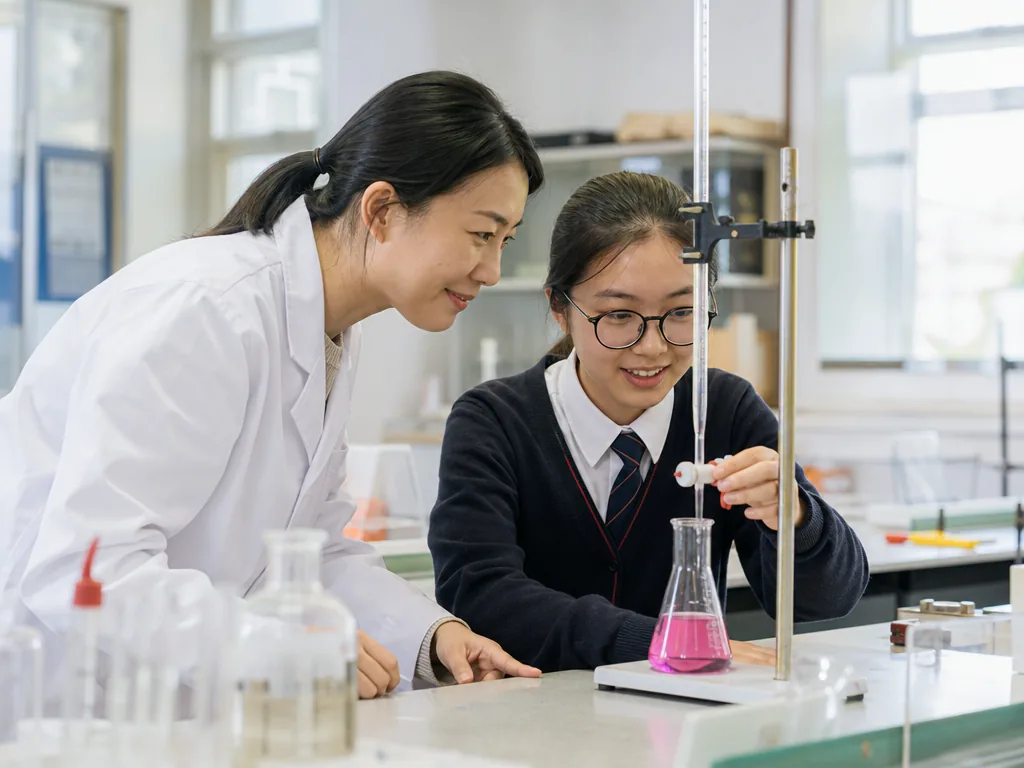
- Practical skills——For Paper 5 or 6, practise describing apparatus, identifying variables, and handling results tables and sources of error.
Who Should Take IGCSE Chemistry?
- Students interested in careers in medicine, pharmacy, dentistry, chemical engineering, materials science or biochemistry
- Those planning to take A-Level or IB Chemistry, Biology, or Physics
- Learners who enjoy practical science, patterns, and solving quantitative problems
Recommended Resources
- Cambridge IGCSE Chemistry——the official Cambridge-endorsed coursebook, updated for the current syllabus.
- Physics & Maths Tutor——free IGCSE Chemistry past papers by topic.
- CGP IGCSE Chemistry Revision Guide——a concise revision companion with exam-style questions.
- YouTube channels——like Cognito for clear topic walkthroughs and worked calculations.
- Sibling guides——explore our IGCSE Physics guide and IGCSE Biology Syllabus 2026 guide for the complete science picture.
Expert Advice: How to Score an A* or 9
Top-scoring students do not memorise reactions — they learn to predict them using the Periodic Table, bonding models and the reactivity series.
- Prediction over memorisation——Learn the trends of the Periodic Table and the reactivity series so you can work out unfamiliar reactions instead of relying on recall.
- Command words——Know the difference between describe, explain, suggest, and state; examiners award marks for exactly what the command asks.
- Timed practice——Practise under timed conditions, then study the examiner reports to learn where top candidates gain and lose marks.
Frequently Asked Questions (FAQ)
Q: What is the difference between Core and Extended IGCSE Chemistry?
Core covers the fundamental syllabus content and is eligible for grades C to G, while Extended adds the more advanced Supplement content and opens up grades A* to G. Extended is the recommended route for students aiming for top grades or planning to continue to A-Level or IB Chemistry.
Q: How many papers do IGCSE Chemistry students take?
All students take three papers: one multiple-choice paper (Paper 1 for Core or Paper 2 for Extended), one theory paper (Paper 3 for Core or Paper 4 for Extended), and one practical paper — either the Practical Test (Paper 5) or the Alternative to Practical written paper (Paper 6).
Q: What changed in the 2026–2028 IGCSE Chemistry syllabus?
The syllabus for 2026, 2027 and 2028 is version 1 published in September 2023, and Cambridge confirms there are no substantial changes affecting teaching. The 12-topic structure, including experimental techniques and chemical analysis as a topic in its own right, remains in force, and textbooks endorsed for the 2023 syllabus remain suitable.
Q: Is IGCSE Chemistry hard, and how do students score top grades?
IGCSE Chemistry is very achievable with consistent study. Students who practise past papers by topic, master the mole and titration calculations, learn precise definitions, and build practical skills find the exam manageable — and these habits are exactly what separates A* and grade 9 candidates.
Further Resources & Next Steps
- Official Resources——Cambridge Assessment International Education (CAIE) publishes the official 2026–2028 syllabus, specimen papers, and past papers for IGCSE Chemistry 0620.
- Further Reading——the Cambridge-endorsed IGCSE Chemistry coursebook and the CGP IGCSE Chemistry Revision Guide are trusted study companions.
- Parent Tips——Encourage short, regular practice sessions and let your child explain a reaction or calculation back to you; teaching a concept is the fastest way to master it.
Note: The information above is for reference only. Please consult professional education institutions for details.
This article was initially drafted and organised with AI. Editor / Professor Chan Kwok-wai; Managing Editor / Kong Yee-leung
Direct Answer:What topics are in the IGCSE Chemistry syllabus?
The IGCSE Chemistry syllabus (0620) spans 12 topics across four themes: matter, atoms and the Periodic Table; reactions, energy and electrochemistry; quantitative and organic chemistry; and metals, the environment and practical analysis.
Direct Answer:Is IGCSE Chemistry hard?
IGCSE Chemistry is very achievable for students who practise past papers by topic, master the mole and titration calculations, and learn precise definitions. The practical and calculation components are where most marks are lost — targeted practice there makes the exam manageable.
Act Now: Find a Tutor / Register as a Tutor
For parents & students: looking for a home or online tutor for this subject? Click the button below to post a free tuition case (subject, level and preferred time) — TutorZone will match you with suitable tutors:
For tutors: do you teach this subject? Click the button below to register for free and receive more suitable cases — you pay only when a match is made: