
 中文(繁體)
 中文(简体)
 English



GCE Geography: Complete Guide to Course Content, Structure & Exam Format
@keyframes tzPulseO { 0%,100% { box-shadow: 0 0 0 0 rgba(255,140,0,.55); transform: scale(1); } 50% { box-shadow: 0 0 0 14px rgba(255,140,0,0); transform: scale(1.04); } }
@keyframes tzPulseN { 0%,100% { box-shadow: 0 0 0 0 rgba(2,30,64,.5); transform: scale(1); } 50% { box-shadow: 0 0 0 12px rgba(2,30,64,0); transform: scale(1.04); } }
.tz-blink-o { animation: tzPulseO 1.6s ease-in-out infinite; }
.tz-blink-n { animation: tzPulseN 1.6s ease-in-out infinite .35s; }
TUTORZONE SUBJECT GUIDE · GCE
GCE Geography spans physical and human geography, environmental issues and GIS, building the spatial thinking, analytical and problem-solving skills that universities and employers value. This guide walks through the full course content, the AS and A Level structure, the exam format, and the academic and career pathways the subject opens up.
Direct Answer:What does GCE Geography cover?
GCE Geography covers physical and human geography, environmental issues and GIS, building spatial thinking, analytical and problem-solving skills.

Course Content Overview
The GCE Geography curriculum spans several fields and can be divided into two main parts: physical geography and human geography. Alongside these two strands, the course also covers environmental issues and sustainable development, and it introduces Geographic Information Systems (GIS) and spatial analysis as essential tools of modern geography.
Geography sits at the meeting point of the natural world and human society — and GCE Geography teaches you to read both.
Physical Geography
Climate and weather
Study the formation and variation of climate, and analyse the characteristics of different climatic zones and their impact on human life.
Landforms and earthquakes
Study the structure and changes of the Earth’s surface, such as the formation of mountains, rivers and volcanoes.
Hydrology
Study the water cycle, oceans, the atmosphere and precipitation patterns, and explore how these elements affect the Earth’s ecosystems.
Biogeography
Explore the interaction between living organisms and the environment, studying the distribution of biological communities, species diversity and ecological conservation.
Human Geography
Population geography
Analyse the distribution, growth and migration of populations and their impact on society, the economy and the environment.
Urban and economic geography
Study the process of urbanisation, and examine the structure, development, land use and impact of globalisation on different cities.
Agriculture and land use
Study different types of agriculture, agricultural policy and changes in land use.
Development and inequality
Explore development issues around the world, analysing economic development, the wealth gap and unequal resource distribution.
Environmental Issues & Sustainable Development
Global environmental issues
Learn how to respond to global warming, resource depletion and pollution, and understand the impact of climate change on living things and humanity.
Sustainable development
Explore how to achieve a balance between economic development, social equity and environmental protection, with emphasis on the Sustainable Development Goals (SDGs).
Geographic Information Systems (GIS) & Spatial Analysis
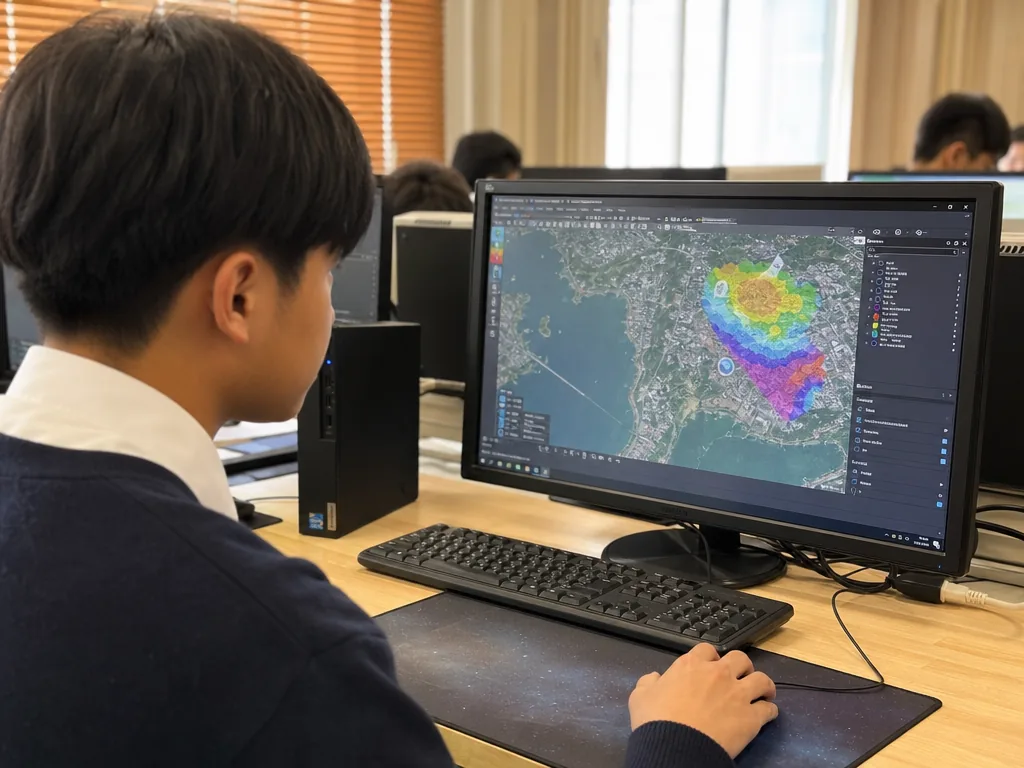
Learn how to use GIS to collect, analyse, process and present geographic data. GIS is an important tool in modern geography, widely applied in urban planning, environmental monitoring and disaster management.
Course Structure: AS Level & A Level
The GCE Geography course is generally divided into two stages: AS Level and A Level.
AS Level
This is the first stage of GCE Geography, in which students usually study foundational geographical knowledge, such as the Earth’s physical environment, basic human geography concepts and simple geographical data-analysis skills.
A Level
This is the advanced stage, in which students explore the various fields of geography in greater depth and learn how to apply geographical theory to real-world problems. The A Level course involves more interdisciplinary knowledge and focuses on the practical application of geographical data, such as using GIS technology to solve environmental and urban development problems.
Exam Format
The GCE Geography examination format usually includes the following parts:
Written examinations
- Multiple-choice questions: Students answer a number of multiple-choice questions testing their understanding of geographical knowledge.
- Short-answer questions: These require students to answer concisely, testing understanding of specific concepts and processes.
- Extended-response questions: Students analyse a question in detail and write a well-reasoned geographical essay.
Internal assessment (Coursework)
- Geographical investigation: Students carry out an independent geographical research project, which may include fieldwork, data collection and analysis, and write a report on the results. This assesses students’ ability to apply geographical knowledge and skills in practice.
- Data analysis: Students demonstrate how they use statistics and other analytical methods to interpret geographical data and draw conclusions.
Academic Applications
GCE Geography has broad applications for students’ future academic and career development, starting with the study pathways it opens up:
Environmental science
For students interested in environmental science, climatology or ecology, GCE Geography provides the foundational knowledge.
Urban planning and development
Studying how humans use cities and land, and how to plan sustainable development, is particularly important for students interested in urban planning or architectural design.
International relations and development studies
Geography provides the background to globalisation, poverty and inequality — issues that are crucial for students intending to study international relations, economics and sociology.
Career Applications
GIS professions
With advances in technology, GIS and geographic data-analysis techniques are widely used in many fields, including environmental protection, urban planning and logistics management.
Environmental consultancy and resource management
Knowledge from GCE Geography is also applicable to careers such as environmental consultant or resource-management specialist, helping businesses or government bodies respond to environmental challenges.
Education and research
For students intending to pursue education or academic research, geography provides a solid foundation and enables deeper exploration of the links between space, the environment and society.
Conclusion
GCE Geography is a highly integrated subject that not only teaches students about the Earth’s natural environment but also emphasises the interaction between people and the environment. The course helps students develop spatial thinking, critical analysis and problem-solving skills, with far-reaching implications for their future academic and professional lives. Whether in academic research, environmental protection or urban development, GCE Geography equips students with the knowledge and skills they need to tackle the various challenges facing today’s world.
Frequently Asked Questions (FAQ)
Q: What is the difference between AS Level and A Level Geography?
AS Level is the first stage, covering foundational geographical knowledge and simple data-analysis skills, while A Level is the advanced stage that explores each field in greater depth and applies theory to real-world problems — including using GIS to tackle environmental and urban development issues.
Q: Does GCE Geography include fieldwork or coursework?
Yes. The internal assessment typically includes a geographical investigation — an independent research project that may involve fieldwork, data collection and analysis — together with data-analysis tasks in which students use statistics to interpret geographical data and draw conclusions.
Q: What careers can GCE Geography lead to?
Common pathways include GIS and spatial-data professions, environmental consultancy and resource management, urban planning and logistics, and education and academic research.
Q: Do I need strong maths for the GIS and data-analysis parts?
GIS work involves collecting, analysing, processing and presenting data, so comfort with statistics and basic quantitative methods helps. The course builds these skills progressively, starting from simple data-analysis techniques at AS Level.
Further Resources & Next Steps
- Official Resources——Cambridge International and Pearson Edexcel GCE Geography specifications and past papers.
- Further Reading——Prisoners of Geography by Tim Marshall, for an accessible look at how geography shapes global politics and trade.
- Parent Tips——Build spatial awareness at home with free tools such as Google Earth, and talk through news stories about climate, cities and development.
Note: The information above is for reference only. Please consult professional education institutions for details.
This article was initially drafted and organised with AI. Editor / Professor Chan Kwok-wai; Managing Editor / Kong Yee-leung
Act Now: Find a Tutor / Register as a Tutor
For parents & students: looking for a home or online tutor for this subject? Click the button below to post a free tuition case (subject, level and preferred time) — TutorZone will match you with suitable tutors:
For tutors: do you teach this subject? Click the button below to register for free and receive more suitable cases — you pay only when a match is made:
Drill it: TutorZone original drilling mocks for Cambridge A-Level Geography 9696 (2027-2029): Cambridge A-Level Geography 9696 Paper 1 drilling mock · Cambridge A-Level Geography 9696 Paper 2 drilling mock · Cambridge A-Level Geography 9696 Paper 3 drilling mock · Cambridge A-Level Geography 9696 Paper 4 drilling mock · each with invented data sets, worked answers and drilling technique.